

If you have any questions about data centers and the environment, feel free to reach out to us. Your input matters: ask@cbc.ca
By the year 2026, Artificial Intelligence (AI) has become prevalent, sparking concerns among some Canadians about having large AI data centers in their vicinity.
Canada has made significant investments in AI, leading to a surge in planned or proposed AI data centers that consume substantial amounts of water and energy.
Advocates argue that these facilities could solidify Canada’s position as a global AI leader. However, the rapid expansion has prompted certain communities to halt development. For instance, Oakville imposed a one-year moratorium on data center construction, and Mississauga is considering a similar pause following a proposal for a massive data center.
Recently, hundreds of individuals attended town halls in Alberta to seek clarity from the province’s technology minister regarding the AI data center plans.
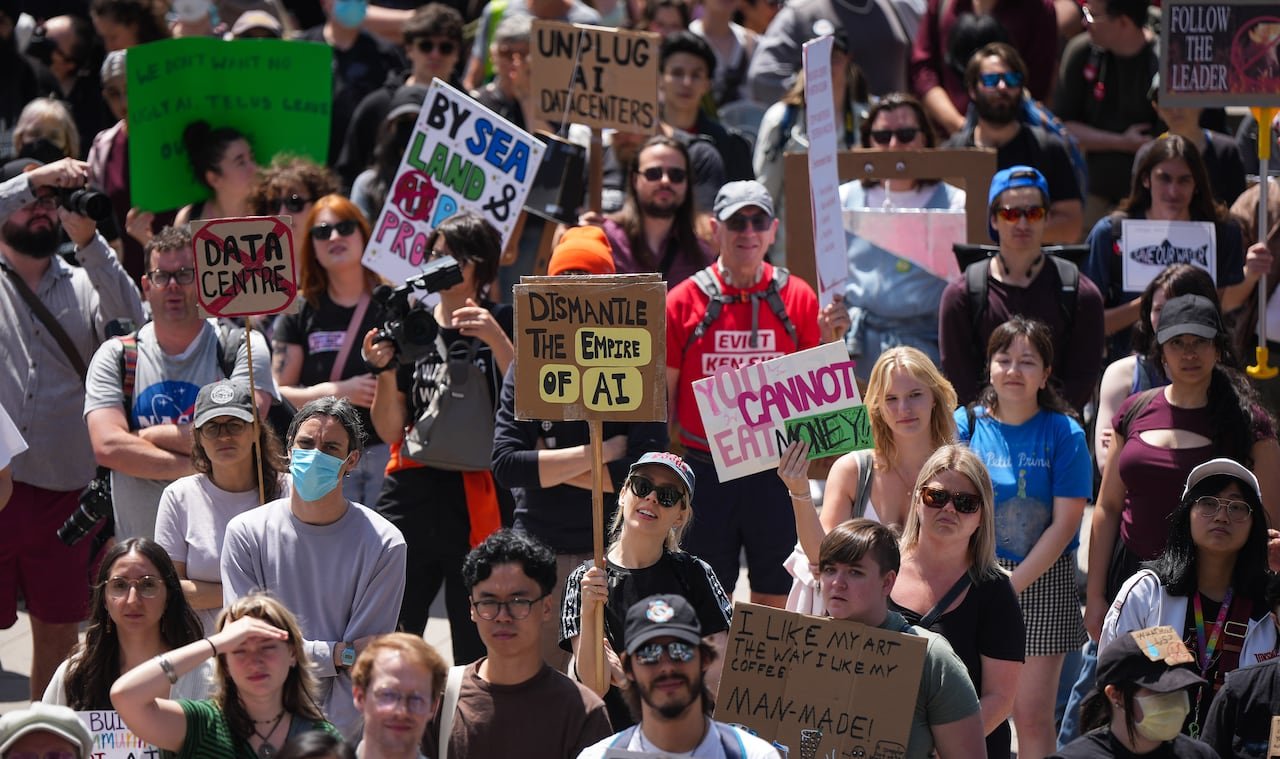
Several CBC readers have raised inquiries about the surge in data center construction across Canada.
Here is a breakdown of the situation.
Understanding Data Centers
Data centers are facilities that house and power computer servers, networking equipment, and other technology necessary for data processing and storage. The modern AI data centers are significantly larger and more energy-demanding than conventional ones, utilizing powerful GPUs that escalate energy consumption and require sophisticated cooling systems to manage the generated heat.
-
Analysis
Canada wants sovereign AI data centers. What does that actually mean?
-
What’s the difference between traditional and AI data centers? This Waterloo prof says it’s their computers
-
What’s behind the growing backlash toward AI data centers?
“While a traditional cloud facility might require a few megawatts, AI facilities often demand hundreds of megawatts,” noted Anne Pasek, Canada Research Chair in Media, Culture, and the Environment at Trent University.
<

