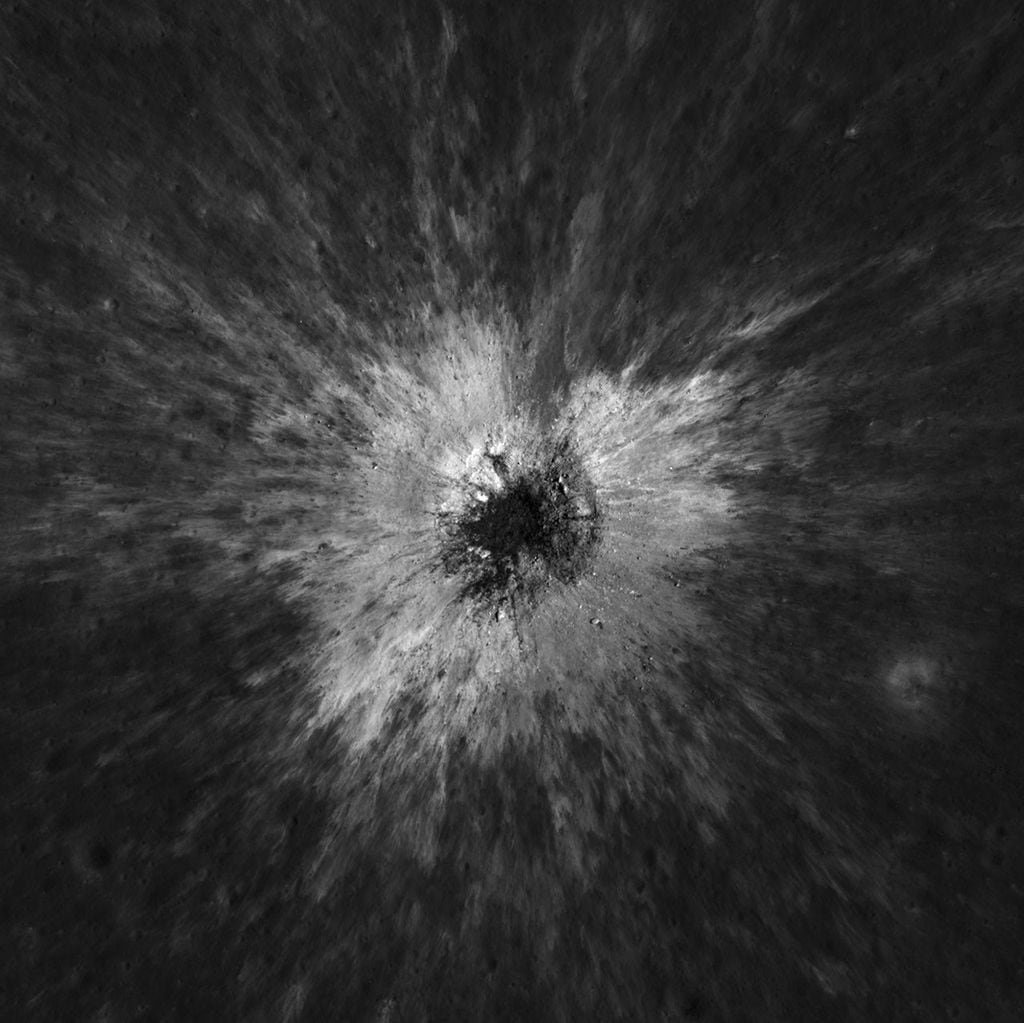

A recent discovery by scientists has unveiled a massive crater on the moon, surpassing the size of the Roman Colosseum. This crater, measuring 222 meters wide and up to 43 meters deep, is the largest known impact crater in the solar system created in modern times.
Experts estimate that such a significant event occurs approximately once every 132 years, making this finding a valuable source of information as NASA gears up to establish a lunar base for astronauts.
In a study published in the journal Science Advances, researchers described this event as a statistically rare and extraordinary observation.
The Lunar Reconnaissance Orbiter (LRO) operated by NASA detected the crater on the moon’s near side in May 2024, shortly after it was formed by a fragment from an asteroid or comet. Interestingly, this lunar impact went unnoticed by telescopes on Earth and in space.
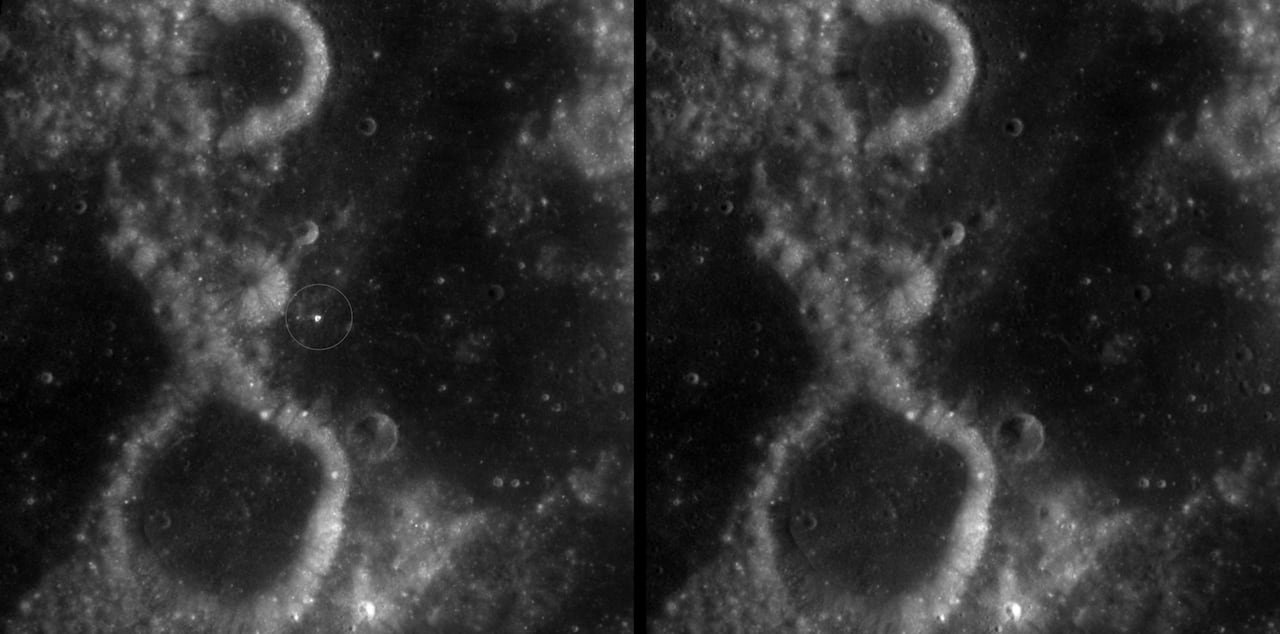
It wasn’t until August 2025 that the LRO’s wide-angle images revealed the crater, with more detailed pictures captured in the following months and confirmation of the discovery earlier this year.
The crater has been named after the late Thomas McGetchin, a former director of Houston’s Lunar and Planetary Institute.
Resembling Gardening
The moon, known for its ancient impact craters, hosts some of the largest craters in the solar system, including one spanning over 2,400 kilometers.
The recent impact altered the lunar surface across more than 100 kilometers, ejecting dust and rocky soil at a higher angle than expected, according to Mark Robinson, the chief scientist for LRO’s cameras at Intuitive Machines. Robinson led one of the studies on this discovery.
-
Spotting the Impact of a SpaceX Rocket Crash on the Moon
-
Study Reveals Moon Astronauts’ Impact on Subsurface Temperatures
Another study noted a seven-kilometer-wide cold region surrounding the new crater, indicating a loosening of the moon’s top layer. Co-author David Paige of the University of California, Los Angeles, compared this process to gardening.
“We now view impacts as a way to cultivate the regolith — disturbing the sediments and bringing subsurface materials to the surface,” Paige commented in a statement. (Regolith refers to the loose, solid material covering bedrock.)