

Canada’s economic expansion came to a halt in August for the second consecutive month, with indications of a possible decline in September, according to data released by Statistics Canada on Friday.
The real gross domestic product remained virtually unchanged for the month, following a period of minimal growth in July.
Economists surveyed by Reuters prior to the report had anticipated a growth rate of 0.2 percent for August.
Wholesale trade and the public sector emerged as significant challenges. In August, wholesale trade dropped by 1.4 percent as most subsectors experienced a downturn. Statistics Canada reported that wholesalers of motor vehicles and parts saw a contraction for the first time in seven months, attributed to a downturn in car manufacturing and a decrease in imported passenger vehicles.
Additionally, public sector activities, which encompass areas such as education, health care, and social assistance, also saw a decline. The drop was largely influenced by a reduction in government public administration activities as preparations for the 2026 census concluded.
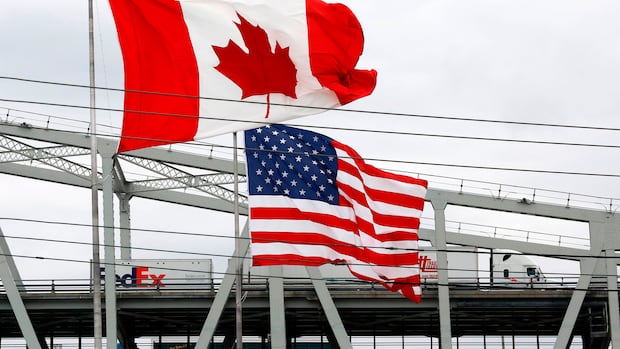
Canada’s economy has shown resilience in the face of punishing U.S. tariffs, but new import bans on a range of Canadian products are creating further drag. Accounting firm Deloitte has lowered its growth forecast for next year by 20 per cent.
The mining, quarrying, and oil and gas sectors remained stagnant, with increased activity in mining and quarrying counterbalanced by a decline in oil and gas output due to maintenance at several facilities.
Retail trade, however, stood out positively, recording a 1.2 percent increase, effectively compensating for the drop in July.
Manufacturing advanced for the fifth time within seven months; the transportation and warehousing sector also experienced growth in August, along with the finance and insurance industry.
Preliminary estimates from Statistics Canada for September indicate a 0.1 percent decrease in real GDP, primarily due to reductions in manufacturing and in mining, quarrying, and oil and gas extraction.
This slowdown in September, combined with stagnant growth in July and August, suggests a recent trend of economic weakness, as noted by BMO’s chief economist Doug Porter.
“The momentum that seemed to be developing during the spring months has dissipated, contradicting the narrative of resilience cited by the Bank of Canada,” Porter remarked in a recent note, referring to the economic activities mentioned just before the central bank raised interest rates earlier this week.
Porter suggested that some of the observed weakness might be “overstated” due to the one-off impact of the census-related decline. However, he pointed out that the ongoing trade conflict and recent job losses provide clear reasons for the economy’s struggle to grow.
Even with stagnant growth in July and August and signs of a downturn in September, the agency’s preliminary estimates still project a 1.3 percent annualized growth in real GDP for the third quarter, marking a decrease from the 3.3 percent growth seen in the second quarter.
However, this is below the two percent growth that the Bank of Canada had forecasted for the third quarter in its monetary policy report issued on Wednesday.
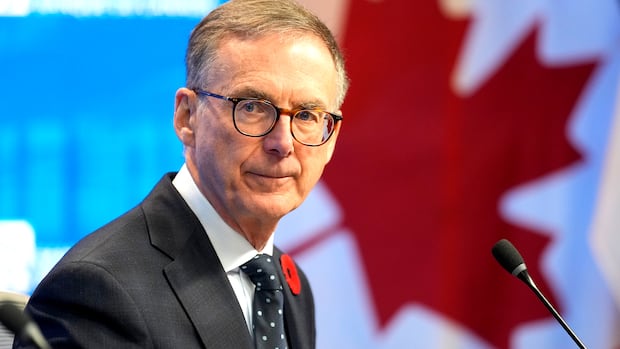
After holding interest rates steady for almost a year, the Bank of Canada has raised the policy rate to 2.5 per cent. Bank governor Tiff Macklem said the hike was necessary to battle inflation driven by rising energy prices.
CIBC economist Andrew Grantham noted that while the bank had already anticipated some slowing in the fourth quarter of 2026, the current data indicates that the economic momentum leading into that period may be weaker than originally expected.
“There is still a significant amount of data to be released before the December meeting,” Grantham mentioned in a note to investors. “However, today’s figures support the notion that the bank may pause on any further interest rate hikes for now.”
This week, the central bank increased its key lending rate by a quarter of a point to 2.5 percent. While some economists speculate this could mark the beginning of a series of rate hikes, others suggest the bank might maintain rates at 2.5 percent while assessing the necessity for additional increases.

