

Researchers in the northern regions are observing a significant rise in Indigenous women engaging in field research, which is motivating a new wave of female academics.
“Over the past two to three years, there has been a remarkable surge of Indigenous women enrolling in master’s and doctoral programs,” remarked Nicole Redvers, an associate professor at Western University and a member of the Deninu Kue First Nation in the Northwest Territories. “It’s truly inspiring to witness.”
Statistics Canada reports that between 2016 and 2021, there was a notable increase in Indigenous women pursuing post-secondary education across Canada, as well as a rise in the percentage of Indigenous women holding a bachelor’s degree or higher, although specific statistics regarding Indigenous women participating in field research in the North are not readily accessible.
Redvers suggests that establishing a centralized university in the North would facilitate better tracking of this data across all territories.
She identifies several contributing factors to the trends she is witnessing: heightened geopolitical interest in the Arctic, new funding opportunities, and, crucially, the growing visibility of female Indigenous researchers — an aspect she noted was “a significant challenge in the past.”
“If you cannot see yourself represented in areas like research, it becomes challenging to think, ‘Perhaps that is a path I would like to take,’” she explained.
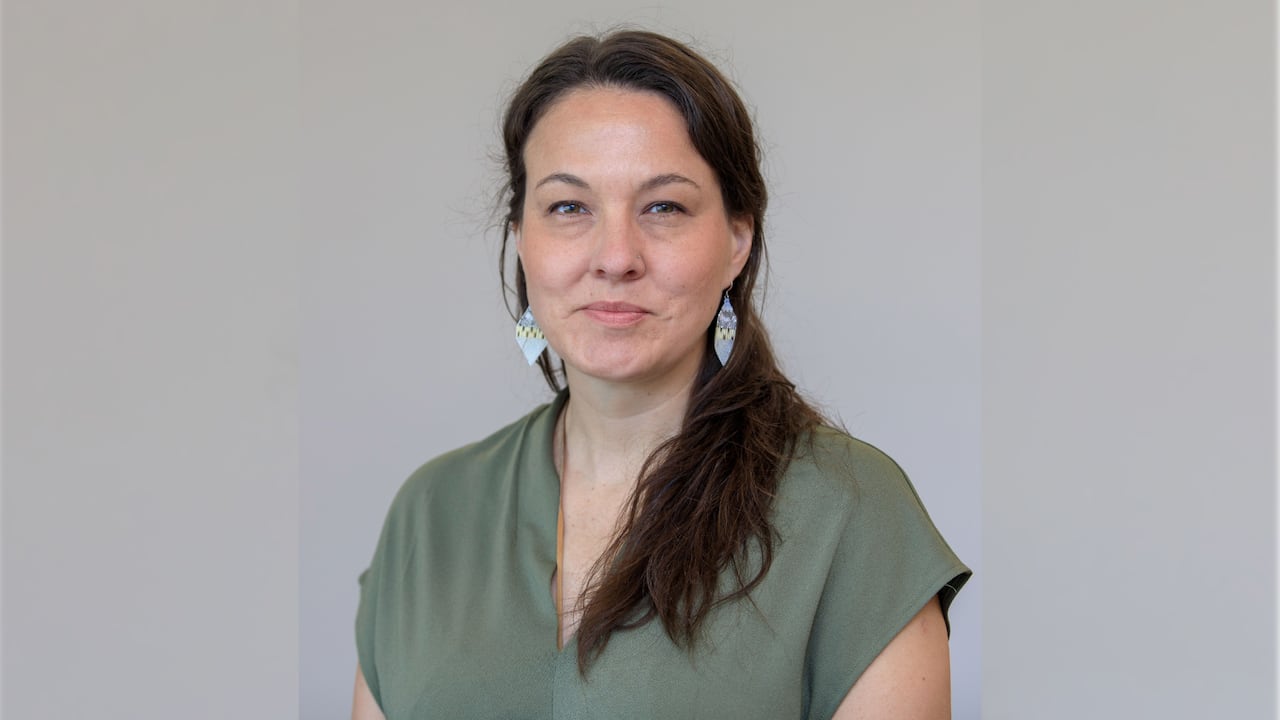
Nicole Redvers, an associate professor at Western University and a member of the Deninu Kue First Nation in the N.W.T., states that the primary catalyst for change is the ongoing advocacy by Indigenous individuals for innovative research methods. (Submitted by Nicole Redvers)
Disparities in education and funding lie at the core of many of the Truth and Reconciliation Commission’s (TRC) 94 Calls to Action. While these initiatives have compelled some academic institutions to confront systemic obstacles historically faced by Indigenous students and researchers, Redvers emphasized that the true impetus for change stems not solely from institutional goodwill, but rather from Indigenous peoples persistently advocating for transformation.
Reconciliation through academia
Ashley Ens, a PhD candidate and member of the Nihtat Gwich’in in the N.W.T., expressed that Indigenous women have always been the custodians of knowledge.
<p“What is evolving is that a greater number of women are affirming the validity of Indigenous methodologies, community knowledge, oral traditions, and their obligations to the community,” she stated.
According to Ens, female Indigenous researchers are redefining academic environments by fostering supportive spaces where women can pursue their degrees without sacrificing their familial and community responsibilities.
Ens shared her own experience, recalling how she balanced motherhood while working towards her PhD.
“I would often bring my child with me to these gatherings. The acceptance in those spaces was remarkable,” she remembered.
However, she added that institutions must take further steps to facilitate change, such as offering more long-term funding for projects led by communities and providing additional support for northern students traveling to universities in the south.

Ashley Ens, a PhD student and member of the Nihtat Gwich’in in the N.W.T., states that female Indigenous researchers are influencing how academic spaces operate. (submitted by Ashley Ens)
“When discussing reconciliation through research, it is not merely about studying Indigenous Peoples or incorporating Indigenous viewpoints into existing projects,” Ens remarked.
“It necessitates a transformation in who formulates the questions, who governs the information, who receives the funding, and who benefits from the outcomes.”
How Indigenous women are changing research
By grounding their work in traditional knowledge and involving community members, northern researchers are fostering trust within their communities, according to Redvers.
“Indigenous communities are growing weary of the traditional research model,” she noted. “This often involves researchers briefly visiting and then departing.”
Laurie-Ann Lines, a senior researcher at the Yellowknife-based Institute for Circumpolar Health Research, expressed her astonishment at the “influx” of Indigenous women pursuing graduate and post-doctoral studies.
“This shift is occurring due to the elders and community members who have collaborated in research and have advocated for our Indigenous research methodologies,” she remarked.
Lines, who belongs to the Yellowknives Dene First Nation, recalled that when she first entered academia in 2015, there were few Indigenous mentors who comprehended both community-based research and Western academic frameworks.
Currently, Lines spearheads the Northwest Territories Network Environments for Indigenous Health Research, a project uniting elders, researchers, community members, and learners in the N.W.T. She believes this development showcases the evolving nature of research in the North.
“Research will no longer solely be about us,” she declared. “It will be conducted alongside us, by us, and for our benefit.”

