

On Wednesday, Iran and its neighboring Arab states were drawn back into conflict, marked by the largest scale of gunfire exchanged between Tehran and Washington since July. U.S. military forces targeted Iran’s southern coastline, while Iran retaliated by launching strikes at American installations throughout the region.
The United States has warned of further significant attacks. In response, Iran accused Washington of striking a wedding celebration, with the Iranian health minister later reporting a total of 18 fatalities and 108 injuries resulting from the latest round of U.S. airstrikes.
Following the renewed airstrikes from the U.S., Asian and European stock markets experienced declines, and oil prices soared to levels not seen since July. This escalation further exacerbated the economic fallout from a worldwide bond market sell-off, as disrupted energy supplies continue to stoke inflation across the globe.
The Central Command of the U.S. military stated that it targeted air defense systems, maritime assets, mine-laying capabilities, and communication sites of the Islamic Revolutionary Guard Corps on Tuesday. Iranian media reported that multiple sites near the Strait of Hormuz were struck, an area where Tehran has threatened to intercept tankers passing without its approval.
Mahmoud, a 38-year-old municipal worker from Sirik County along the strait, described the situation to Reuters via telephone, saying, “Last night felt like the end of the world,” referring to the attacks in the locality where the wedding incident took place.
U.S. President Donald Trump asserted that the U.S. had hit Iran “very hard,” claiming Iran’s response was merely a “love tap.”
Trump informed reporters at the White House, “It was a very heavy attack last night, and we are ready to execute another one whenever we choose.”
Iran claimed to have targeted U.S. interests in Bahrain, Jordan, Kuwait, and Iraq, stating that its objective was to expel U.S. forces from the extensive network of military bases they have established across the Middle East over the years.
According to Iran’s military command, “The American malevolence in the region will encounter more severe, widespread, and destructive reactions, and any nation that collaborates with the aggressive American armed forces must face its perilous repercussions.”
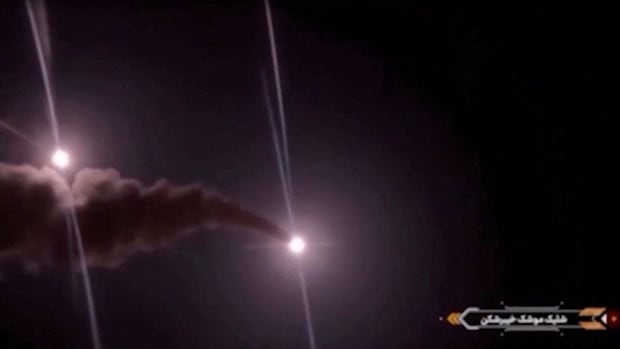
The U.S. launched a fresh round of airstrikes against Iran on Tuesday, following a weekend exchange of fire that broke a month of relative calm in the conflict. Tehran said it responded with missiles and drones on U.S. targets in the region while warning that U.S. attacks would ‘tighten the lock’ on the Strait of Hormuz.
In Kuwait, Iran reported executing a missile and drone assault on the large U.S. Ali Al Salem Air Base, specifically targeting the living quarters of a U.S. commander. Kuwait’s fire service confirmed extinguishing a fire at a residential complex that was hit by a drone.
Qatar, which hosts the largest U.S. airbase in the Gulf region, stated it holds Iran responsible for the attacks and their consequences. Bahrain, home to the regional headquarters of the U.S. Navy, reported that Iranian drones were intercepted and destroyed.
-
Day of attacks by U.S. and Iran marks most serious escalation of conflict in weeks
-
Iran’s Revolutionary Guard retaliates after U.S. bombs targets in Strait of Hormuz
Additionally, Iran indicated that two tankers were damaged by mines while being navigated through the Strait of Hormuz by U.S. personnel.
Despite the Iranian attacks, Washington maintains that it is successfully guiding vessels through the strait. Energy Secretary Chris Wright reported that over 17 million barrels of oil departed on Monday.
Iran has added 11 more ships to its blacklist, bringing the total to 56, according to a government website, meaning these vessels may face fines, confiscation, or detention if they attempt to navigate the strait without Iran’s authorization.
Nevertheless, President Trump reiterated his claim that the strait, which previously handled 20 percent of global oil and liquefied gas shipments before the conflict, remains open for shipping.
In a post on his Truth Social platform, Trump quipped, “Now that we have it under U.S.A. control, should we rename Hormuz Strait to TRUMP STRAIT???”
4 killed during wedding in Iran
Iranians who have endured U.S. strikes over the past six months are concerned that the war could escalate dramatically.
Mahpari, a 28-year-old woman from the southern port city of Bandar Abbas, expressed her anxiety to Reuters over the phone, saying, “It’s very challenging to live like this. We are uncertain when America will strike. My family and I constantly worry about where they will target next.”
Iran reported at least 12 casualties from the recent night of U.S. strikes, including four individuals, among them a four-year-old, who lost their lives while attending a wedding at a residence in Sirik, a town along the strait’s coast.
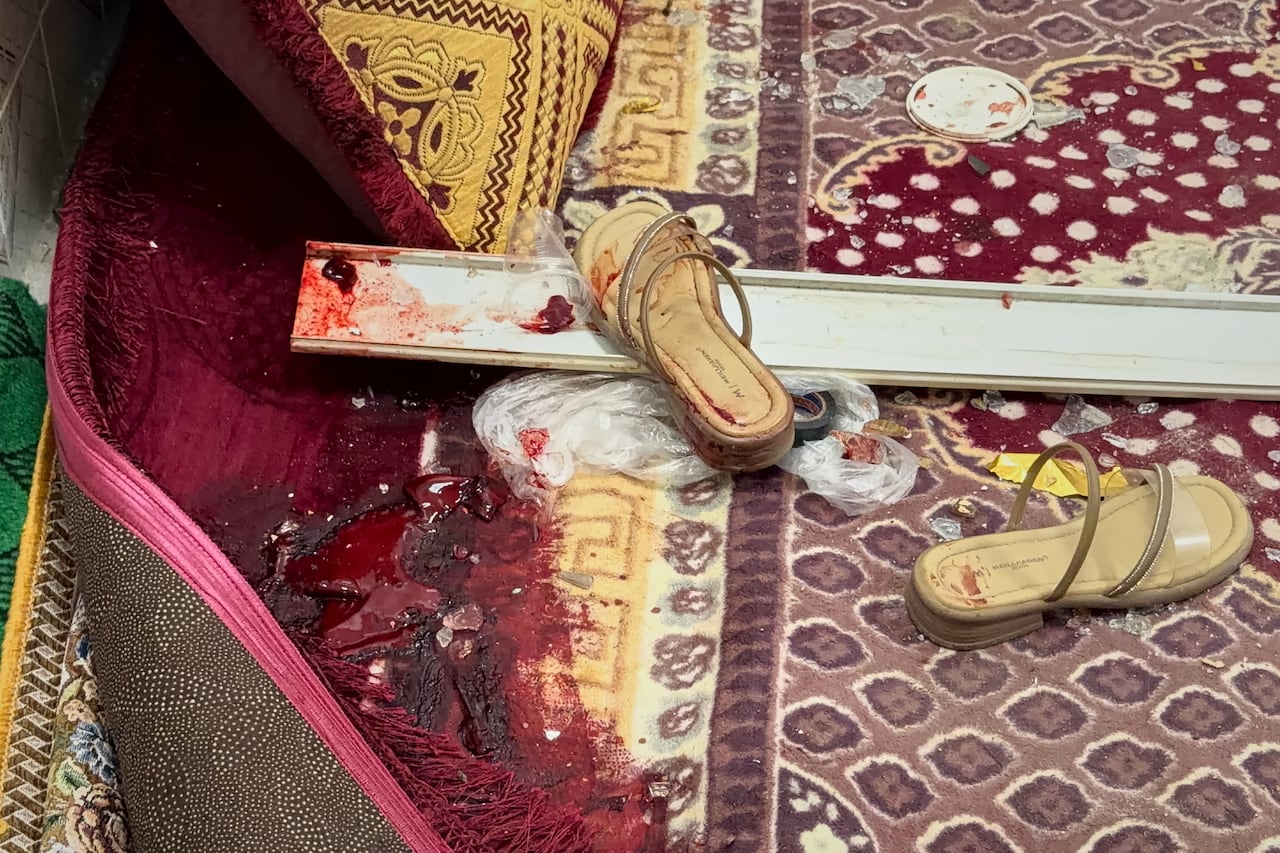
Blood stains are seen next to a pair of sandals on a carpet inside a building that Iranian media said was damaged in a U.S. strike in Kuhestak, southern Iran, early Wednesday. (Morteza Akhoondi/Tasnim News Agency/The Associated Press)
Iranian media reported that as many as 68 individuals sustained injuries in that incident, releasing images of several injured children receiving treatment in hospitals. Iranian officials drew parallels between this incident and a strike on a girls’ school that claimed 160 lives on the war’s first night.
Reuters was unable to independently verify the claims regarding the incident.
U.S. Navy Capt. Tim Hawkins, a spokesperson for Central Command, stated, “We are aware of reports originating from Iranian state media. The U.S. military does not target civilians, unlike the IRGC,” referring to Iran’s Revolutionary Guards.
Video footage captured by Iran’s West Asia News Agency at the alleged site depicted debris scattered across rooms and a courtyard of a home. Abandoned strappy women’s sandals lay on a bloodstained carpet.
Ali Molahi, identified as the bride’s father, remarked, “I am just relieved the casualties weren’t even greater.”
Worst exchange of fire since July
This exchange of fire represents the most severe escalation since July, when Trump abruptly ended two weeks of intense bombing on Iran following military advisors’ warnings that munition supplies were dwindling and meaningful targets were becoming scarce.
Iran’s economy, already battered by war, and its weakened conventional forces have left it in a vulnerable position, while the U.S. has expended much of its air defense munitions and precision long-range missiles.
Despite this, Trump, who has yet to fulfill the objectives he set forth with “Operation Epic Fury” in February — including ending Iran’s nuclear program, stripping it of its ability to threaten neighbors, and creating conditions for the Iranian populace to topple their leaders — reiterated his claims that victory is near.
Trump stated on Tuesday, “I prefer our current position, with almost complete control of the Hormuz Strait and their economy in total collapse.”
Treasury Secretary Scott Bessent indicated that Washington is considering targeting airlines, the maritime sector, and digital assets as part of a strategy to heighten economic pressure on Tehran.
Sources informed Reuters that Trump’s aides are attempting to keep the war low-profile for the time being to avoid backlash in the upcoming congressional elections in November, as polls show that Americans oppose the war by more than a two-to-one margin.
On the other hand, Iran is determined to emerge from the war stronger, seeking the lifting of sanctions, the release of frozen funds, and a stronger hold over the strait to collect fees from vessels that typically transport a fifth of the world’s oil.

