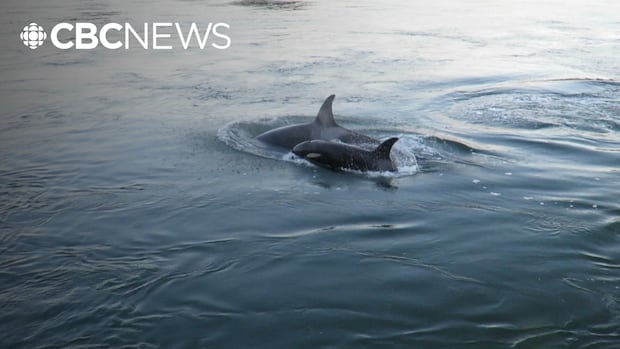

A species in Canada can be classified as endangered and still endure lengthy delays as Ottawa considers whether to offer protection—while its essential habitat continues to evolve.
A recent study revealed that among 288 species evaluated as at risk since 2017, only 17 received a decision from the Governor in Council—the federal cabinet responsible for final listings—within the suggested timeframe. More than half, comprising 153 species, remained overdue and were still waiting as of January 25, 2025.
This includes species such as caribou, beluga whales, and lake sturgeon, all classified as endangered or threatened while they await decisions that could initiate habitat protection measures and recovery strategies.
The researchers attribute the delays to a gap in the Species at Risk Act (SARA). While Ottawa has established recommended timelines for progressing assessments, there is no legally mandated deadline for a vital phase of the procedure.
The study does not specify the reasons for these delays. Critics argue that this gap permits governments to delay making difficult decisions that balance conservation with economic interests.
Peter Thompson, a postdoctoral biology researcher at Simon Fraser University in Burnaby, B.C., and the study’s lead author, indicated that the government frequently fails to adhere to its self-imposed timelines.
“The government suggested a timeframe of one to two years, and they consistently miss that target,” he stated.
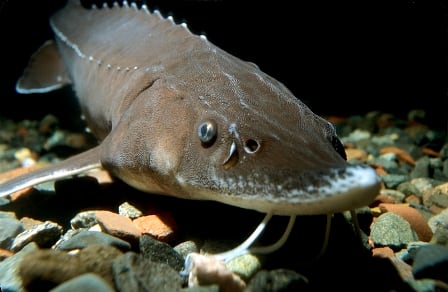
A lake sturgeon rests along the riverbed. The Saskatchewan-Nelson River population was assessed as endangered in 2017 and has spent years awaiting a federal listing decision. (Eric Engbretson Underwater Photography/WWF-Canada)
The lake sturgeon population in the Saskatchewan-Nelson River serves as a case in point. This ancient fish can reach lengths of up to three meters and can live for over a century.
COSEWIC, the independent scientific organization evaluating wildlife, classified this population as endangered in 2017 after observing a decline of around 90 percent since the 1960s. The study highlights that the population missed the recommended federal deadline for advancing its assessment on January 18, 2020, and remained in limbo five years later.
Thompson emphasized the significance of the situation, noting that dams and other hydroelectric projects have fragmented waterways, hindering the fish’s ability to migrate between essential habitats.
“These barriers prevent species from accessing the areas they need for survival,” he remarked.
What protection is delayed
COSEWIC’s scientific evaluations do not automatically alter a species’ legal status under SARA; that requires formal listing or reclassification by the federal government.
According to the Species at Risk Act, listing an endangered or threatened species can lead to prohibitions against activities such as killing, harming, harassing, capturing, or taking them. Additionally, the law mandates a recovery plan that identifies critical habitats wherever feasible. Once these habitats are identified, SARA includes provisions for their protection.
These protections are crucial for aquatic species, as the core prohibitions of SARA apply to them nationwide, while for most land species, they are generally restricted to federal territories.

Drew Yewchuk, a lawyer and doctoral researcher at UBC’s Peter A. Allard School of Law, claims that a gap in the Species at Risk Act can enable governments to delay difficult decisions regarding species protection. (Submitted by Drew Yewchuk)
Drew Yewchuk, an attorney and doctoral student at the University of British Columbia’s Peter A. Allard School of Law, who was not involved in the study, stated that habitat protection is one of the most significant tools provided by SARA.
“Without habitat, these animals cannot survive,” he remarked.
SARA mandates that the environment minister must issue a response within 90 days after receiving a COSEWIC assessment. The Governor in Council then has nine months to make a decision following that assessment. However, there is no specific deadline for the minister to deliver the assessment to the Governor in Council.
“It could potentially remain in limbo indefinitely since there is no timeline for that step,” Yewchuk explained.
Aquatic species were notably affected in the study. By the January 2025 deadline, none of the 15 marine mammals or 49 marine fish evaluated during the study window had been forwarded to the Governor in Council. Additionally, ninety percent of terrestrial mammals and seventy-nine percent of freshwater fish were still pending.

Spawning sockeye salmon are observed making their way up the Adams River in Roderick Haig-Brown Provincial Park near Chase, B.C., in October 2011. Pacific salmon were among the aquatic species disproportionately impacted by the federal listing delays identified in the study. (Jonathan Hayward/The Canadian Press)
More than biodiversity
Andrea Reid, a citizen of the Nisga’a Nation and Canada Research Chair in Indigenous Fisheries Science at the University of British Columbia, emphasized that the implications extend beyond the mere loss of individual species.
“These fish are deeply intertwined with our identity,” Reid stated. “It’s not solely about food; it encompasses traditions, culture, and language systems.”
The study identified 38 Pacific salmon populations experiencing delays while the government continued to gather or analyze information. The most frequent reason for delays cited by researchers was information collection, followed by analysis. In 20 percent of cases, the government did not provide a specific explanation for the delay.

Andrea Reid, a citizen of the Nisga’a Nation and Canada Research Chair in Indigenous Fisheries Science at the University of British Columbia, argues that Indigenous consultation should be integrated into the species-listing process rather than viewed as a cause for delays. (Talon Gillis)
Indigenous consultation was also mentioned in some instances, but Reid warned against viewing it as a hindrance.
“It undoubtedly requires time, but that should be an integral part of the planned process,” she remarked.
Reid noted that listing can be complex for Indigenous communities, as restrictions may raise concerns about continued access to species that are culturally significant.
“While we need to ensure species are adequately protected, we must also safeguard our cultural connections,” she stated.
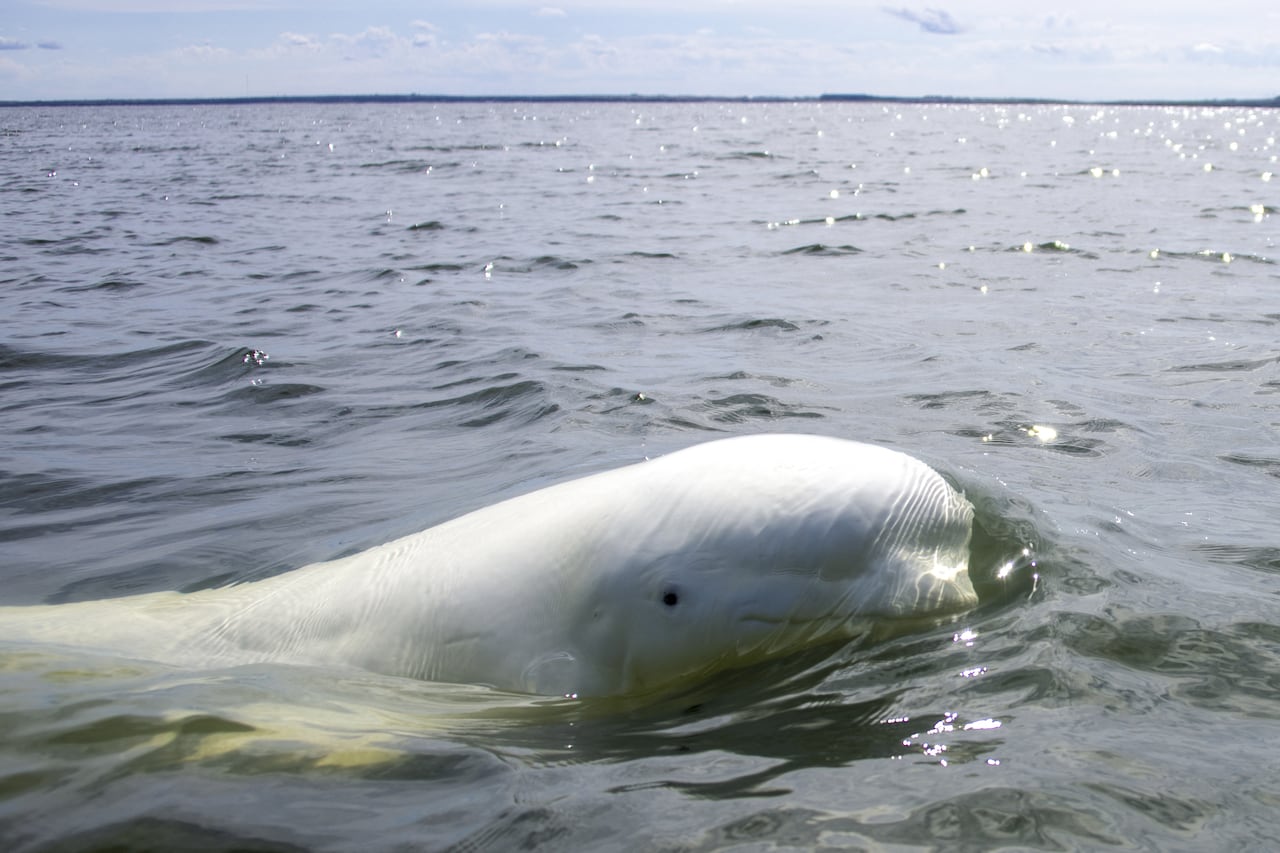
A beluga whale is spotted in Hudson Bay near Churchill, Manitoba, in August 2022. Several beluga populations were among the marine mammals still awaiting federal listing decisions as of January 2025, years after their last assessments by COSEWIC. (Olivier Morin/AFP/Getty Images)
Few answers for long waits
Thompson expressed that the lack of clear or adequate explanations has made it challenging for researchers to ascertain why numerous species are experiencing delays.
“There appears to be, at the very least, a lack of transparency regarding the situation,” he commented.
Yewchuk took this further, contending that the existing gap allows governments to sidestep publicly addressing the difficult choices between conservation and competing economic interests.
“It alleviates the pressure to make tough decisions regarding species conservation, enabling them to let the matter fade into obscurity,” he explained.
Environment and Climate Change Canada acknowledged the gap highlighted in the study. “SARA does not stipulate a statutory timeline for the minister to submit a recommendation to the Governor in Council,” the department stated in a message to CBC News.
It noted that 76 terrestrial species assessed since 2017 have missed the government’s recommended timelines as of January 25, 2025, and that some cases necessitate additional time for input from the public, industry, and Indigenous communities.
Fisheries and Oceans Canada remarked that aquatic listings may be more intricate. “For aquatic species, listing can initiate protections across all waters where the species exists, as these species fall under federal jurisdiction,” the department articulated in a statement. Since the study’s cutoff in January 2025, the Governor in Council has received assessments for 15 aquatic species, commencing the nine-month period for listing decisions. Recently, the government suggested adding or reclassifying all 15 under SARA.
Thompson pointed out that the fundamental issue lies in the speed of the process.
“We must enhance the efficiency of the system to secure the necessary protections for these species, or at the very least, arrive at quicker decisions.”