

Once roaming in vast numbers across North America, bison were nearly driven to extinction, characterized by their striking stampedes of rust and auburn fur.
Recent studies analyzing their DNA are unveiling insights into how the near extinction and the gradual, fragmented resurgence of herds in their former territories have affected this remarkable species.
The research, featured in the journal Science, involved sequencing 160 bison genomes, constructing a genetic timeline that spans 20,000 years.
Led by paleogeneticist Jonas Oppenheimer, the study brought together nearly 40 scientists, including many from Canada, and was conducted at the Paleogenomics Lab at the University of California, Santa Cruz, which focuses on ancient DNA studies derived from fossil remains.
Researchers aim for these discoveries to inform contemporary conservation strategies, believing that by understanding the complex genetic history of bison, they can enhance the animals’ prospects for survival in the future.
Once interconnected, bison populations are now confined to carefully managed herds. The study revealed that the fragmentation of these modern groups poses challenges to their resilience.
“Until very recently, bison across almost all of North America were genetically similar, regardless of where they were found,” Oppenheimer stated in a CBC News interview.
“Today, however, that has changed, with distinct differences emerging based on herd origins.”
“This situation reflects the significant bottleneck they faced when humans nearly led them to extinction.”
Ancient and Contemporary
By sequencing the genomes, which are comprehensive sets of genetic instructions essential for life, researchers mapped the biological diversity shifts of the species over time.
They collected DNA from both ancient bison remains, dating back thousands of years to about 100 years old, and from current living herds.
Scientists retrieved DNA from managed herds located throughout Canada and the United States, including those in Elk Island National Park and Wood Buffalo National Park in Alberta, as well as from wild herds in Ronald Lake and Wabasca in northern Alberta.
The ancient DNA was sourced from collections across the U.S., Canada, and Russia, involving specimens from Parks Canada and the Royal Alberta Museum (RAM) in Edmonton.
In total, researchers sequenced 115 ancient bison genomes alongside 45 modern ones, merging this data with 52 genomes previously sequenced, resulting in the most extensive genetic map of the species thus far.
Chris Jass, a curator of quaternary (ice age) paleontology at the RAM, expressed satisfaction in seeing ancient fossils play a role in contemporary herd management, labeling the study a “shining example” of collaboration.
“This is crucial for the reason we maintain these collections and preserve them for extended periods, as emerging techniques enable us to explore evolutionary and biological questions in innovative ways.”
Utilizing these samples, researchers tracked how the dynamics of bison populations, including their structure, diversity, and genetics, were influenced by the significant declines they underwent.
The Massacre
Prior to colonization, ancient bison traversed the continent freely for millennia, breeding and sustaining a robust, largely uniform gene pool.
In the late 1800s, their numbers plummeted due to extensive hunting and government initiatives that decimated millions of bison from the plains.
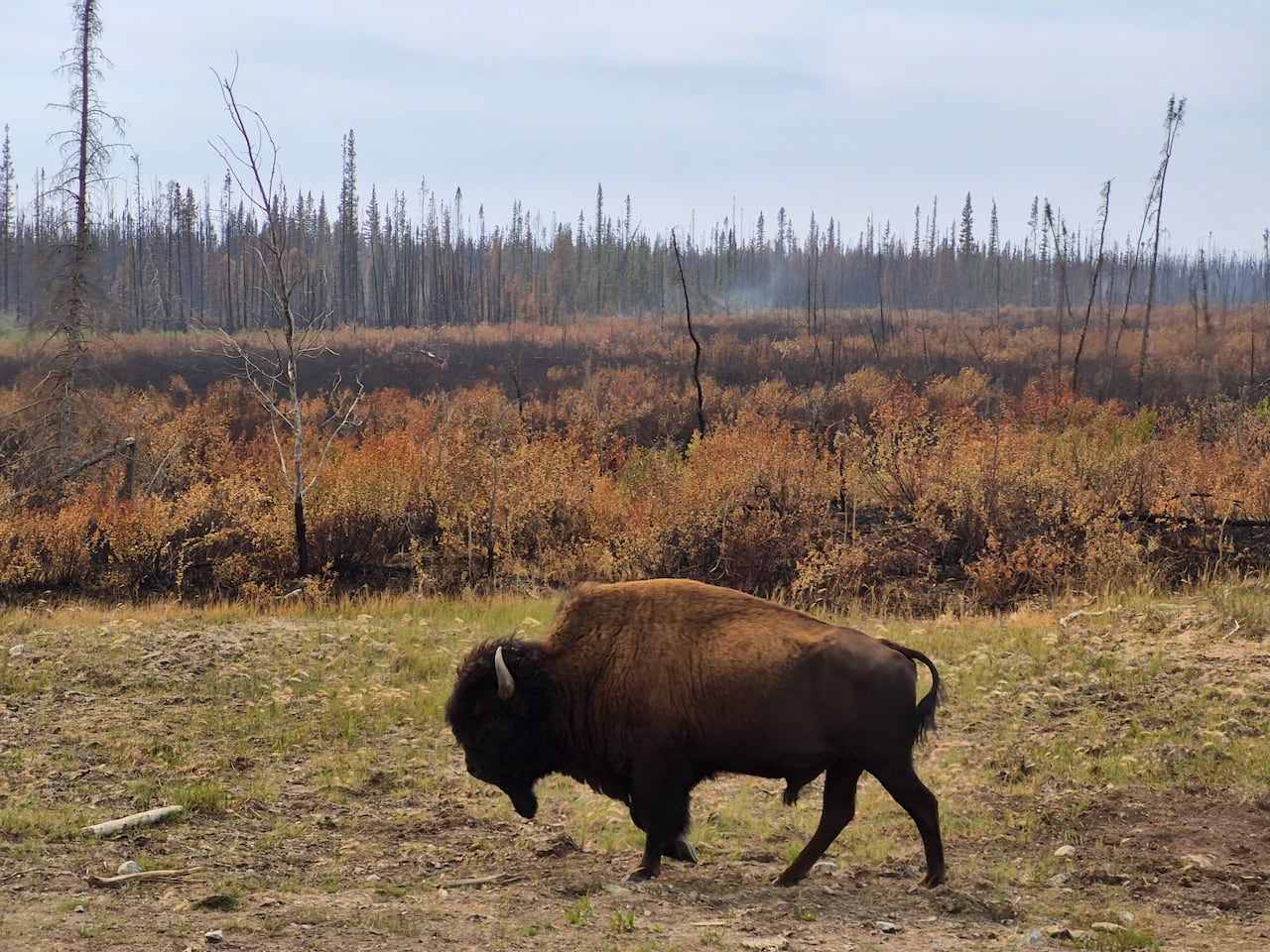
A wood bison bull walks near a recently burned area in Mackenzie, Northwest Territories. (Greg Wilson/Parks Canada)
Despite the drastic reduction, genetic diversity initially remained intact as the populations had been widespread and uniform until then, Oppenheimer noted.
The findings revealed that a surprising level of diversity has persisted but is now confined within separate herds that are isolated from each other. The modern genetic differentiation has mostly survived by mere chance, embedded in the DNA of each herd.
“We had expected significant loss,” Oppenheimer remarked. “Overall, it appears that not much genetic diversity has been lost.
“However, each specific herd now possesses its own unique genetic signature due to that relatively recent history.”
A ‘Significant Divide’
The study concluded that, contrary to common assumptions, many bison do not have cattle lineage. When it does exist, it typically accounts for less than one percent of their genetic makeup.
Additionally, the research highlighted the distinct separation between the two species, indicating that wood bison and plains bison are considerably different.
Wood bison, which are larger and heavier with a distinctive humped silhouette, are suited to the northern boreal forests and aspen parklands, while smaller plains bison traditionally inhabited the open grasslands and prairies of the Great Plains.
The study indicates that the divergence between these two types occurred approximately 3,000 years ago as shifting climates expanded boreal forests.
Subsequent human actions caused intermixing between the subspecies, notably when plains bison were introduced to Wood Buffalo National Park in the 1920s.
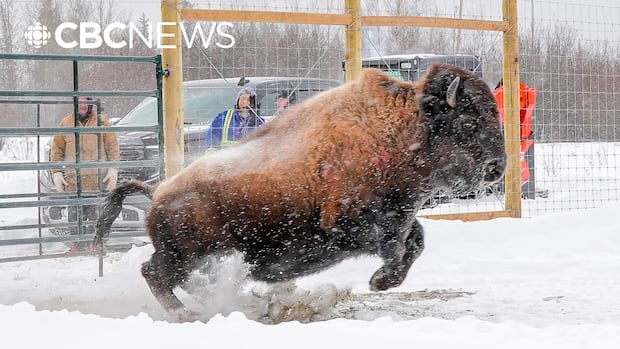
The Willow Lake Métis Nation has brought 20 bison back to its land, marking the first time in 100 years that the animals have roamed the area. As CBC’s Jamie Malbeuf reports, It’s a move toward food sovereignty for the nation.
Greg Wilson, a bison geneticist and wildlife ecologist with Parks Canada, emphasized that these findings are crucial for effective herd management, indicating that the species are distinct and should be managed separately.
While no truly pure wood bison exist anymore, he advocates for the preservation of this subspecies as distinct.
“Even though this split was relatively recent, it represents a significant divide, underscoring the importance of maintaining that distinction,” he stated.
‘Increased Matchmaking’
Wilson collaborated on the genome study with his team at Bison Integrated Genomics, a Genome Canada-backed initiative aimed at conserving the species through DNA preservation and establishing the world’s first bison genome biobank.
He noted that the study’s findings provide conservationists with a valuable tool to reconnect isolated herds and initiate the process of reversing the genetic consequences of population decline.
“Increased matchmaking” among Canada’s isolated herds could help mitigate inbreeding risks and prevent further loss of diversity, Wilson suggested.
Oppenheimer mentioned that ancient genomes establish benchmarks for herd managers to safely restore gene flow across habitats, aiding bison that are now predominantly held in captivity to return to diverse wilderness environments.
“They uphold that genetic diversity, but there is a risk that various segments of it may be lost if herds remain isolated.”
More top stories

