

On Thursday, Prime Minister Mark Carney’s administration revealed a budget exceeding $150 billion in expenditures, outlined in a comprehensive document spanning over 500 pages. As Canadians strive to understand the implications of this budget, here are responses to several inquiries submitted by CBC’s audience.
- If you have questions regarding the federal budget, feel free to email ask@cbc.ca.
What will happen with the merger of RRSPs and RRIFs, and when is it set to commence?
The government intends to integrate Registered Retirement Savings Plans (RRSPs) with Registered Retirement Income Funds (RRIFs). Presently, Canadian citizens must cease contributions to their RRSPs by the end of the year in which they turn 71, converting them into RRIFs and initiating withdrawals.
The proposed “RRSP-for-life” initiative would eliminate the necessity for this transition.
According to the budget, specific details are still being finalized; however, Canadians aged 71 and older will still need to make minimum withdrawals. The government is also exploring whether a spouse or common-law partner could maintain the RRSP after death and if current “rollover” guidelines could be substituted with direct tax-free transfers.
These adjustments will take some time to implement since they necessitate modifications to both federal and provincial legislation. Canadians can express their opinions on the proposal in writing to the Department of Finance by emailing RRSP-consultation-REER@fin.gc.ca by January 8, 2027.
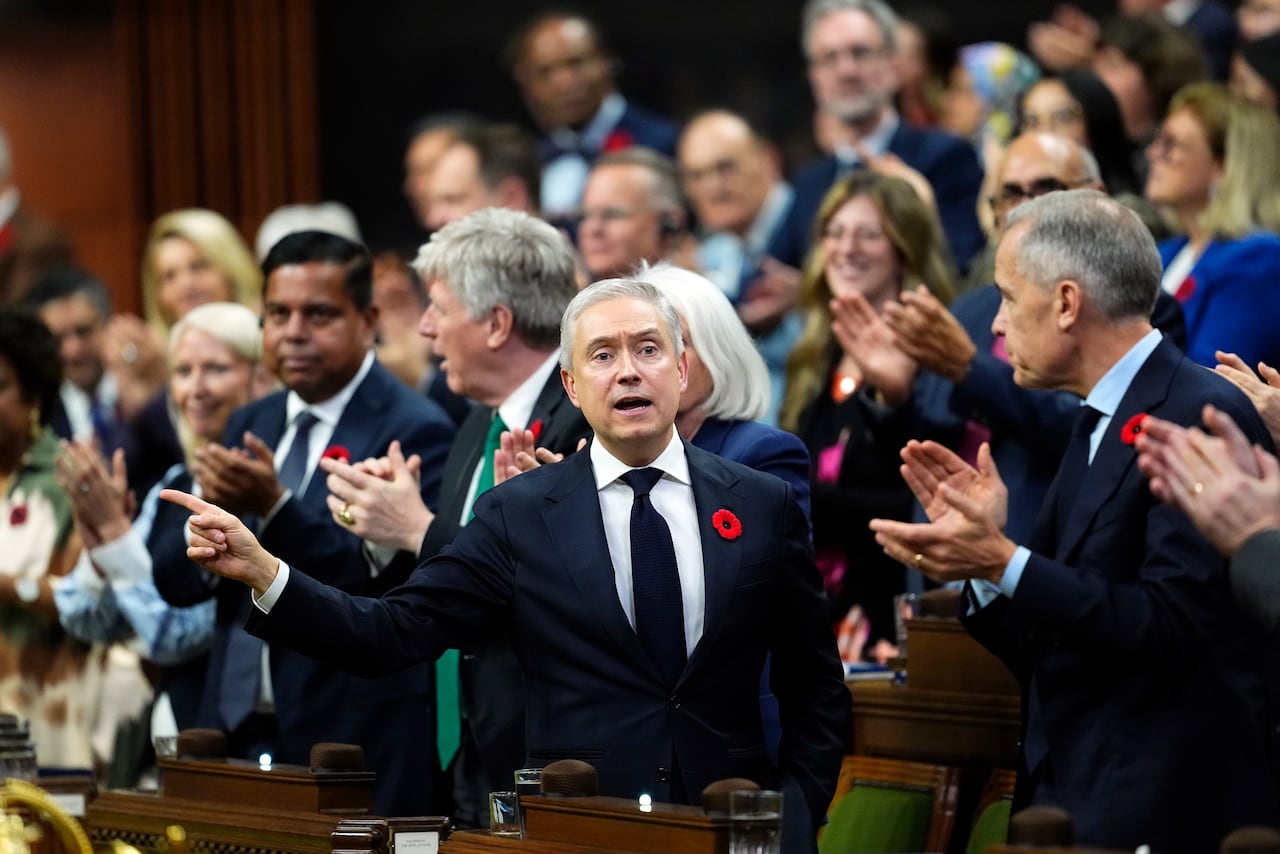
Finance Minister François-Philippe Champagne delivers the federal budget speech in the House of Commons on Parliament Hill in Ottawa on Thursday. (Justin Tang/The Canadian Press)
What is the Canada Housing Benefit?
The budget extends the Canada Housing Benefit, which provides direct monthly rental assistance to individuals with low incomes. This 10-year extension begins with an allocation of $1.7 billion over the first three years, starting in 2028-29, and will rise to $3.9 billion in subsequent years.
This benefit is co-financed with each province and territory, meaning the regulations vary based on your location.

An aerial view of a residential neighbourhood in Vancouver on Tuesday. (Darryl Dyck/The Canadian Press)
What does the new tax credit for business income from ‘creative artistic works’ entail?
Details are not yet available.
The federal administration has indicated that it will engage with Canadians and the cultural sector regarding the Canada Creative Credit, providing more information in the spring economic update of 2027.
Currently available information suggests that it will likely take the form of a non-refundable personal income tax credit, which, when combined with an individual’s basic personal amount of tax-exempt earnings, could cover up to $45,000.
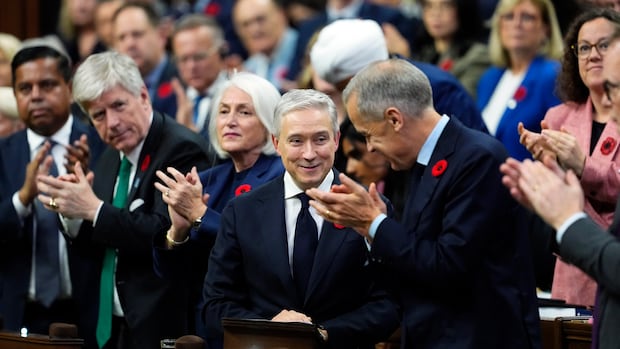
Thursday’s federal budget includes a number of measures aimed at making life more affordable for Canadians. More low-income workers will get benefit payments to help them make ends meet. Those who make a minimum of $3,000 annually get a refundable tax credit under the Canada Workers Benefit, but that threshold is being lowered to $500 for all workers.
Are heat pumps included in the budget?
Yes. As previously announced on October 8, the federal government is initiating a $2-billion rebate program aimed at assisting homeowners in Canada to reduce their annual heating expenses while decreasing emissions through the installation of heat pumps in their residences.
This funding will offer rebates to approximately 820,000 homeowners over the next eight years, allowing them to save an average of $1,400 annually on their heating costs when they upgrade existing heat pumps or heating systems.
What provisions are there for seniors …
The budget outlines around a dozen initiatives that it claims will benefit “primarily seniors or the baby boomer generation.” These include simplifying the process to claim tax credits for home accessibility renovations; “modernizing” Canada Post; exempting devices specifically designed for cancer treatment using alternating electric field therapy from GST/HST; and implementing a new national anti-fraud strategy.
The Bloc Québécois criticized the budget for not doing enough to support seniors, especially concerning healthcare.
“It is the individuals, the seniors, the ill who will bear the consequences,” stated Jean-Denis Garon, the Bloc’s finance critic.

The federal government released its 2026 budget, sparking pushback from the Bloc Québécois over federal encroachment on provincial jurisdictions and a lack of unconditional funding for health care and seniors. Power & Politics hears from Bloc Québécois finance critic Jean-Denis Garon.
… and youth …
The government asserts that nearly 30 measures in the budget will positively impact “primarily youth, children, and/or future generations.”
These initiatives include revitalizing recreational facilities and hockey rinks; establishing the new Digital Safety and Data Protection Commission of Canada to uphold the Safe Social Media Act; and funding the Canadian Centre for Child Protection.
Conservative Leader Pierre Poilievre remarked on Friday that youth are in urgent need of homes and jobs, indicating that Carney’s approach reflects a disconnect from reality due to his spending and immigration policies.
… and for grocery shoppers …
The budget enhances the Canada Groceries and Essentials Benefit, an existing program that provides quarterly payments to individuals with low and moderate incomes.
The boost raises payments by 50 percent for the 2026-27 benefit year, with a standalone payment to be issued early next year. The increase could amount to up to $339 for a single individual without children and up to $679 for a couple with two children.
The government estimates this totals $4.1 billion in additional assistance for over 12 million individuals.
-
From groceries to tax credits, how much is in the federal budget for your wallet?
-
Maple Leaf Foods plans to raise prices again early next year, CEO says in earnings call
… and for small businesses?
The federal budget focuses on fostering business growth through a range of tax incentives and measures aimed at encouraging private-sector investments. However, some business leaders and organizations believe the budget does not adequately address the challenges faced by small enterprises.
“While there’s significant tax deductions and emphasis on large projects, my impression is that this is a hugely disappointing budget for small business owners,” remarked Dan Kelly, president and CEO of the Canadian Federation of Independent Business.
The budget improves the small business rollover of taxes when capital gains are reinvested in other Canadian small businesses.
“If you sell your enterprise and reinvest those funds into a new one, you won’t incur immediate capital gains taxes,” Kelly explained. “This already exists, but they’re enhancing its flexibility.”

At Issue this week: Mark Carney’s second budget lays out billions to build Canada’s sovereignty and tackle the affordability crisis, but will it work? And what does the Democratic Blue-nami mean for Canada-U.S. trade talks?
In terms of entrepreneurship, the government announced the Canada Growth Incentive, aimed at prompting investors and business owners to reinvest capital gains into Canadian companies.
Furthermore, the budget introduced a $930-million expansion of the Scientific Research and Experimental Development tax incentive program to assist businesses in developing and bringing new products and technologies to market.
For self-employed individuals, Ottawa intends to streamline tax installments by allowing a single annual payment instead of quarterly payments.
“All of these elements collectively support growth and investment in Canada over the long term,” said Randall Bartlett, deputy chief economist at Desjardins Group.
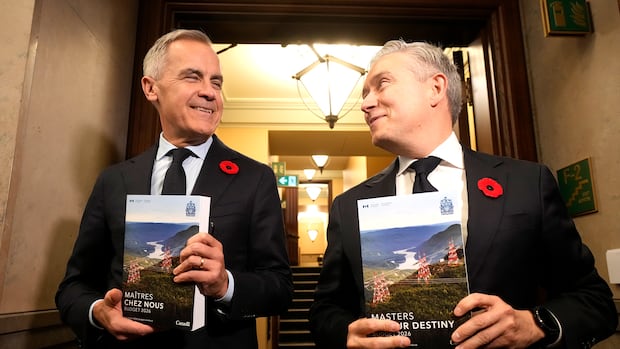
The Carney government’s second budget lays out over $150 billion in spending to attract investment, accelerate nation-building projects, boost housing and tackle the affordability crisis. The NDP says it favours the rich, while Conservatives call it a ‘credit card budget Canadians can’t afford.’
What are the implications of the budget’s cost on national debt?
The budget indicates that financing Canada’s approximately $1.3-trillion national debt will rise significantly, escalating from $60.2 billion in 2026-27 to $85.5 billion in 2030-31.
Sahir Khan, executive vice-president at the Institute of Fiscal Studies and Democracy, noted that the government’s fiscal sustainability remains intact. With Canada’s excellent credit rating, relatively robust GDP growth, and strong balance sheet, he remarked, “compared to others, we are in a very strong position.”
Carney anticipates that the considerable public investment outlined in the budget will transform the economy before the debt servicing costs reach 12.5 percent of government expenditures, increasing from approximately 10 percent currently.
The Opposition, however, is not in agreement.

Asked by the CBC how long Canadians should give the Liberal government to demonstrate results from their plan to build economic growth, Conservative Leader Pierre Poilievre says ‘the time is up.’
Poilievre argued that the Liberals should have titled the budget “mastered by debt,” asserting that their plan will exacerbate the costs of necessities and increase the burden on Canadians. Adam Chambers, Conservative shadow critic for innovation, science, and industry, expressed concern that the budget relies on no significant global disruptions affecting the economy in the interim.
“If the government’s assumptions are incorrect, the country’s financial stability could deteriorate rapidly,” he cautioned.

