


Throughout the arid stretches of the African savannah, elephants are redefining the concept of life after death.
This assertion is based on a recent study conducted by a global team of scientists who scrutinized elephant carcass sites in South Africa’s Kruger National Park.
These majestic grey mammals, often referred to as “ecosystem engineers”, are recognized for their ability to transform the savannah while alive by digging waterholes, uprooting trees, and consuming vast amounts of flora. This aspect was already established by researchers.
“What we were uncertain about was whether the significant impacts they have while alive could persist even after death,” stated ecologist Courtney Reed, the principal author of the study, during an interview with As It Happens guest host Dave Seglins.
“Their remains are rich in nutrients, containing large amounts of carbon, nitrogen, and phosphorus, and we aimed to determine if the nutrients from these carcasses could maintain a role in the ecosystem.”
The results were published on Monday in the Proceedings of the National Academy of Sciences of the United States of America. Reed, currently affiliated with Princeton University, carried out the study as a post-doctoral researcher at the University of California Santa Barbara.
Cycle of renewal
By analyzing soil chemistry, biodiversity, and animal grazing patterns around large elephant carcasses, the team discovered that decomposition released “enormous pools of nutrients” into the soil. This process fostered microbial growth and facilitated the development of nutrient-rich plants, which drew herbivores to the area long after the elephant remains had disappeared.
The researchers noted that the decomposition effects endure for over seven years following the death of elephants.
However, this surge of regrowth and biological activity is not immediate. Initially, the high nutrient concentration from the carcasses can harm surrounding vegetation, creating extensive bare areas or “cold spots” in biodiversity, according to Reed.
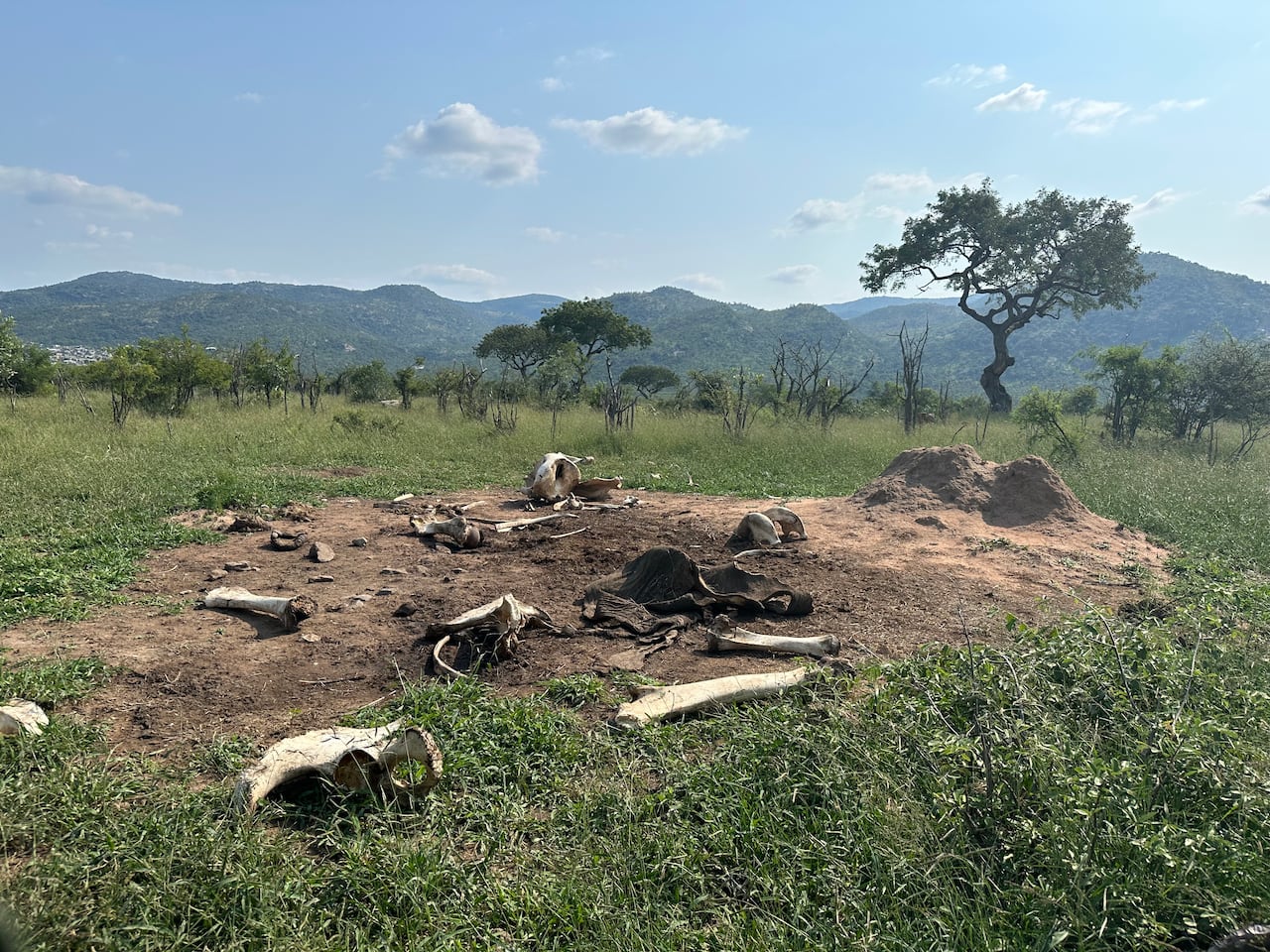
The research indicated that the elevated nutrient levels in elephant carcasses initially led to the destruction of vegetation in the decomposition area, resulting in extensive bare patches or ‘cold spots’ in biodiversity. (Submitted by Courtney Reed)
“An excess of a beneficial substance can sometimes have adverse effects,” she noted. “The massive influx of nitrogen, often as ammonium, can be toxic to plants in high concentrations.”
In time, however, Reed emphasizes that the ecosystem starts to rebound as the surplus ammonium diminishes, with bacteria converting some into nitrate, a nitrogen form that is easier for plants to utilize.
Reed mentions that the regrowth is particularly nitrogen-rich, providing a crucial protein source for herbivores.
“This leads to herbivores such as zebras, buffalo, and rhinos arriving and selectively grazing on these nitrogen-rich grasses,” she explained. “As a result, there is a significant increase in herbivore activity that persists for years following the elephants’ demise.”
Moreover, the advantages extend further. The study found that grazing animals continue to frequent these carcass locations years later, further enhancing the soil through their waste.
For Reed, this cycle of renewal represents a crucial insight from the study: the potential for positive feedback loops that can continue to influence the environment long after an elephant has passed away.
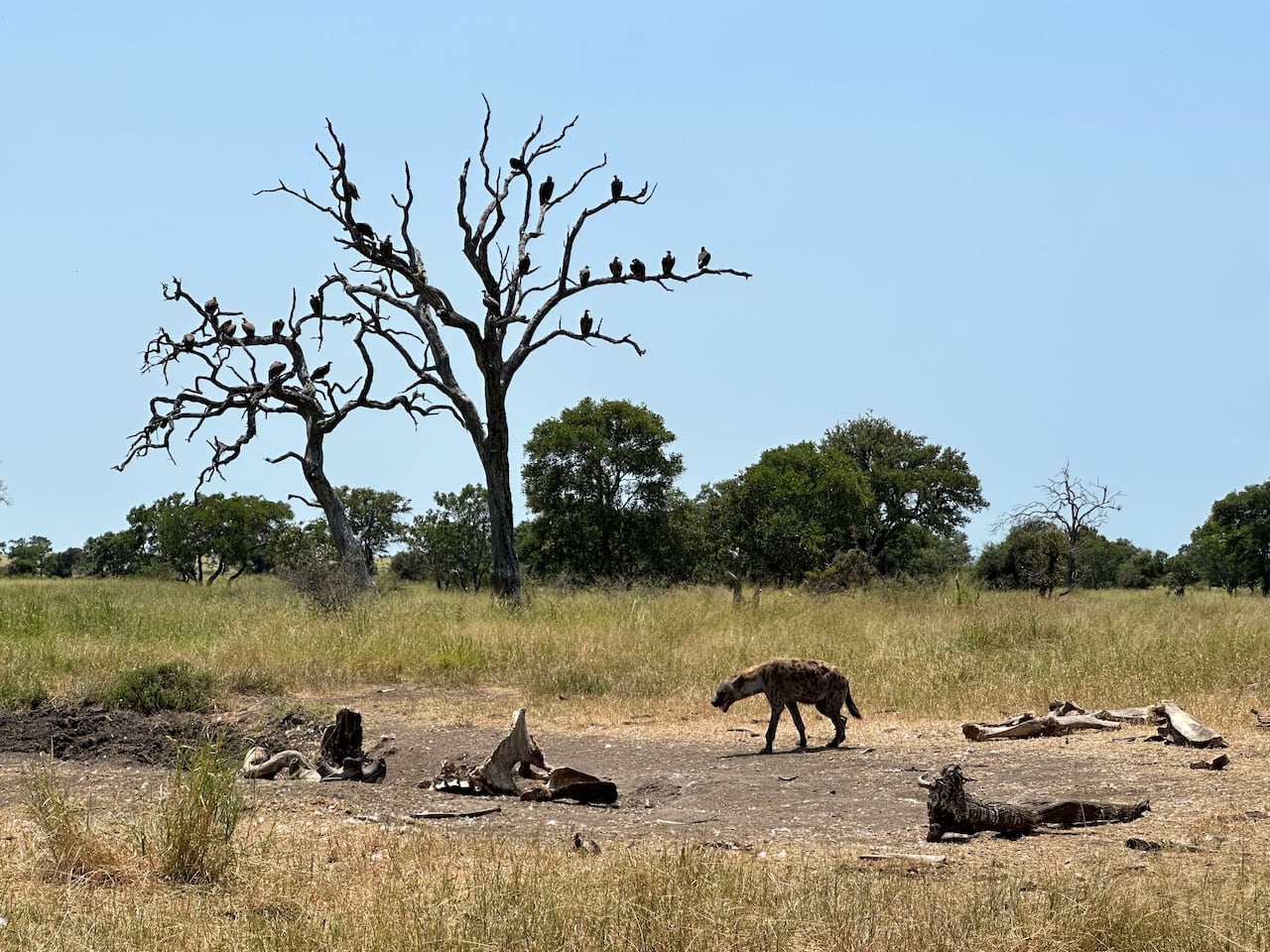
Researchers discovered that grazing animals and scavengers continue to visit the carcass site years later, which further enriches the soil through their waste. (Submitted by Courtney Reed)
However, the ecological impact of an elephant carcass may not always be beneficial in every environment, as suggested by an expert not involved in the study.
Chase LaDue, an elephant ecologist and research curator at the Oklahoma City Zoo, commented that the study’s results underscore the fragile balance required within an ecosystem.
In the African savannah, where natural disturbances contribute to biodiversity, an elephant carcass can sustain the ecosystem. However, if human encroachment has reduced the habitat, these carcasses may disrupt the ecological equilibrium.
“If numerous elephants die in a confined area, it can adversely affect the biodiversity that cannot redistribute itself as it would in a more intact and expansive landscape,” LaDue explained.
“This region of southern Africa has a greater number of elephants than the environment can sustain, which may further contribute to negative consequences for the landscape already constrained by human activities.”

