

On a balmy August afternoon in the serene eastern German town of Quedlinburg, a large crowd assembled to listen to the insights of a renowned far-right figure regarding the nation’s future.
Many attendees arrived on their Simson motorcycles, which have become emblematic of the Alternative for Germany (AfD) party, to meet Ulrich Siegmund, the AfD’s nominee for the leadership of the eastern state of Saxony-Anhalt.
The party is experiencing a surge in popularity in opinion polls, and in an upcoming regional election on Sunday, it could become the first far-right group to gain state authority in Germany since World War II.
Analysts indicate that the AfD could obtain considerable political influence over state services, particularly in education, where it aims to implement policies like establishing separate classrooms for refugees, fostering relations with Russia through student exchanges, and promoting a nationalistic narrative that downplays Germany’s Nazi history.
“I believe [Siegmund] expresses what we feel deeply,” remarked Luca Stemmler, 17, during the gathering in Quedlinburg.
“He’s a role model for me.”

Luca Stemmler, 17, at an AfD rally in Quedlinburg. (Malte Broyer/CBC)
Opposite the motorcycle event, counter-protesters waved rainbow flags and sang All You Need Is Love by The Beatles — a display of unity against a party some fear may threaten fundamental human rights and alter key components of Germany’s postwar democratic system.
“I believe this could have ripple effects across Germany, throughout the European Union, and even on a global scale,” stated Marcus Böick, a historian from the University of Cambridge hailing from Saxony-Anhalt.
“Once they gain power, it becomes incredibly difficult to remove them.”
The AfD’s path to state power
Germany’s leading political parties have adopted a strategy known as “the firewall,” which aims to prevent collaboration with extremist parties to protect the nation’s postwar democracy. If polling numbers translate into actual votes — a possibility that experts acknowledge is uncertain — the other parties might find it challenging to exclude the AfD from the state government.
In Saxony-Anhalt, the AfD currently leads in opinion polls with 42 percent, according to Infratest-Dimap, a German election research organization that surveyed 1,511 eligible voters online and via phone between August 24 and 25.
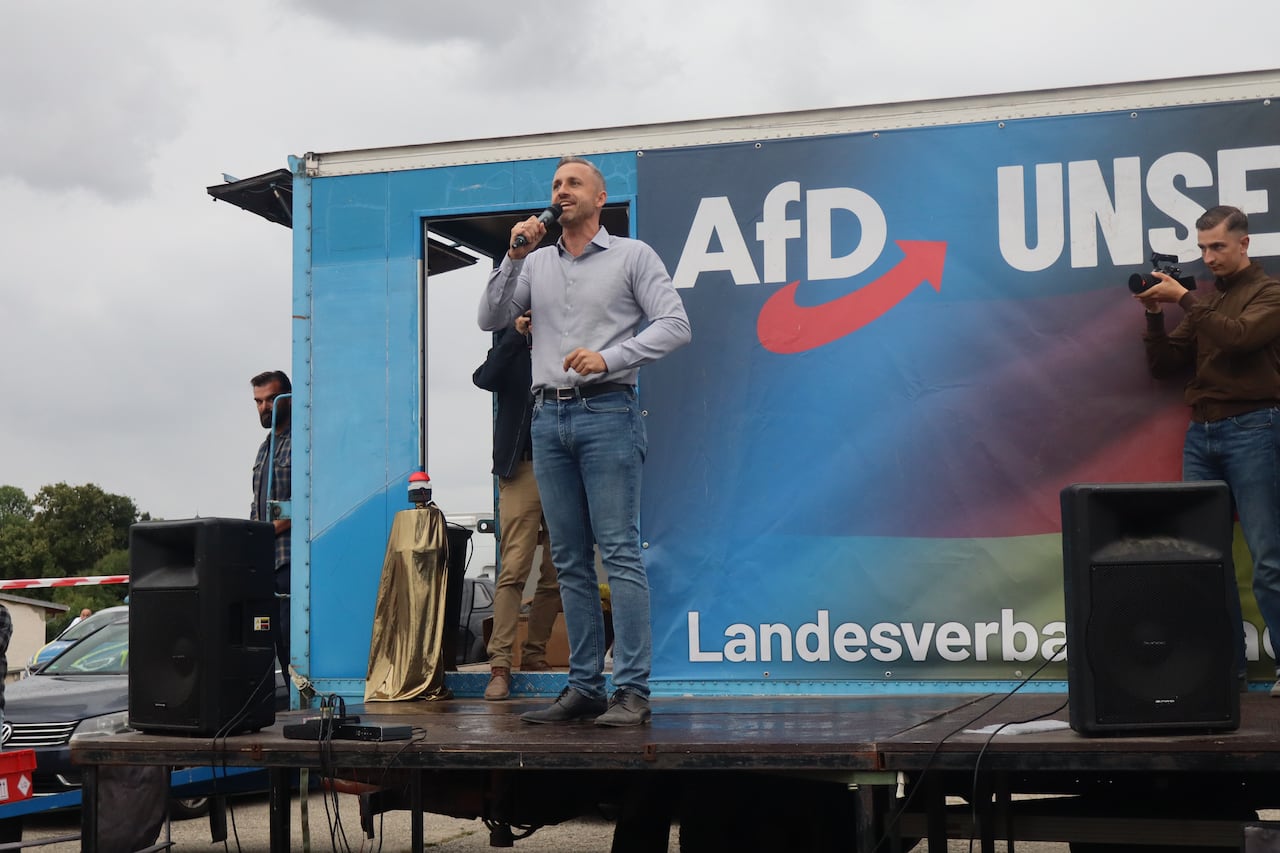
Ulrich Siegmund addresses supporters at a family festival in Querfurt, Germany, on August 21. Siegmund represents the AfD in the race for leadership of Saxony-Anhalt. (Max Karl Thümer/CBC)
The party is also leading nationally with 28 percent, according to Infratest-Dimap, and secured the second highest number of seats in the 2025 federal election.
Initially established in 2013 as an anti-Euro party, the AfD shifted its focus to migration issues in 2015, coinciding with then-chancellor Angela Merkel’s decision to welcome hundreds of thousands of refugees from countries such as Syria.

An upcoming state election could see the AfD, Germany’s far-right party, form government in the region of Saxony-Anhalt. A win here would give the party influence over schools, culture, courts and police forces, affecting over 2.1 million residents in the region as well as legitimize the party on the federal level. It would also mark the first time a far-right party — one that Germany’s domestic intelligence agency has designated a far-right extremist group in the state — has come into power since the Nazi Party.
The AfD’s objectives
The AfD advocates for “remigration,” a term frequently employed in right-wing discussions to refer to the mass deportation of individuals with migration backgrounds. In Saxony-Anhalt, it intends to prohibit immigration from non-European Union nations deemed problematic, establish numerous detention facilities for deportees, and create separate classrooms for refugee children.
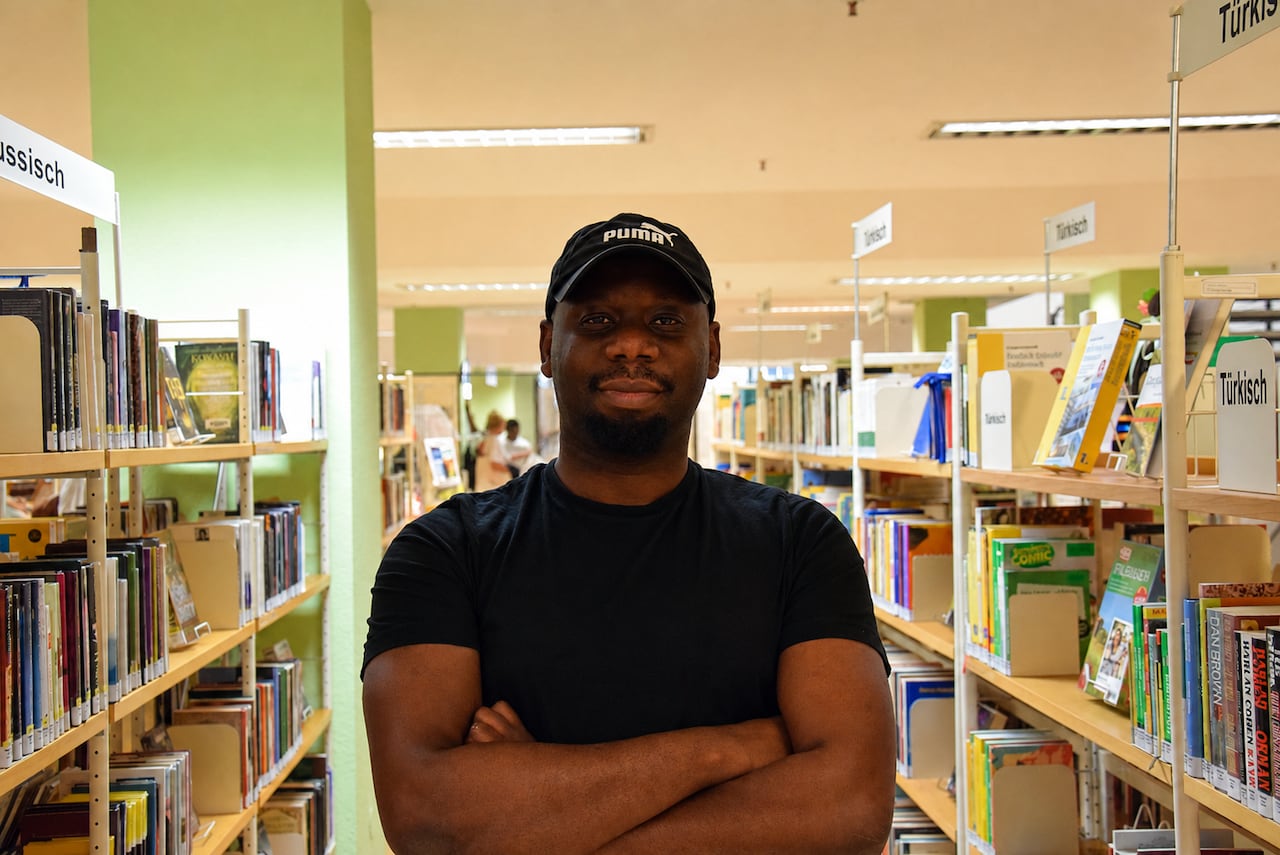
Akinola Sanyaolu is a Nigerian immigrant residing in Magdeburg, the capital city of Saxony-Anhalt. (Mona Schulze/CBC)
Akinola Sanyaolu, a Nigerian immigrant who relocated to Magdeburg six years ago, states that many individuals he interacts with blame immigrants for the nation’s political and economic issues. He shares that he has encountered numerous instances of racism in the city, yet he strives to remain optimistic as he desires to live in the country he now considers home.
“I feel targeted, but what can I do?” Sanyaolu expressed.
“They have not walked in my shoes. They do not understand the experience of being a foreigner. I know what it feels like. I am the one experiencing it.”
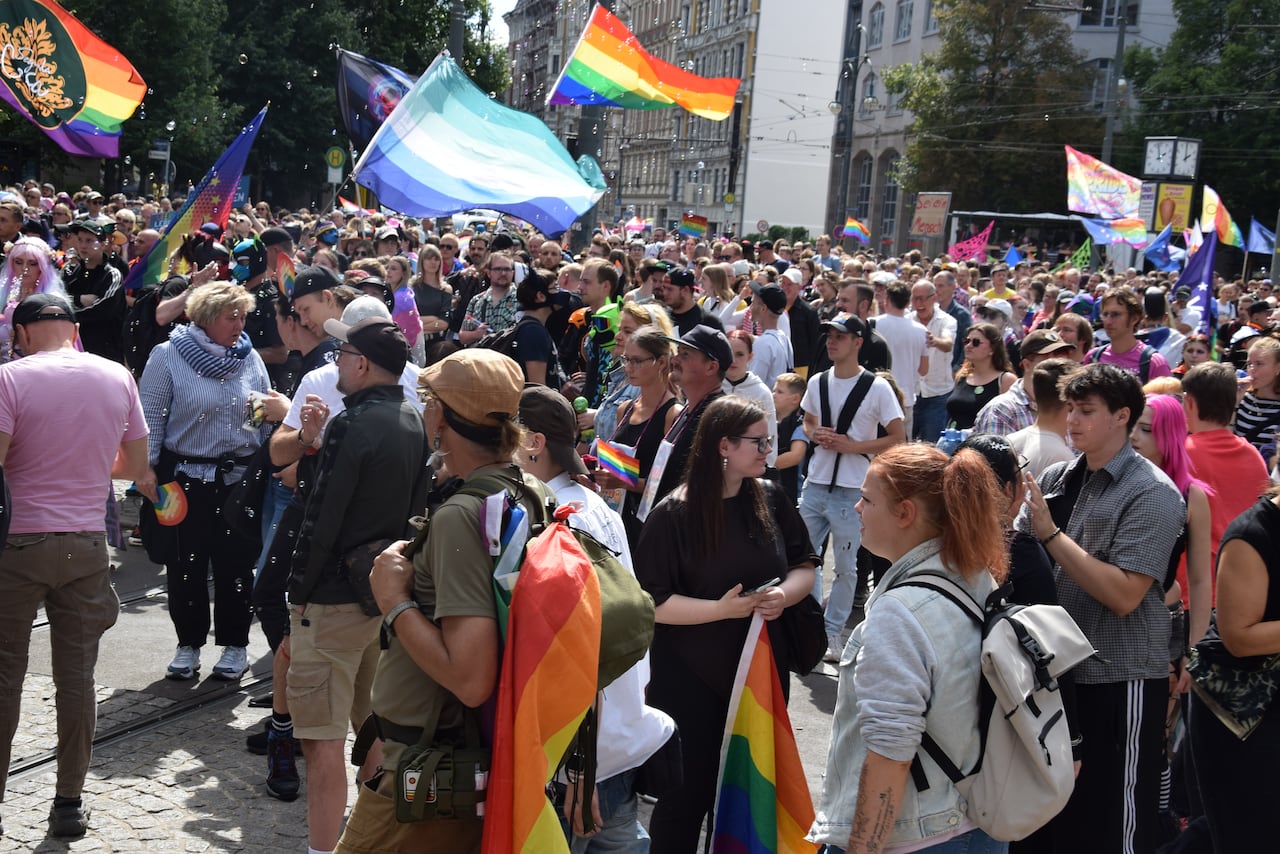
Thousands participate in a Pride parade in Magdeburg, Germany, on August 22. (Mona Schulze/CBC)
States possess autonomy over several areas, including the environment, education, cultural policies, and law enforcement.
The Saxony-Anhalt AfD outlines its specific aims in a detailed government manifesto. These goals include prohibiting Pride flags in educational institutions and revising the state’s history curriculum to emphasize what it describes as the positive aspects of Germany’s past.
Additionally, the party defines a “healthy family” as consisting of a father, mother, and children.
I would say, ‘Make Saxony-Anhalt great again.’Hans-Thomas Tillschneider, AfD politician in Saxony-Anhalt
Anki Wolf and Miriam Siemon, recently engaged, find their celebrations overshadowed by concerns over escalating political extremism. The couple, who identify as lesbian, live part-time in the small city of Dessau and wish to start a family. However, they question the safety of raising children in Germany amidst rising homophobia.
“What happens when a child is involved? Can I truly say that I can stay here and protect this child?” Wolf pondered.
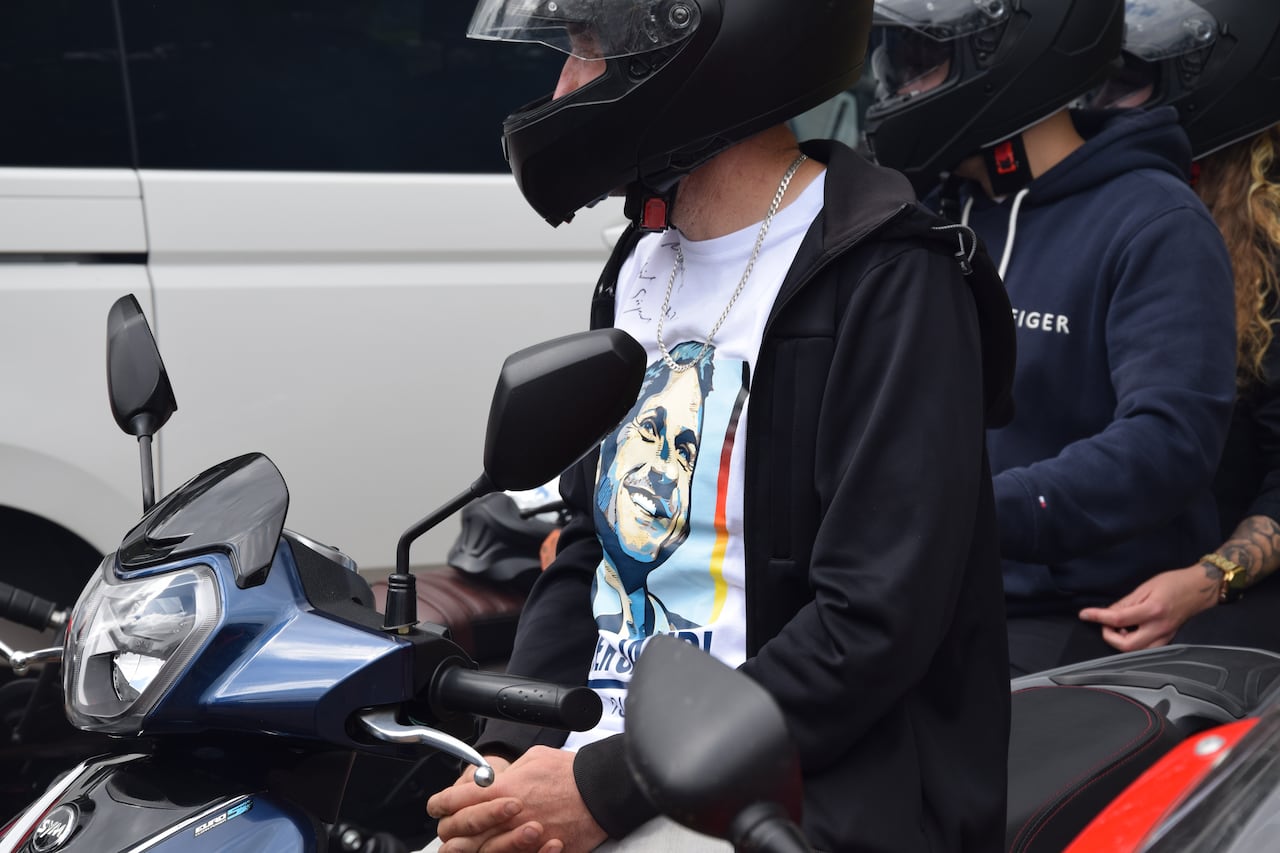
A motorcyclist at an AfD rally in Quedlinburg on August 23 wears a T-shirt bearing Ulrich Siegmund’s image. (Malte Broyer/CBC)
Assessing the AfD’s extremism
The Saxony-Anhalt AfD is classified as a right-wing extremist party by the state’s Office for the Protection of the Constitution, which monitors extremist threats.
Members of the party have faced scrutiny for employing rhetoric associated with Nazi organizations, and experts assert that many have connections to far-right, ethnonationalist movements.
Should the AfD attain state power, it may oversee state-level domestic intelligence services, raising concerns, particularly due to the party’s links to Russia. Party officials have expressed admiration for and visited the country, and in the government manifesto of the Saxony-Anhalt AfD, it emphasizes a strong interest in fostering positive relations with Russia both “economically and culturally.”
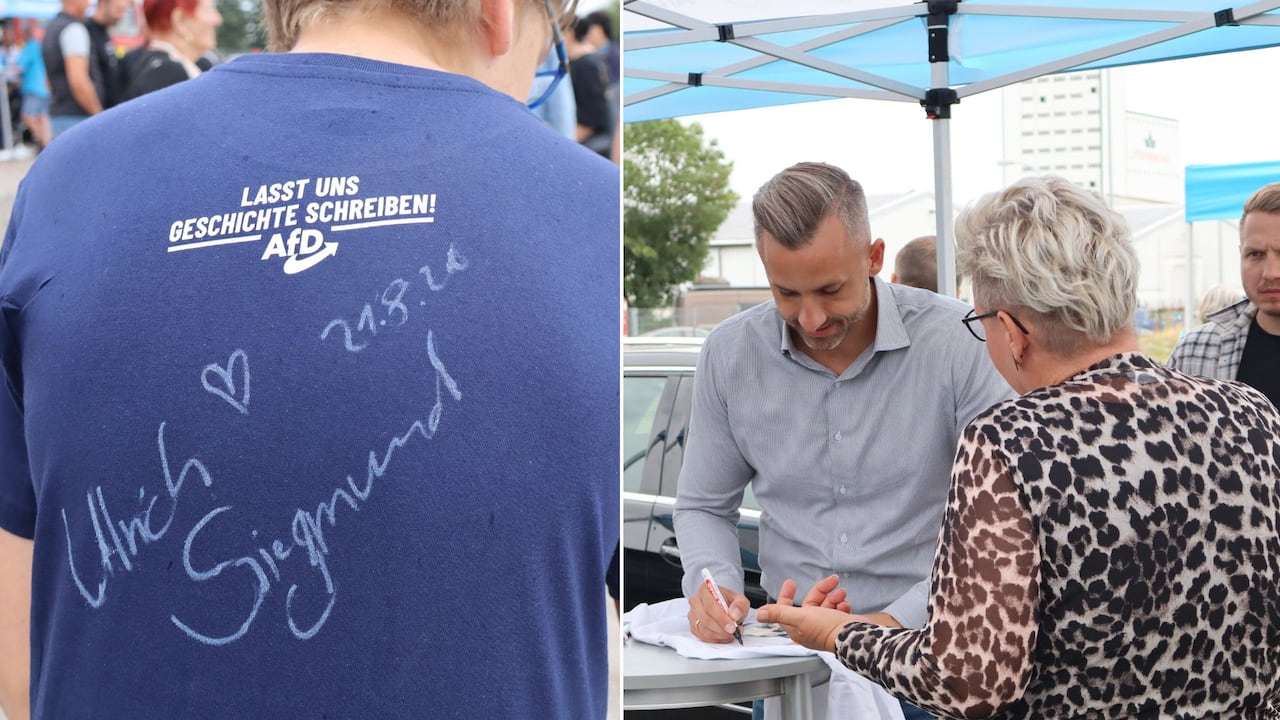
Hundreds of supporters gathered at a family festival in Querfurt, Germany, to have their T-shirts signed by Siegmund. (Max Karl Thümer/CBC)
Just days prior to the motorcycle event, hundreds of AfD supporters convened in the town of Querfurt, where many waited for hours to obtain a signed T-shirt featuring Siegmund’s image on the front. The polished 35-year-old hails from a small town in Saxony-Anhalt and boasts over 800,000 followers on TikTok.
“Here, no one is a right-wing extremist,” he asserted in German to his audience at the festival.
“Here, everyone is simply exercising their rights.”
Reasons for the AfD’s popularity
While the rise of far-right populism is evident across various European nations, Germany’s situation is distinct due to a lingering divide between the western and eastern regions of the country, where AfD support is particularly strong, according to Böick, who studies modern German history.

Residents of the former communist East Germany were promised greater freedoms following reunification, yet inequality and unemployment remain prevalent after the fall of the Berlin Wall. Many from the east migrated to the west in search of better employment opportunities, according to Böick.
German Chancellor Friedrich Merz, a member of the ruling CDU, is also grappling with significant unpopularity.
As dissatisfaction with mainstream political parties grows and people face political uncertainty exacerbated by international conflicts and economic turmoil, they may be inclined to support alternative options, noted Oliver Schmidtke, former director of the Centre for Global Studies at the University of Victoria.
The party has also garnered backing from external political figures. In 2025, U.S. Vice-President JD Vance publicly criticized Germany’s firewall approach, while Elon Musk endorsed the party.
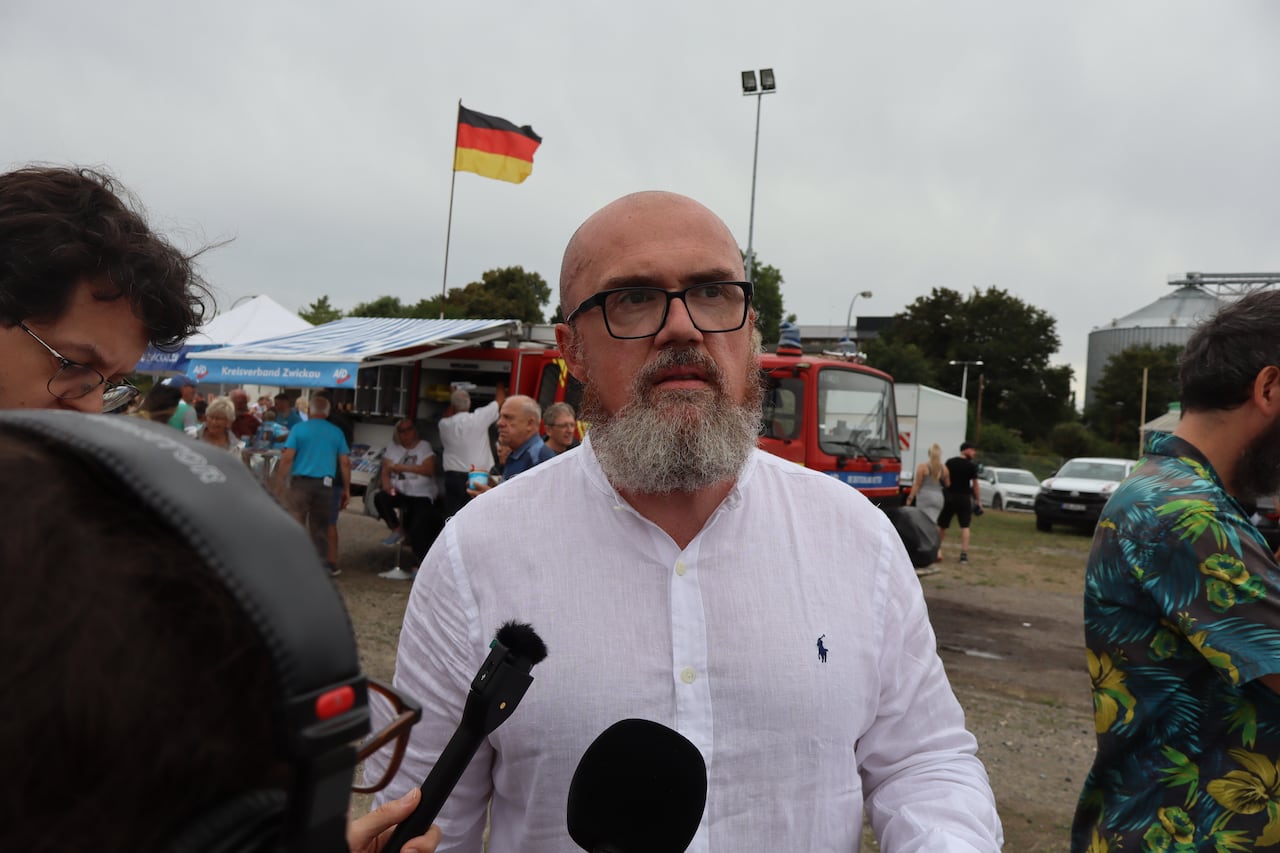
Hans-Thomas Tillschneider is a local AfD politician in Saxony-Anhalt, Germany. (Max Karl Thümer/CBC)
Hans-Thomas Tillschneider, an AfD politician from Saxony-Anhalt, is frequently regarded by analysts as the mastermind behind the party’s cultural strategies. At a family festival he held in Querfurt, his voting district, he expressed that he’s inspired by U.S. President Donald Trump.
“I would say, ‘Make Saxony-Anhalt great again,'” Tillschneider remarked.
Potential implications if the AfD wins
Some analysts express concern that the AfD’s possible victory could enhance the party’s influence at the federal level. Should it secure state power, it would gain representation in the Bundesrat, the federal legislative chamber that represents Germany’s 16 states. In that capacity, it could attempt to obstruct legislative initiatives, according to Schmidtke.
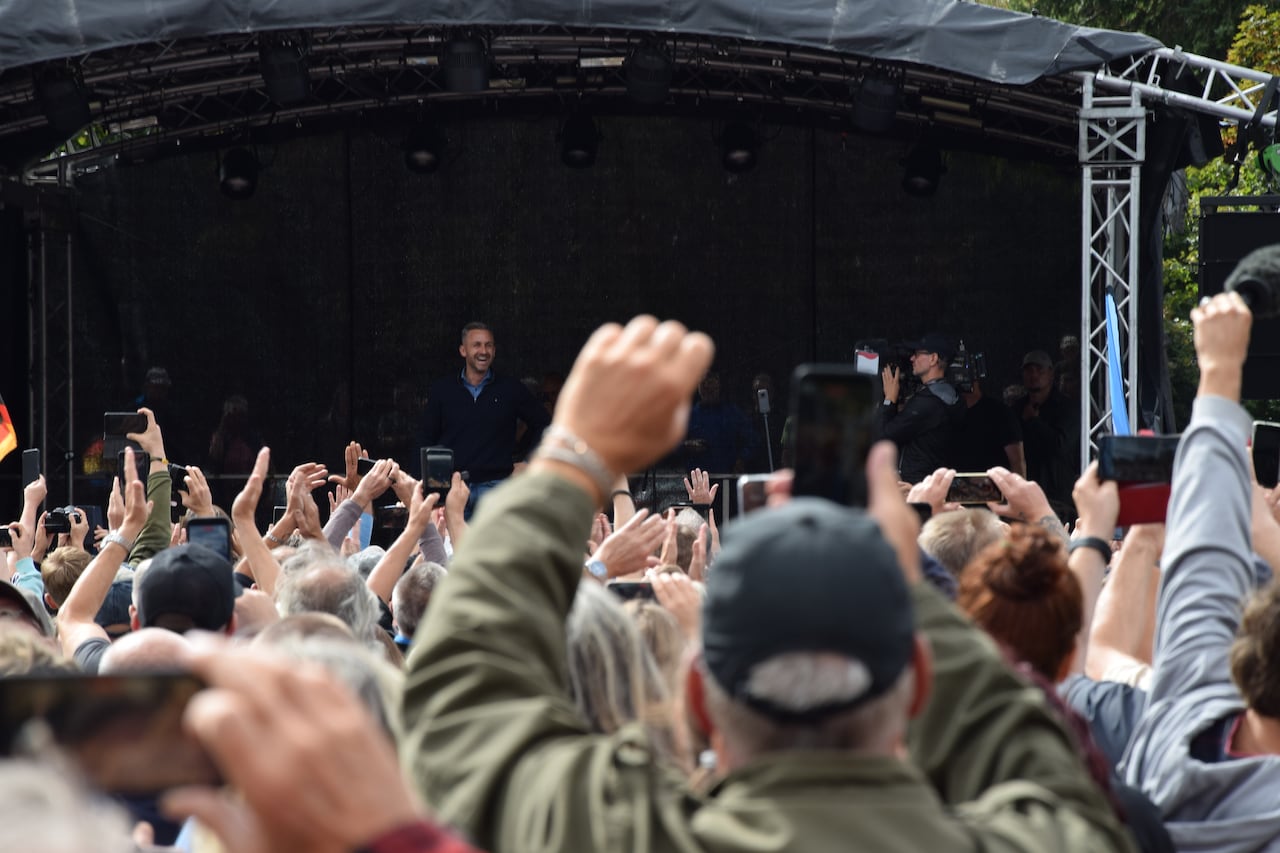
Siegmund addresses thousands of supporters at a rally in Quedlinburg on August 23. (Malte Broyer/CBC)
Schmidtke mentioned that Germany’s robust constitution would pose challenges for the AfD in implementing sweeping reforms, but winning a state election would further legitimize the party as a significant political entity.
-
As Germany’s far right gains ground, coded symbols are hiding in plain sight
-
Analysis
65 years after the Berlin Wall was built, Germany’s east-west scars help feed a rising far-right party
If the AfD emerges with the most votes on Sunday but is excluded from government by other parties, Böick stated that the AfD could leverage this scenario to its advantage.
“This creates a narrative of victimization, of being unfairly treated, of being undemocratically mistreated,” Böick explained.
“In either case, they will find a way to win. This is the harsh reality.”
Reporting for this story was funded in part by the Gordon Sinclair Roving Reporter Bursary.

