

Amidst a network of nets set up in the boreal forest, Ethan Denton reaches into a cloth bag and carefully extracts a small, dark grey songbird known as a dark-eyed junco.
Denton, an ornithologist from Calgary spending his summer in Fort McMurray, Alta., uses pliers to attach a lightweight aluminum band with a unique identification number to the junco’s slender right leg.
After documenting its gender and measurements, he releases the bird. Researchers throughout North America can log the locations where the bird is captured, helping to illustrate its migration routes.
Nearby, Ken Foster, a co-founder of the Wood Buffalo Wildlife Research Institute (WBWRI), listens as Denton explains the process to volunteers.
The WBWRI is currently the sole non-profit organization of its kind located in Fort McMurray, with a mission to conduct long-term monitoring of avian populations in the oilsands region.
“We all perceive a decline in bird populations,” Foster remarked in a recent interview with CBC News. “Initiatives like this help identify which bird species are decreasing, by how much, and ideally what actions we can take to reverse this trend.”
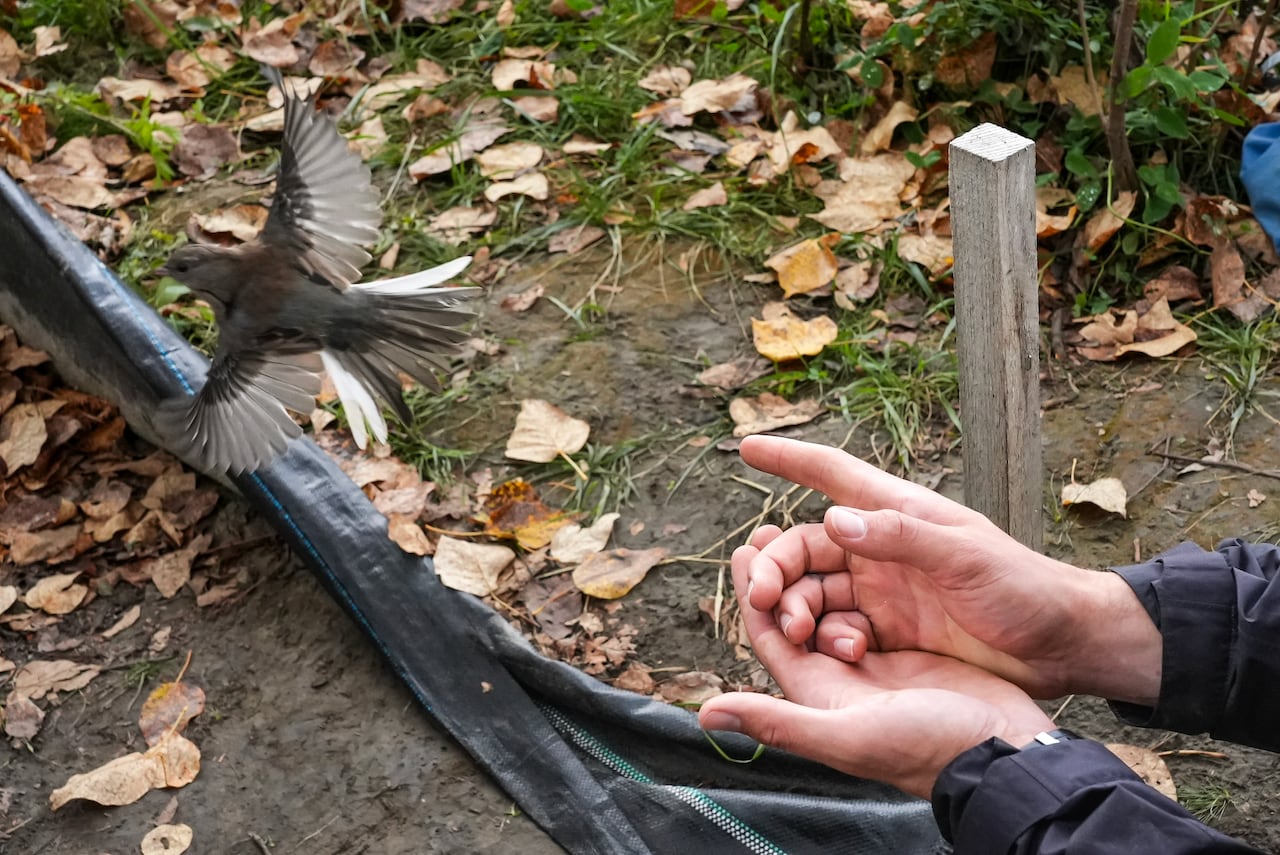
Toby MacKenzie releases a bird recently tagged with a bird band near Fort McMurray, Alta., on Sept. 29, 2026. (Vincent McDermott/CBC)
Research on birds in the oilsands area is not a new endeavor. Initiatives like the collaborative provincial-federal Oil Sands Monitoring Program and the Alberta Biodiversity Monitoring Institute (ABMI) have conducted extensive research over time, along with numerous university-led studies.
Foster has conducted his own long-term studies through his consulting firm, Owl Moon Environmental Inc. (OMEI). He hopes that establishing a non-profit in 2024, alongside his wife Christine Godwin, will provide ongoing stability in this work while also engaging volunteers in wildlife research.
“This is a citizen science project for a non-profit organization,” Foster stated. “We have volunteers who regularly participate and are genuinely enthusiastic about this work.”
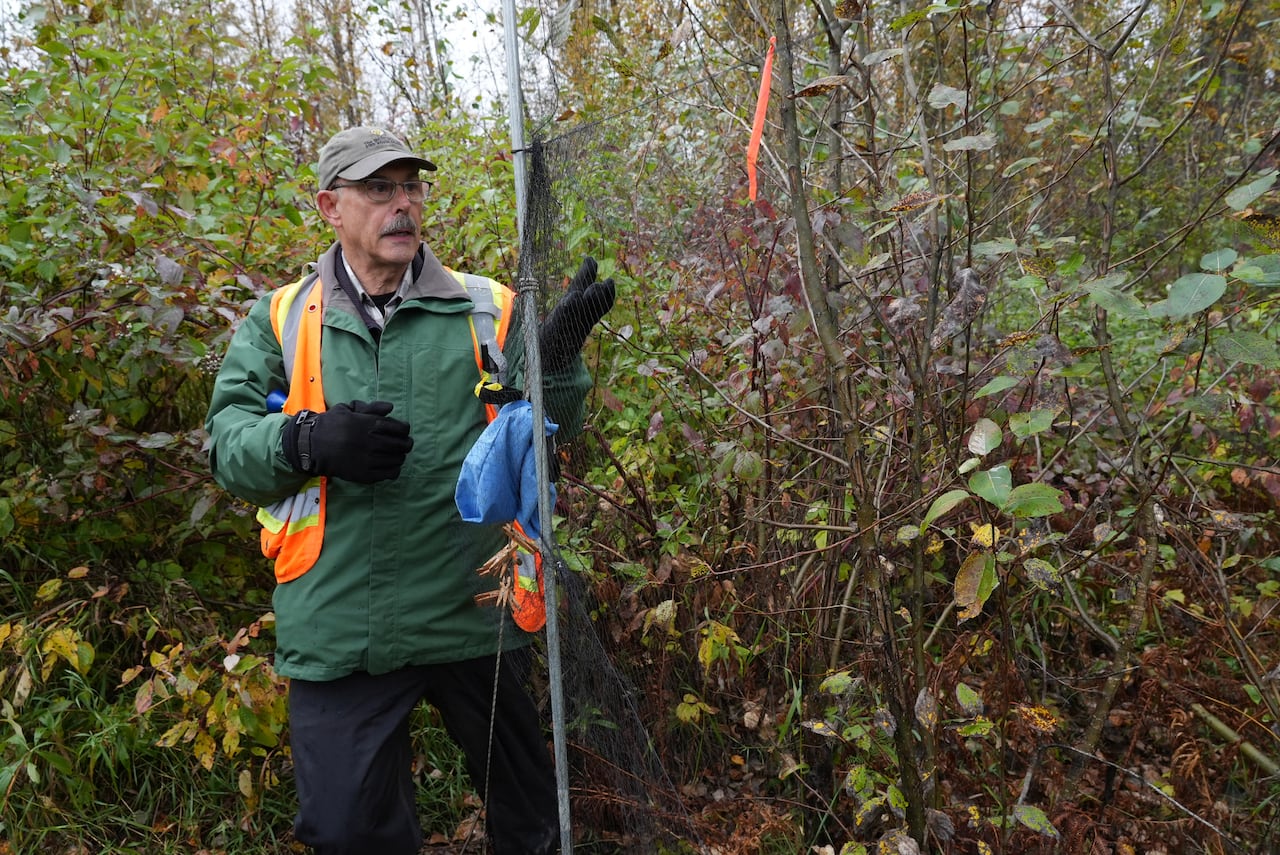
Ken Foster of the Wood Buffalo Wildlife Research Institute (WBWRI) inspects nets used to catch birds for tagging outside Fort McMurray, Alta., on Sept. 29, 2026. (Vincent McDermott/CBC)
The data collected thus far by Foster through OMEI indicates that bird species are reacting differently to environmental changes in the oilsands region.
He believes that certain songbird populations, such as the least flycatcher and northern waterthrush, have experienced declines of up to 90 percent over the past 15 years. This decrease is largely attributed to habitat alterations caused by wildfires, industrial expansion, and other changes along their southern migration routes. Additionally, there has been a reduction in flying insects for the birds to feed on, according to Foster.
Conversely, generalist species like adaptable ground feeders such as clay-colored sparrows are thriving in disturbed, young-growth habitats within former oilsands locations that have been reclaimed or regrown following wildfire destruction.
We all sense fewer birds.Ken Foster, Wood Buffalo Wildlife Research Institute
Foster notes that energy companies have been open to his research. While he acknowledges some overlap, the WBWRI aims to conduct research projects that also enhance outreach and education opportunities.
“Initially, I thought, ‘Yeah, I want to work outdoors; this will be a good experience,’ but then I learned a considerable amount about birds,” shared Ryan Campbell, a recent high school graduate who completed a summer internship with the WBWRI.
“I’ve started buying binoculars and setting up eBird accounts. I’m definitely becoming a bird enthusiast, and for that, I am eternally grateful.”
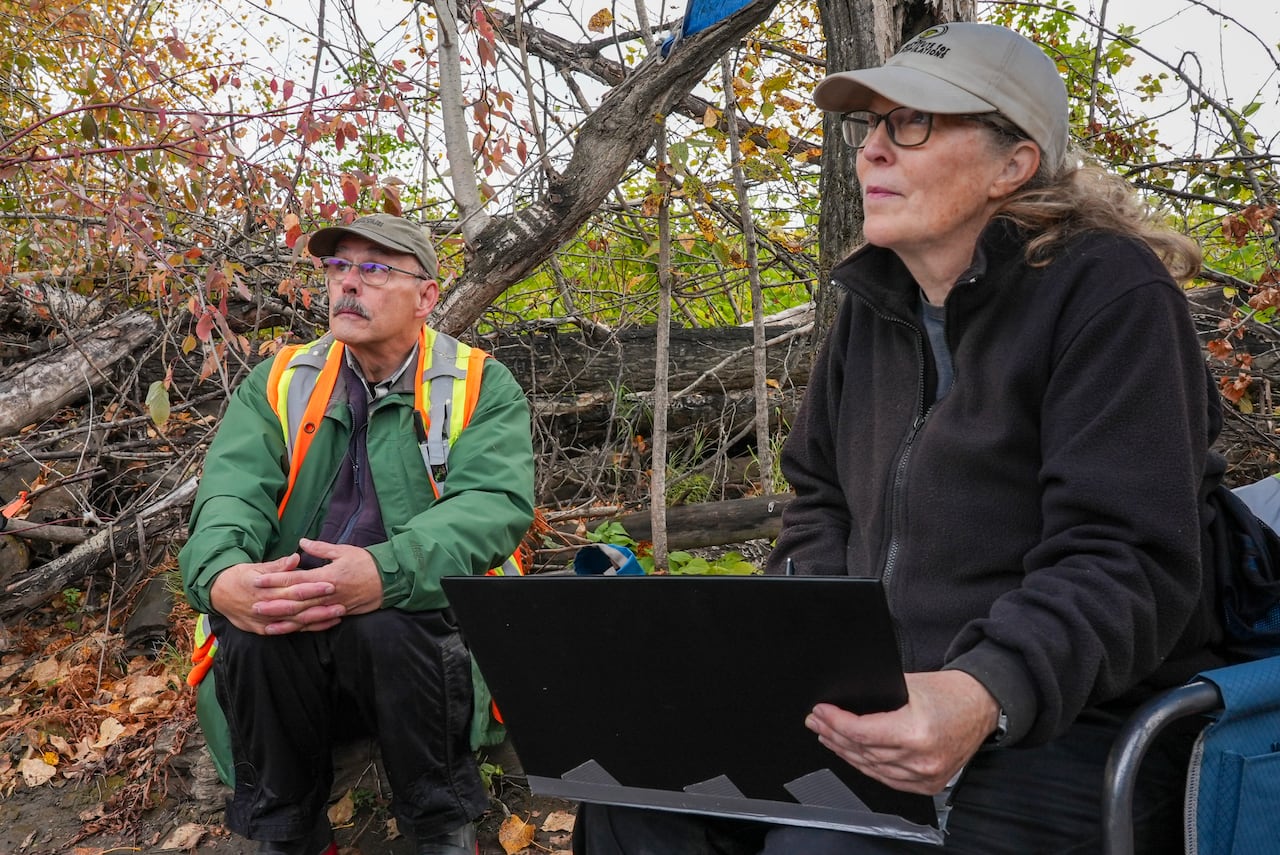
Ken Foster and Christine Godwin of the Wood Buffalo Wildlife Research Institute record notes during a bird banding exercise near Fort McMurray, Alta., on Sept. 29, 2026. (Vincent McDermott/CBC)
Erin Bayne, a biology professor at the University of Alberta focusing on avian behavior near industrial sites, stated in an email to CBC News that local studies and initiatives like Foster’s are essential.
While species such as the least flycatcher and hermit thrush show stable populations across North America, Bayne emphasized that Foster’s research highlights changes occurring around Fort McMurray and possibly along migration paths.
When local findings are combined with broader national databases, researchers can identify specific local issues and notify government entities, NGOs, and industry stakeholders.
“Regarding the usefulness of local monitoring, absolutely,” Bayne affirmed. “The fundamental aspect of all monitoring is data integration.
“Local changes are significant and matter to community members.”
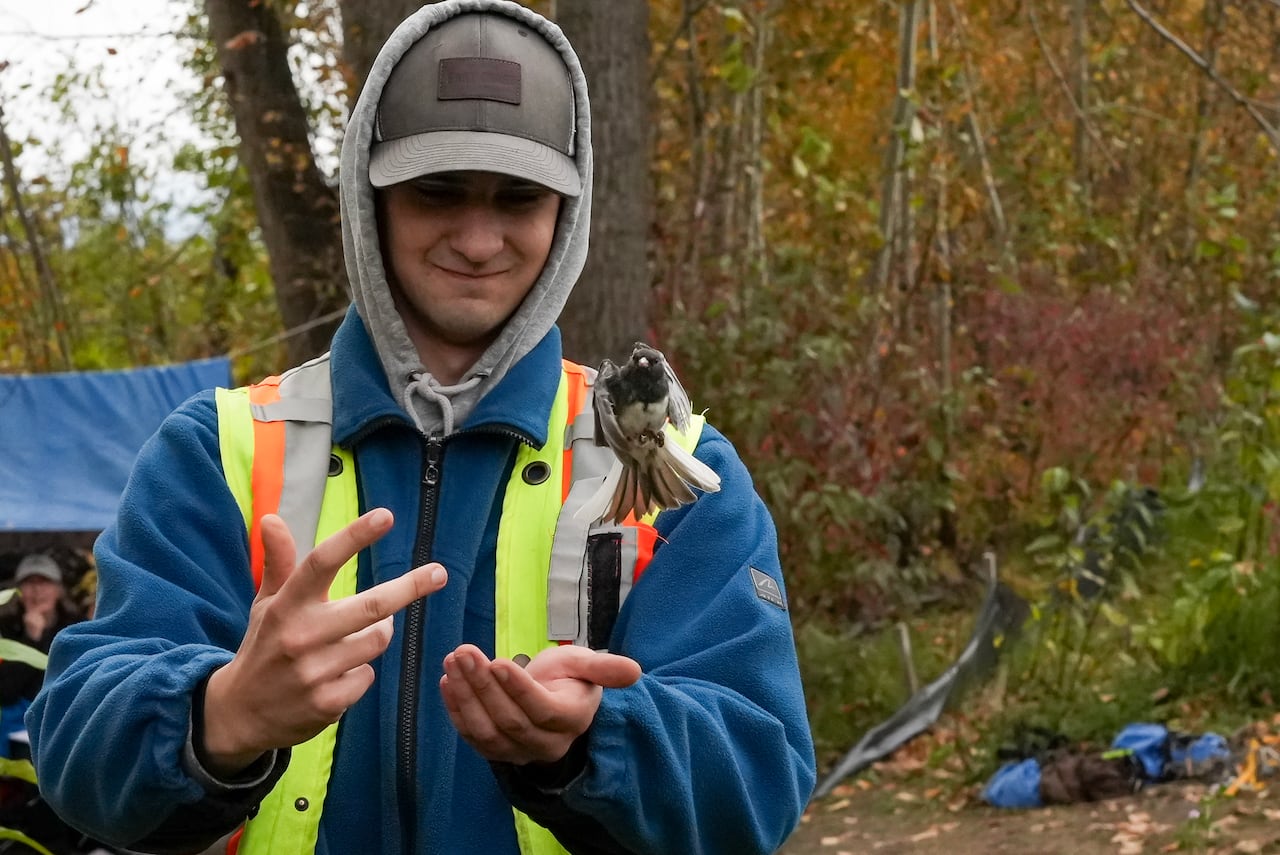
A bird takes flight from Ryan Campbell’s hand during a bird banding project near Fort McMurray, Alta., with the Wood Buffalo Wildlife Research Institute (WBWRI) on Sept. 29, 2026. (Vincent McDermott/CBC)
Beyond bird banding for autumn migrations, Foster has additional plans. The WBWRI has installed an automated tracking tower that monitors animals equipped with radio transmitters. This is part of the Motus Wildlife Tracking System, extending across North and South America. Foster aspires to secure funding to tag birds with radio transmitters.
The organization is also beginning to assess bat population health and aims to raise funds to train volunteers in the rehabilitation of injured wildlife in the Fort McMurray area.
“Initiatives like this quantify the changes that we all perceive,” Foster noted. “We all sense a decrease in bird populations.”

