

Fish are making a comeback in the streams surrounding the former tar ponds and coke oven areas in Sydney, N.S., which officials consider a promising development following the cleanup of a century’s worth of pollution from the steel and coal industries in Cape Breton.
The $400-million cleanup initiative was carried out by the Sydney Tar Ponds Agency, which has since merged into Nova Scotia Lands and is now managed by Build Nova Scotia, the organization responsible for overseeing water quality in the streams that flow through these past industrial zones.
Donnie Burke, a senior director at the agency, reported that findings from an independent engineering firm indicate that the remediation efforts are yielding positive results.
“Everything we observe so far is either stable or showing improvement, which is fantastic,” he stated during a recent site visit.
The site of the coke ovens was previously covered in leftover slag from the former steel mill, while the infamous tar ponds, adjacent to the coke ovens and once labeled the most hazardous waste site in Canada, have been sealed with concrete.
The clean-up also included Coke Ovens Brook, Wash Brook, and Muggah Creek, and the nearby areas were landscaped to channel surface water into these streams. Additionally, groundwater from the coke ovens area is routed to a treatment facility before re-entering the brooks.
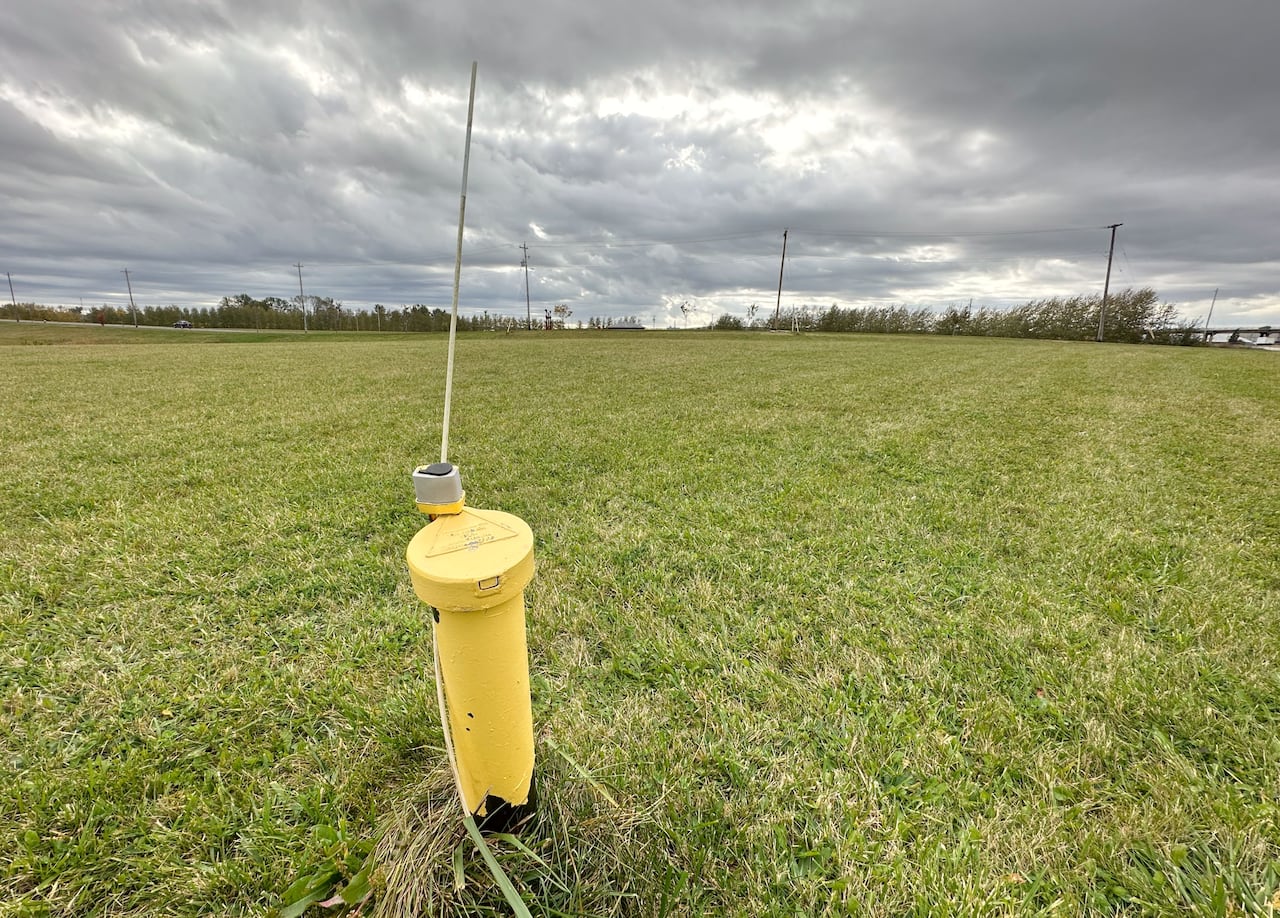
One of several well heads is seen on the former coke ovens site, providing access to test for industrial toxins in groundwater. (Tom Ayers/CBC)
Both areas were ultimately covered with topsoil and grass.
The old tar ponds are now referred to as Open Hearth Park, which features football and soccer fields, a playground, walking paths, and open spaces.
The site of the coke ovens has transformed into an open area that is utilized for cricket, walking, and snowmobiling during the winter months.
Burke shared that water testing indicates the cap over the tar ponds is not leaching any toxins.
Although the former coke ovens site does occasionally show elevated levels of heavy metals or industrial chemicals, particularly after heavy rainfall, the monitoring systems detect these spikes, and the water treatment protocols are adjusted as necessary, he explained.

The Build Nova Scotia office in Sydney is located in Harbourside Industrial Park on reclaimed land situated between the former coke ovens and tar ponds sites. (Tom Ayers/CBC)
“There are various small anomalies,” Burke noted. “We do observe some fluctuations, but overall, things have remained stable or have improved since the cap was installed.”
Water samples are taken from the brooks and under the cap of the former coke ovens through wells distributed around the sites.
A recent research project conducted by Cape Breton University revealed that a small fish species has returned to the brooks, and Burke mentioned that provincial staff recently spotted trout eggs and fry in Coke Ovens Brook.
“Who would have imagined that trout would thrive here 20 years ago?” he remarked.

Dr. Katherine Jones, a CBU biologist, says mummichog fish living in the former tar ponds displayed bone and fin abnormalities, but lately, their health has improved. (Tom Ayers/CBC)
Katherine Jones, a biology professor at CBU, researched mummichogs that exhibited poor health in the tar ponds prior to the cleanup.
Last year, she oversaw a pilot study conducted by fourth-year student Hannah MacKinnon to assess any health improvements. Jones noted that MacKinnon found that the previous symptoms had vanished.
“We did not observe fin rot, fin erosion, or bone deformities, so in general, the health status of these fish appears significantly better than it was before the remediation,” she stated.
‘Trending in the right direction’ — Burke
Jones indicated that further research is necessary to ascertain whether the local fish are still impacted by the remediated industrial sites, and she is interested in analyzing their DNA to determine if they are descendants of the fish that previously inhabited the area or if they have migrated from other locations.
Burke confirmed that the government is dedicated to monitoring the sites for 25 years following the cleanup, with results being regularly updated on Build Nova Scotia’s website.
With half of the monitoring period completed, “everything seems to be trending in the right direction,” he added.
MORE TOP STORIES
-
Druhan releases campaign document that could be ‘foundation’ for election platform
-
New N.S. chief medical officer of health named as Dr. Robert Strang to retire
-
Former Halifax Alehouse building recommended for heritage status
-
Nova Scotia university enrolment continues to drop, new statistics show
-
Scam targeting minor hockey teams with fake invite for real tournaments, group warns

