On Thursday, Maria Corina Machado, the leader of Venezuela’s opposition, ended several days of silence by releasing a video message in which she expressed her disapproval of the oil agreement made on Wednesday in Caracas between the U.S. government and the interim president of Venezuela, Delcy Rodriguez.
“I empathize with what you are feeling,” she conveyed to her fellow citizens, “sadness, anger, and that painful sensation, so familiar throughout our history, of others making choices regarding our resources, in our name, without consulting us.”
Machado’s remarks followed a day after both Trump and Rodriguez avoided providing any timeline for a return to democracy in Venezuela, with Trump once again commending Rodriguez’s administration.
“We are very pleased with the president-elect we currently have and the individuals managing it,” Trump stated on Tuesday. (Rodriguez has not actually been elected to this role.)
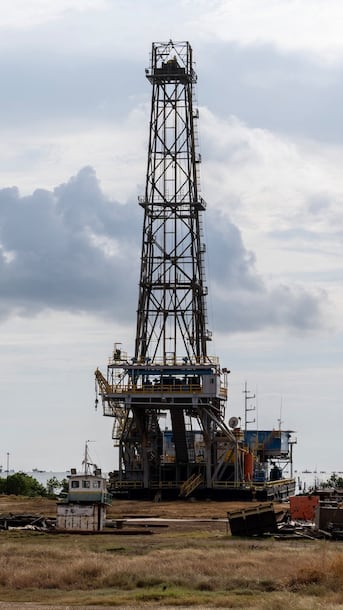
U.S. President Donald Trump stated on Friday that his administration has reached a comprehensive agreement with Venezuela that, if implemented, could allow the U.S. access to significant quantities of the South American nation’s untapped oil reserves, at a cost.
Although she had always believed that the oil sector in Venezuela required U.S. investment for revitalization, Machado asserted that Rodriguez’s administration lacked the legitimacy to negotiate such a deal, which should wait for the restoration of democracy and the rule of law.
She also mentioned that there was uncertainty regarding the actual conditions of the agreement. Many Venezuelans share this uncertainty, but they already know they disapprove of it.
Neither social media posts from U.S. President Donald Trump and U.S. Secretary of State Marco Rubio, nor a White House announcement, nor Rodriguez’s address clarified precisely how or when 17 Venezuelan oilfields would be revitalized and begin producing the 65 billion barrels mentioned in Trump’s “largest oil deal ever.”
Extracting oil over releasing prisoners
Numerous Venezuelan Canadians, including some with extensive knowledge of the oil sector, have responded negatively to the deal.
“It’s a mix of frustration, disappointment, and outrage,” stated Rebecca Sarfatti of Toronto, co-founder of the Canada Venezuela Democracy Forum. “We were used as a nation, as an oil powerhouse, to fulfill Trump’s demands. And Miss Delcy is playing along to maintain her position in power.”
Sarfatti says Venezuelans are frustrated by the quickness to exploit Venezuela’s resources while showing relatively little concern for liberating political prisoners.
Lino Carrillo, former general manager of operations for Nexen Energy in Fort McMurray, Alberta, and a veteran in both Venezuela’s and Canada’s oil sectors, serves on Machado’s advisory committee on oil and energy.

Venezuelan opposition leader Maria Corina Machado, seen in March 2024, spoke out against the new U.S. oil deal this week. (Leonardo Fernandez Viloria/Reuters)
“Anyone who signs with Delcy will ultimately face scrutiny,” he shared with CBC News. “Once a new government is established, they will examine all agreements made by Delcy, Trump, or any U.S. or European government, for that matter.”
“What they are doing contravenes the constitution of Venezuela.”
Venezuelans have become increasingly doubtful about U.S. intentions in their nation since the capture of Nicolas Maduro on January 3, he noted: “There is a saying that people should be judged by their actions, not their words.”

Rodriguez assumed power shortly after the United States apprehended Venezuelan President Nicolas Maduro in January. (Leonardo Fernandez Viloria/Reuters)
Trump’s announcement intensified Venezuelans’ frustrations regarding the fact that eight months post the U.S. capture of Maduro during the raid in Caracas, the dictatorship he led has been permitted to persist, while Trump describes its unelected leader as “highly respected.”
Among Republican politicians in Florida, there were increasing signs of discomfort regarding the proximity of the Trump administration to the remnants of the chavista dictatorship that has become its ally in Venezuela. Florida Republicans voiced concerns about the lack of progress towards democracy and showed support for Machado, who has often been dismissed by the Trump administration.
The deal seemed to divide supporters within Delcy Rodriguez’s own party. Notable chavista congresswoman Iris Varela released a video message declaring that the agreement was signed “under pressure” and pledging to reject it once Trump leaves office.
Even some of the most fervent “MAGAzuelans,” those Venezuelans who placed their trust in Trump and criticized dissenters, seemed to be reassessing their views.
Controversial figure at the centre of the deal
Criticism from Venezuelans regarding the agreement centers on the fact that it was negotiated covertly with an illegitimate government, involving a Venezuelan intermediary perceived in the nation as a typical example of the bolichico class — a businessman who has gained from his ties to the chavista regime.
A fact sheet issued by the White House on Monday night outlined a unique partnership between the Pentagon and a private entity named North American Blue Energy Partners (NABEP).
-
Trump’s Venezuelan oil deal: What we know and how it could impact Canada’s oil industry
-
Analysis
The U.S. could soon control 20% of Venezuela’s oil reserves. Canada’s oilpatch isn’t worried
-
Chevron expands Venezuela presence with $7B US plan
The U.S. State Department is entitled to 20 percent of the output “at cost,” along with the right of first refusal on the remaining 80 percent. Venezuela would be guaranteed $19 U.S. per barrel in royalties, irrespective of the oil price.
NABEP was established from Blue Energy, a business operated by Florida oil and asphalt tycoon Harry Sargeant III, a Trump golf partner and significant GOP contributor who had extensive dealings with the Maduro administration (Maduro once referred to him as “the only gringo I trust.”)
However, Sargeant sold his interest to Venezuelan businessman Alejandro Betancourt, who has faced investigations for allegedly laundering embezzled Venezuelan funds in various nations but has never been charged.
Rubio defended Betancourt’s participation by stating he is not suspected of any wrongdoing on U.S. soil, despite U.S. media reports of Trump administration pressures to halt European inquiries.
A ‘highly irregular’ deal
Venezuelan Canadians involved in the oil industry hold no misconceptions about the condition of the industry they left behind.
Jorge Robles, who dedicated his career to Venezuelan and Alabertan oil fields, acknowledges that people recognize the necessity of foreign investment in Venezuela and that concessions must be made in return.
“I was prepared to engage in negotiations that would be quite uncomfortable and disadvantageous for Venezuela,” he told CBC News.

Wright stated on Wednesday that agreements made with Venezuela would enhance oil production. (Fausto Torrealba/Reuters)
Nonetheless, he expressed that there was something “highly irregular” about the manner in which this agreement was negotiated.
“The U.S. is negotiating on behalf of the Venezuelan reserves, yet offering that to companies that are U.S.-based. It’s a clear conflict of interest,” he remarked.
Robles stated that it is “deeply upsetting and troubling” that the administration is prioritizing oil over the issue of political prisoners.
He fears that any funds Venezuela secures will merely be utilized by the chavista regime to further solidify its power.
Midterm voters may be true target
However, both oil executives argue that in light of the deal’s unenthusiastic reception in Venezuela, oil businesses are unlikely to invest in its long-term viability or in a country with so much uncertainty.
“Unless we reach a point where there is due process in Venezuela, freedom, and people can walk the streets without fear, then do not expect any companies to send representatives to Venezuela,” Robles advised.
They both suggested that the announced deal may be partially aimed at persuading American voters ahead of the midterms that high gasoline prices will soon decline.

The United States has made an agreement with Venezuela that would give it a massive stake in the country’s vast oil reserves. But what does this mean for Alberta? CBC’s Nicole Healey has the details.
“It’s all just a lot of noise intended to sway votes in the States,” Carrillo remarked, noting that oil prices will respond far more to any reopening in the Strait of Hormuz than to distant plans for oil investment in the Orinoco Basin.
“The markets are not naive,” he added. “They are observing that.”
Carrillo expressed his intention to return to Venezuela to lend his expertise to revive the devastated oil industry but stated he will only do so if a deal is ratified by a democratically elected Venezuelan government.
Fears of creeping colonization
Numerous Venezuelans have voiced concerns about a gradual colonization of their nation, in which the chavista dictatorship is sustained in power by the Trump administration as a subcontractor of its control.
“I sense that it’s occurring in a very subtle manner,” Sarfatti stated. “And likely the earthquake is facilitating that process, as we do require assistance, but not necessarily from a colonizing nation.”
The guardianship that the White House has claimed over Venezuela, she asserted, “is certainly a form of takeover. You can observe that when Venezuelan leaders who have been striving for over two decades to restore our nation are simply sidelined.”
-
Smith sees no threat to Alberta from U.S.-Venezuela oil deal, renews pipeline push
-
Federal government will extend gas tax holiday into 2027
The current concern for the Venezuelan opposition is that the lucrative agreement with Rodriguez only provides the U.S. with further incentives to maintain her dictatorship.
Similarly, the U.S. has little incentive to demand the liberation of political prisoners who could challenge the validity of the agreement or the government that endorsed it.
“They spoke of releasing political prisoners and ensuring freedom of the press,” Sarfatti noted. “But as time passed, Trump’s true colors were revealed.
“We never anticipated that a country like the U.S., which has long championed democracy, would behave in this manner.”

