

Imagine a vast habitat corridor stretching 3,400 kilometers from Yellowstone National Park in the U.S. to Canada’s Yukon, allowing wolves, elk, and other wildlife to roam freely. This ambitious project has become the first Canadian finalist for Prince William’s annual environmental awards.
The Yellowstone to Yukon Conservation Initiative (Y2Y) has been selected as one of three finalists in the Protect & Restore Nature category of the 2026 Earthshot Prizes. A total of 15 finalists were unveiled across five categories, with each category winner receiving £1 million ($1.9 million Cdn) at a ceremony in Mumbai in November.
Y2Y, described by the Earthshot Prize as one of the most significant conservation collaborations in history, aims to reconnect a vast mountain landscape across Canada and the U.S. to restore the free movement of wildlife.
The corridor is a habitat for various large mammals, including wolves, grizzly bears, wolverines, and endangered mountain caribou, covering an area larger than the United Kingdom with 25 million hectares of protected land.
Established in 1993 as a joint U.S.-Canada initiative by a U.S. non-profit and a Canadian charity, Y2Y has made significant progress over the years and has been recognized for its conservation efforts.
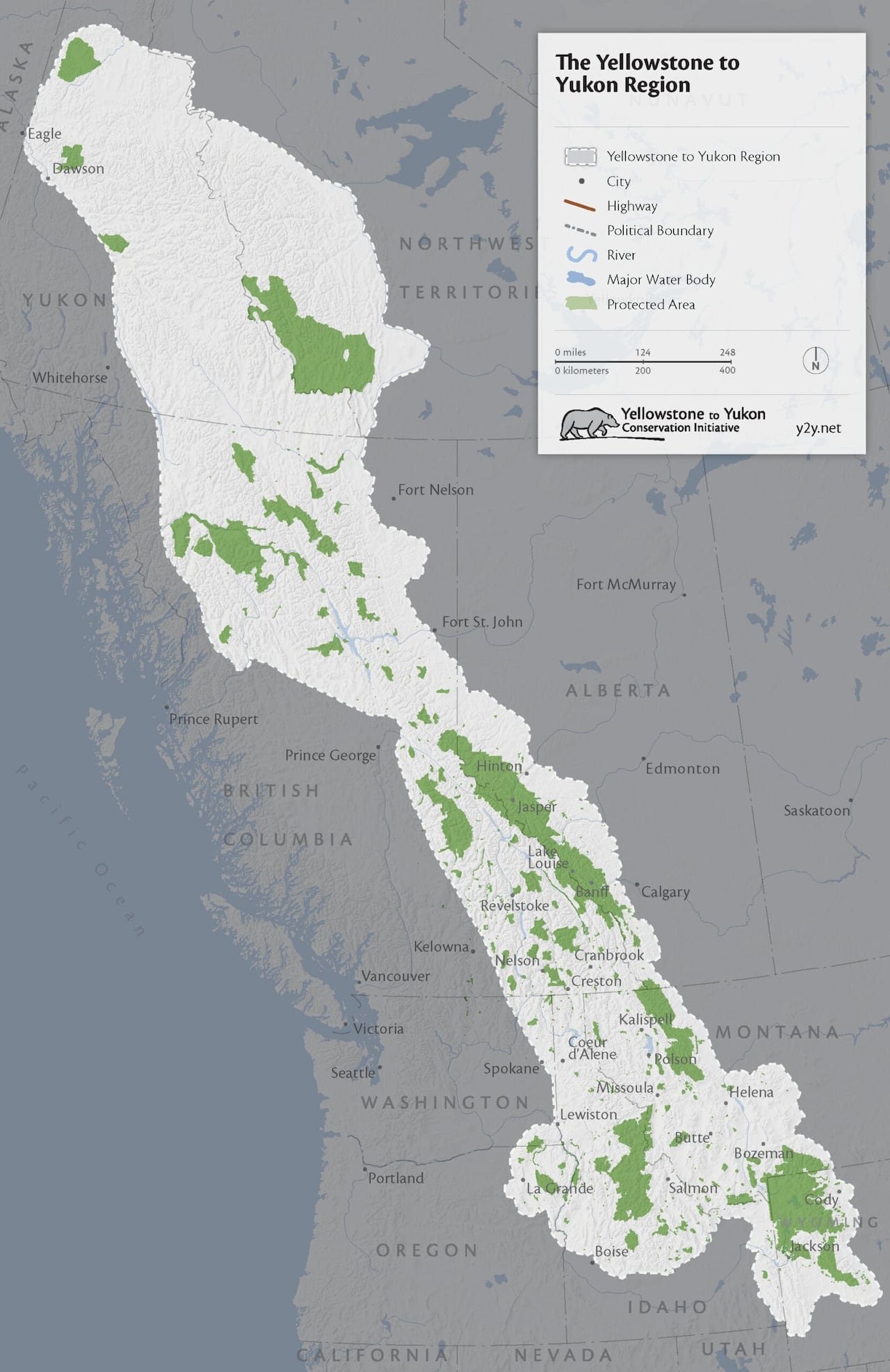
The map illustrates the scope of the Yellowstone to Yukon Conservation Initiative aiming to protect wildlife habitats. (Yellowstone to Yukon Conservation Initiative)
Origins Rooted in Nature
The inspiration behind the project stemmed from the movements of a wolf named Pluie, equipped with a satellite tracking collar near Banff National Park in 1991. Pluie’s extensive travels across multiple states and provinces underscored the need for conservation efforts on a large scale.
Jodi Hilty, the president and chief scientist of the initiative, emphasized the necessity of addressing conservation challenges at the scale required by nature to sustain wildlife populations.
A Path for Climate Migration
Anticipating climate change impacts, conservationists recognized the need for wildlife to migrate to adapt to changing conditions. Y2Y’s work aims to facilitate this movement by creating connected habitats for animals facing habitat fragmentation issues.
In the past 30 years, Y2Y has expanded protected areas along the corridor, doubling the coverage to nearly 18% through collaborations with various partners and stakeholders.


More like thisRelated
Julianne Moore Shines in Award-Worthy Performance

Deadliest Russian Attack Near Kyiv Kills 38
“Toronto Residents Among Missing in Nepal Flash Flood”
“New West Coast Pipeline to Boost Alberta Oilsands Production”