

More troubling news is emerging from grocery stores.
The CEO of Maple Leaf Foods, one of the prominent producers of prepared meats and poultry in Canada, announced that the company intends to raise its prices once again.
During a third-quarter earnings call held on Wednesday, Curtis Frank informed analysts that the company is facing increased costs for fuel and poultry, in addition to ongoing inflation pressures.
Earlier this year, Maple Leaf had already implemented a price increase to counteract escalating costs — marking the second such adjustment this year — but this has not sufficiently alleviated their rising expenses.
“We have experienced more inflation within the business than we anticipated, and it is accelerating,” Frank noted.
“We plan to modify our pricing in the first quarter,” he added, mentioning that the company has not disclosed these changes to customers yet, making it too early to provide further details.
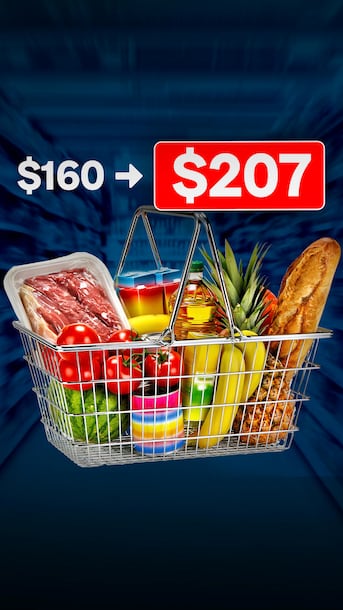
Canadians continue to experience sticker shock at grocery stores, but what factors are truly driving food prices up and impacting our budgets?
Consumers have been facing consistently high food prices due to various influences such as climate change, fuel expenses, tariffs, and retailer pricing strategies. Overall, grocery costs have surged by 33 percent since September 2020, as reported by Statistics Canada’s latest inflation statistics.
Meat prices have been a significant contributor to this trend. For example, ground beef averaged $9.18 per kilogram in September 2020, according to Statistics Canada monthly retail figures, while by September 2026, it climbed to $16.92. Additionally, striploin prices increased from $20.73 per kilogram in September 2020 to approximately $35.74 per kilogram now.
-
Inflation rises to 3.1% in September, as fuel prices push higher: StatsCan
-
Marketplace
These 5 grocery staples have skyrocketed in price this year. Here’s why
Chicken, which is often viewed as a more affordable protein option, has also seen price increases due to growing demand and limited availability, although not as dramatically as beef. For instance, chicken breasts averaged $14.48 per kilogram in September, rising from $12.03 in September 2020. Thighs also increased from $9.60 to $13.36 per kilogram during the same period.
Poultry farmers have increased live bird prices by approximately three percent in the fourth quarter, “with very short advance notice,” Frank elaborated.
“That represents an eight percent rise year-over-year, which is significant in the poultry industry,” the CEO of Maple Leaf Foods stated.
CEO highlights increasing feed and fuel costs
Furthermore, fuel surcharges have escalated by 17 percent since the second quarter, which Frank described as a “considerable change.”
“The primary factors are feed and fuel,” he noted. “Inflation and agricultural commodity prices are directly influenced by the global conflict situations we’ve witnessed.”
The ongoing closure of the Strait of Hormuz due to warfare in the Middle East has hindered oil shipments from that region, resulting in increased costs for fuel and other essential supplies such as fertilizer and animal feed.
This escalation occurs alongside general inflation impacting “almost everything else: labor, packaging, and ingredients,” Frank stated.
-
Kellogg’s Rice Krispies changed its U.K. recipe, muffling its iconic snap, crackle and pop
-
Canadian food bank use hits 2.3 million monthly visits due to grocery costs: report
Maple Leaf Foods is not alone in announcing recent price increases or product modifications to manage rising costs. The world’s major consumer goods and food brands, including Coca-Cola, Procter & Gamble, Nestle, and Reckitt, have all indicated further price hikes may occur next year.
In September, Campbell’s, a prominent soup producer, announced it would also be implementing additional price increases. Recently, cereal manufacturer Kellogg’s disclosed it modified its recipe in the U.K., substituting whole rice grains with rice flour due to “changing weather conditions” impacting rice quality and availability.
In the meantime, usage of Canadian food banks reached unprecedented levels this year. A recent report from the Salvation Army reveals that nearly one in three Canadians are skipping or reducing meals due to the inability to afford groceries.
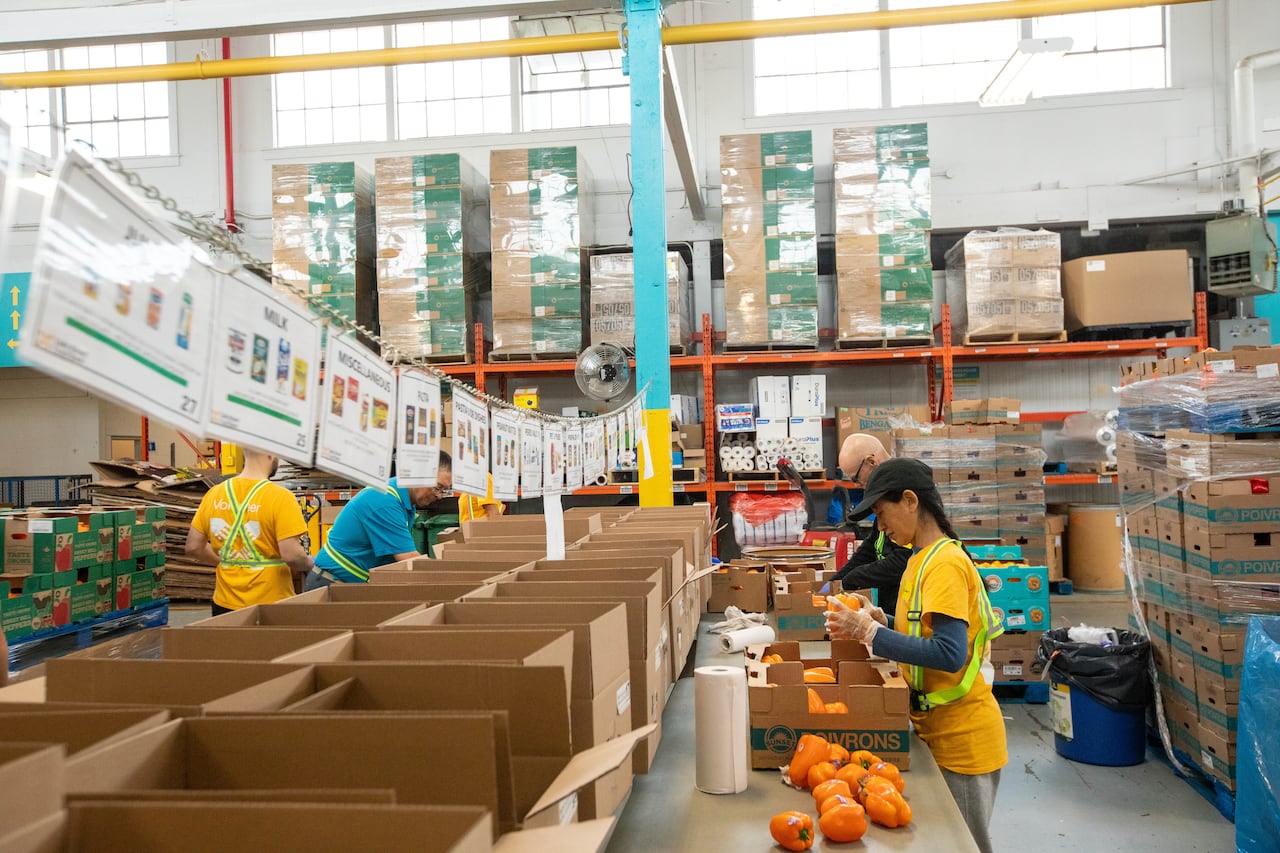
Volunteers are seen on Tuesday at the Daily Bread Food Bank in Etobicoke, Ont. The charity released its annual report, Who’s Hungry, this week, indicating that one in eight children in Toronto now depends on food banks — nearly double the rate from 2022. (Alex Lupul/CBC)

