

Researchers from Carleton University have identified a relatively straightforward preventative strategy that could have significantly aided the Crystal Beach area of Ottawa in coping with the severe storm that struck on Canada Day.
By analyzing rainfall statistics from the unprecedented downpour on July 1, the research team employed a computer simulation to assess the benefits of implementing engineered rain gardens on private properties and within the city’s right-of-way along streets.
The findings revealed substantial decreases in stormwater accumulation and perilous floodwaters.
“The Canada Day storm has highlighted the weaknesses in our neighborhoods regarding the management of extreme weather and urban flooding,” stated Jennifer Drake, an associate professor and Canada Research Chair specializing in stormwater and low-impact development.
“Unless we take action, these disasters will continue to occur,” she warned.
A rain garden, also referred to as a bioretention cell, resembles a shallow trench filled with sandy soil and resilient, deep-rooted plants that can thrive in both dry and wet conditions. It is designed to slow down and absorb water, often featuring a drainage system leading to a catch basin.
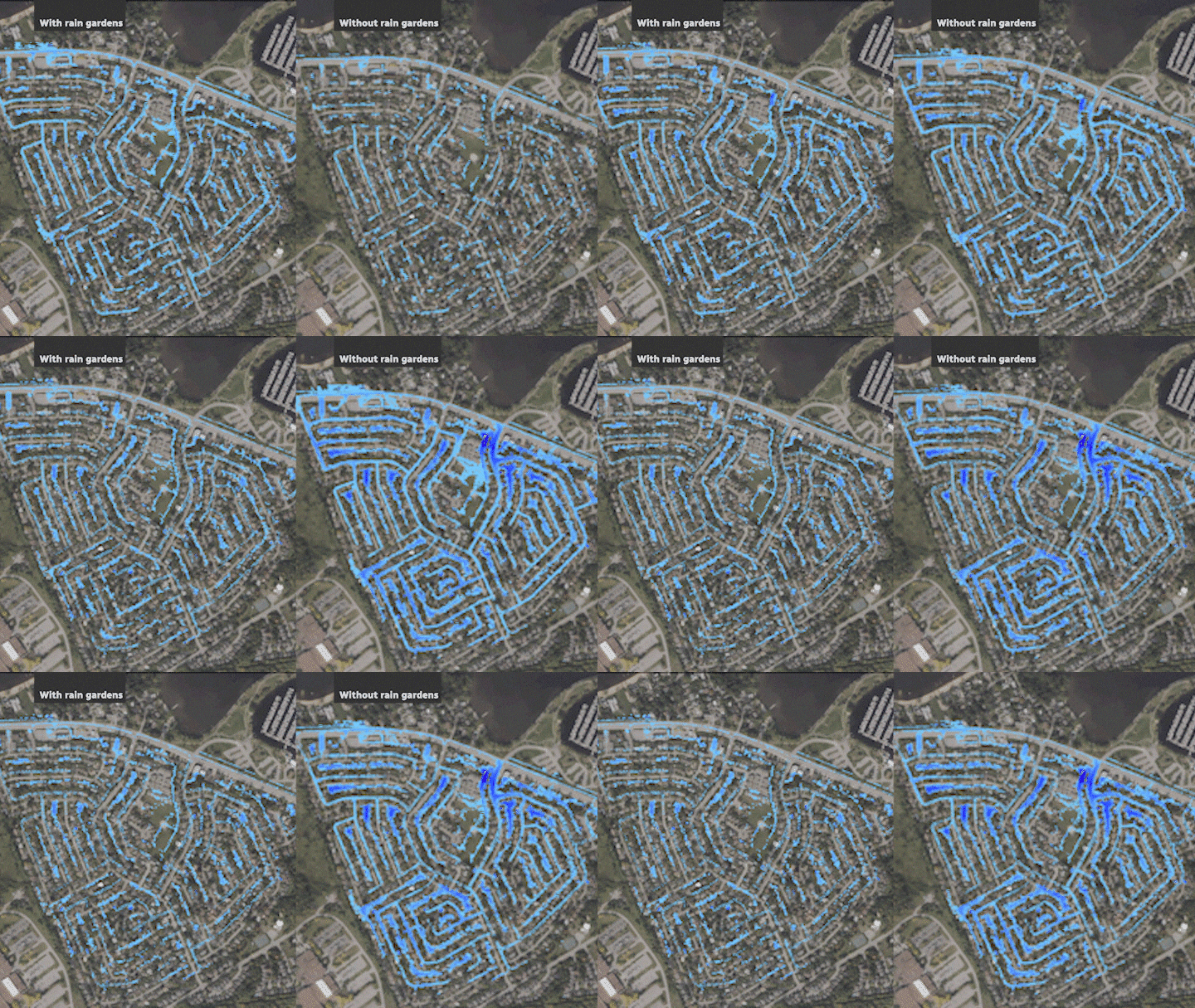
Maps illustrating the rain accumulation in Crystal Beach based on data from the storm on July 1, 2026. The right map shows the current stormwater infrastructure, while the left depicts the scenario with rain gardens situated along the city’s right-of-way at the roadsides. Light blue indicates 15 cm of water, dark blue represents a metre, and red signifies a metre and a half. (Ali Zoghi)
Drake and PhD candidate Ali Zoghi selected Crystal Beach for their stormwater drainage model due to its typical residential construction from the 1950s to the 1980s. The area was also one of the hardest hit during the storm on July 1, making it an ideal case study.
The storm resulted in a peak rainfall of 167 mm within a five-hour timeframe. In contrast, a typical storm would produce about 20-30 mm over several hours.
According to the model, streetside rain gardens installed on the city’s right-of-way could reduce stormwater accumulation exceeding 15 centimetres by 76 percent. Additionally, the systematic addition of rain gardens to private properties could decrease flooded areas by 86 percent.
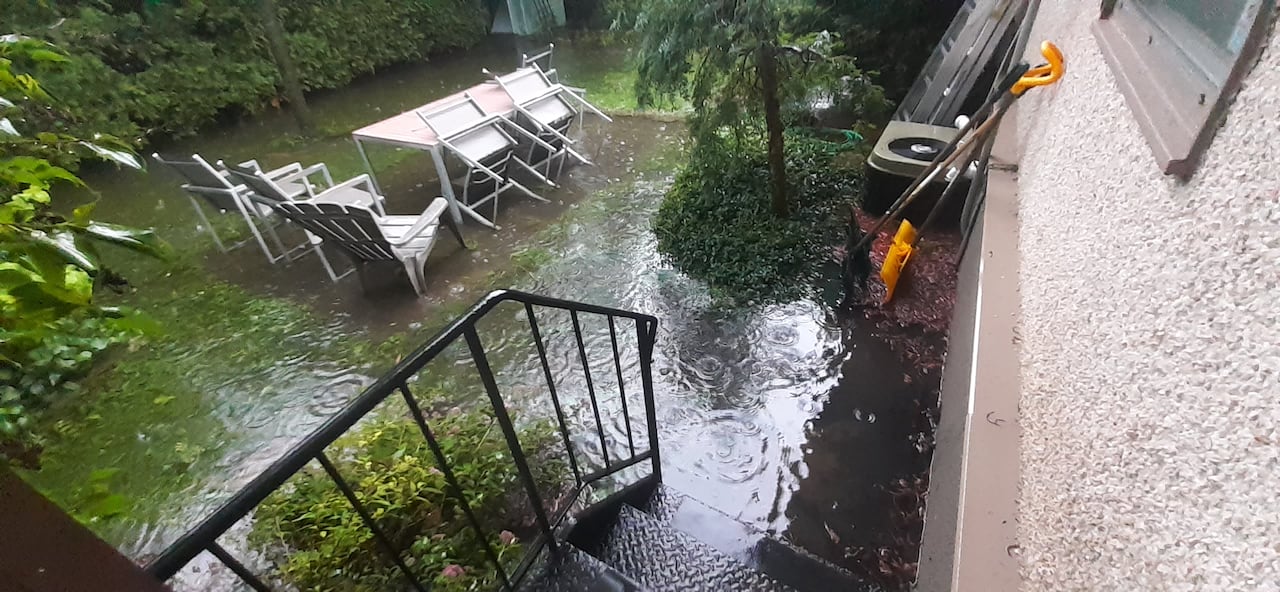
The intense rainfall on the afternoon of July 1, 2026, caused flooding in backyards and basements in the Crystal Beach neighborhood of west Ottawa. The city received numerous service requests from the impacted area. (Kevin Schafer/Supplied)
Furthermore, the rain gardens significantly reduced water depth in the most affected regions of the neighborhood’s northern section, where the model showed water levels nearing a metre and a half, lowering it to one metre.
Crucially, the streetside gardens eliminated water flow exceeding 0.6 metres per second, a speed sufficient to topple individuals or displace vehicles.
“While we didn’t completely eliminate overland flooding, we were able to remove the most hazardous conditions that could potentially lead to loss of life. As an engineer, that’s the ultimate goal,” Drake remarked.
Vulnerable neighborhoods
Crystal Beach was selected for the research as it shares traits with mid-century suburbs such as Mississauga or St. Catharines, Ontario.
Drake explained that developments from that period typically lacked dual drainage systems, which are essential for managing significant events like a once-in-a-century rainfall, in addition to standard stormwater drainage.
This deficiency results in water collecting in low-lying areas throughout the neighborhood, a common issue faced by cities across Ontario,” she noted.
“This is where some of the worst basement flooding occurs.”
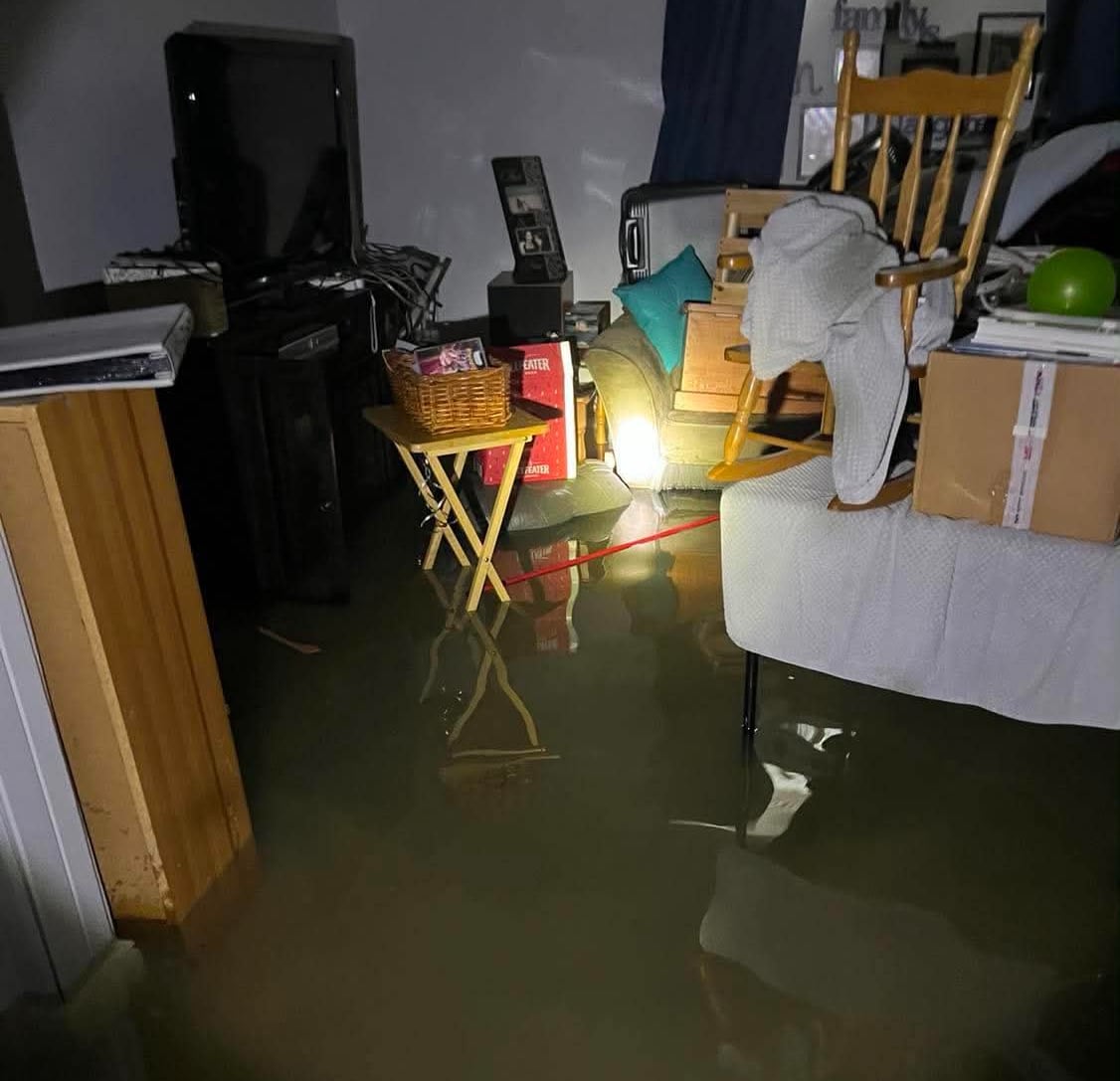
Jennifer Johnston’s residence in Ottawa’s Crystal Beach neighborhood was among thousands that experienced flooding following the powerful storms on Canada Day. (Submitted by Gillian Maloney)
According to the City of Ottawa’s Stormwater Asset Management Plan, older neighborhoods within the Greenbelt face a higher risk of flooding due to designs that predate the implementation of dual drainage systems.
The plan indicates that about 80 percent of buildings citywide would not be susceptible to overland flooding during a “1-in-100-year” rain event.
However, the rainfall on Canada Day was even more extreme, classified by the city as exceeding a 1-in-200-year event.
Combining green and gray infrastructure
The simulation indicated that merely upgrading stormwater pipes—an expensive endeavor involving the excavation of entire roadways—would not have significantly alleviated the situation on July 1.
Ali Zoghi, the PhD student who collaborated with Drake on the simulation and has been investigating Crystal Beach for three years, noted that traditional pipe enhancements resulted in less than a 10 percent reduction in standing water according to their model.
“The impact of our rain gardens was far more pronounced in mitigating flooding and making the storm more manageable for residents,” Zoghi explained.
He emphasized the complementary nature of the two systems: the rain garden mitigates and slows down runoff, while the pipes effectively transport it away.
In an update provided to the council on August 24, city officials stated that their thorough review of the July 1 storm now encompasses two additional significant storms, along with reports from residents and more detailed analyses focused on creeks, watersheds, wards, and neighborhoods.
The update mentioned that the city’s water resources engineers are conducting their own modeling and thorough evaluations to identify potential mitigation strategies.
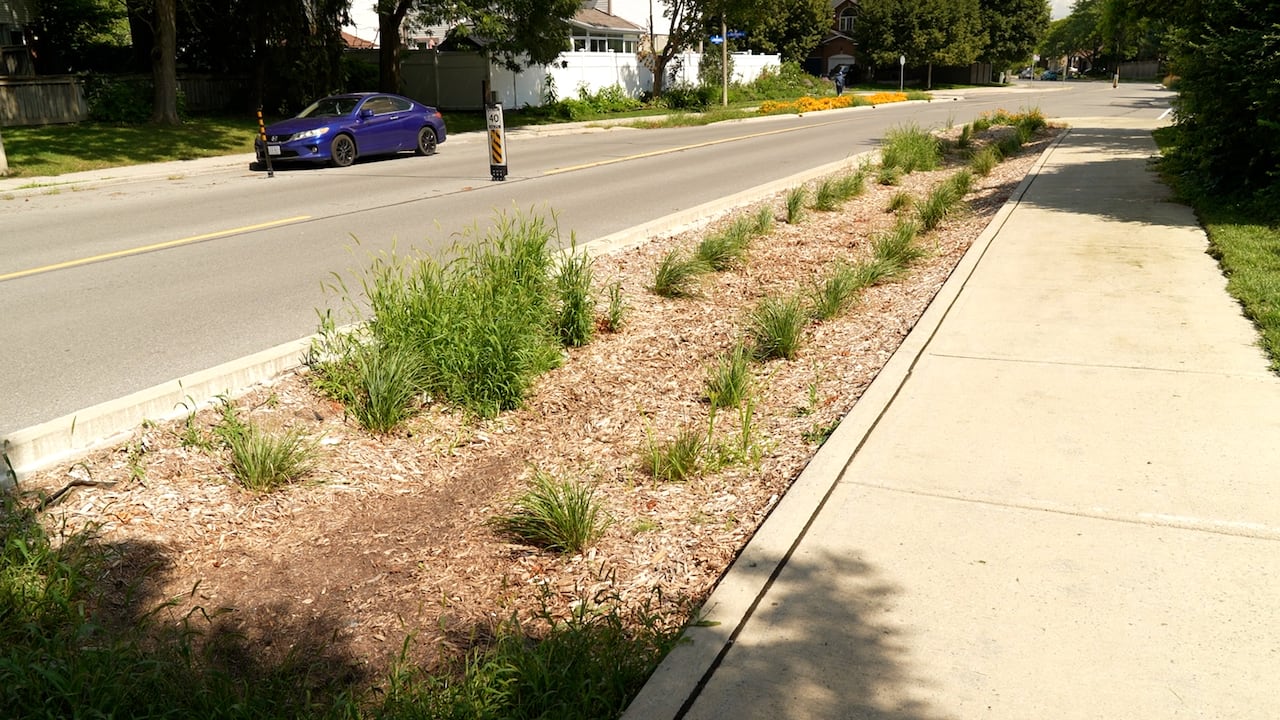
A rain garden established as part of an Ottawa pilot initiative on either side of Hemmingwood Way close to Centrepointe. Native vegetation and soil assist in absorbing and slowing runoff. (Mathieu Deroy/CBC)
In a statement from the city’s director of asset management services, it was conveyed that “it would be premature to evaluate the effectiveness or relevance of any individual measure, location, or approach in isolation before the broader analysis is completed.”
Updates regarding these investigations into storm impacts, infrastructure performance, and resilience strategies are anticipated in the upcoming months.
The city has incorporated rain gardens into its 50-year stormwater management strategy, with pilot programs executed on Sunnyside Avenue in Old Ottawa South, Stewart Street in Sandy Hill, and Hemmingwood Way near Centrepointe.
Additionally, the city offers guidance and rebates for residents wishing to install rain gardens on their properties through the Rain Ready Ottawa initiative.
Drake and Zoghi emphasize that the effectiveness of rain gardens in their model can be attributed to their strategic placement in the city’s right-of-way, allowing them to utilize established drainage patterns.

