

Officials managing the Ebola epidemic in eastern Democratic Republic of Congo are employing anonymized data from mobile phones to track population movements and pinpoint regions that might be at risk of further virus transmission, as reported by the World Health Organization (WHO) and associated researchers.
This novel strategy, which has not been previously applied in response to an Ebola crisis, is being utilized as authorities face challenges in controlling what the WHO has labeled as the fastest-growing Ebola outbreak in history. As of the latest governmental updates, the outbreak, declared on May 15, has impacted six provinces, resulting in over 6,250 infections and 3,039 fatalities.
This marks the 17th outbreak in Congo, caused by the Bundibugyo strain of Ebola, for which there are no licensed vaccines or treatments available.
As the virus continues to spread, health officials are seeking methods to predict potential new cases and effectively allocate their limited surveillance and response resources.
“Population movements have always played a significant role in outbreaks, but they are especially critical in the current epidemic,” stated Olivier Le Polain, head of epidemiology and analytics for the WHO’s Health Emergencies Programme.
Conventional risk assessments target outbreak hotspots, presuming that the virus is most likely to disseminate to neighboring regions. By examining mobility data, responders can uncover risks in areas that may be geographically distant yet closely linked through travel patterns.
“This provides us with a more detailed comprehension of risk,” Le Polain remarked, referencing Ituri province in the northeast, where the virus is thought to have first spread.
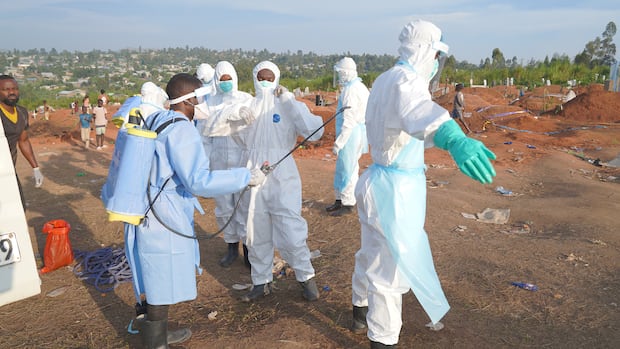
The Ebola outbreak in the Democratic Republic of Congo is officially the deadliest in the country’s history, and health officials worry the crisis will only get worse when children return to school.
“There are significant population movements in Ituri due to mining operations and trade. Understanding these movements is essential for comprehending the outbreak’s spread.”
The analysis is conducted by the Swedish non-profit organization Flowminder, which utilizes anonymized data generated when mobile phone users connect to telecom networks. As individuals travel throughout the nation, their devices connect to different antennas, producing records that indicate where these connections occur. Researchers utilize this information to estimate travel patterns between various regions.
Vodacom, the largest telecom operator in Congo, provides the data at no cost. The company did not respond to requests for comments.
Flowminder asserts that it receives only aggregated and anonymized data and does not have access to any details that could identify individual subscribers.
“Our aim is to provide estimates of how people move, which subsequently predicts how infectious individuals travel,” Flowminder’s founder Linus Bengtsson explained to Reuters.
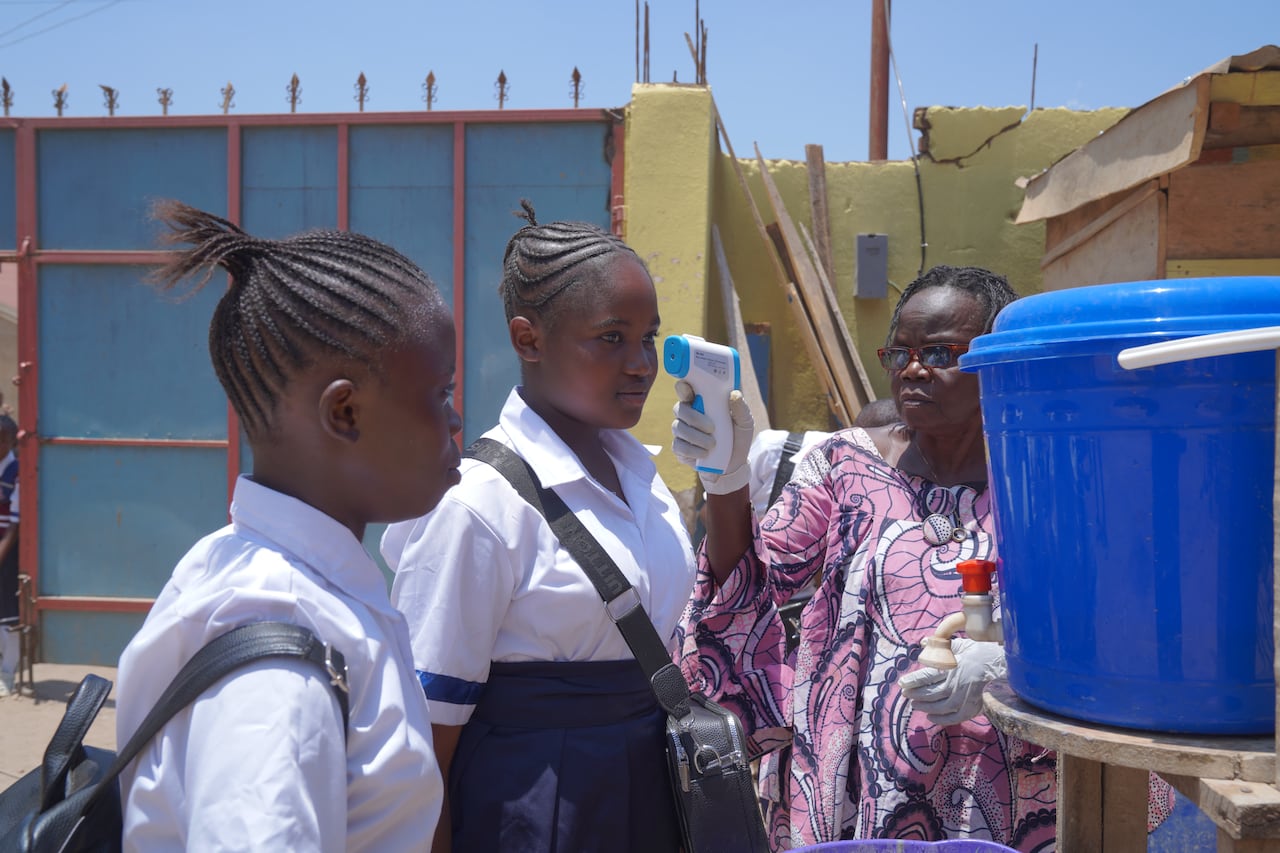
A school official checks students’ temperatures as they enter a school in Ituri, Congo, on Tuesday, the first day of the new school year. (Dieudonne Dirole/The Associated Press)
Flowminder’s initial analysis, released in early June, concentrated on the three regions where the outbreak is believed to have originated: Bunia, Mongbwalu, and Rwampara. The research team tracked travel patterns of individuals who had been in those areas from April 3 to April 23.
The most substantial travel flows were directed towards nearby regions within Ituri and North Kivu provinces. By late June, all ten locations that experienced the highest influx of travelers from the original outbreak hotspots reported confirmed cases of Ebola.
Supporting the response
As the virus spread beyond its initial center, Flowminder broadened its analysis to include additional affected regions, assessing where individuals departing those hotspots were likely to travel next.
Kisangani, a key transport hub on the Congo River linking eastern and western Congo, emerged as a focal point.
“It was not a major surprise that Kisangani was at risk, even though it did not border the affected areas,” Le Polain noted. “By mid-June, the data indicated that the risk was substantial and that the outbreak could propagate there more swiftly than we initially anticipated. We enhanced operations in that area prior to the detection of the first cases.”
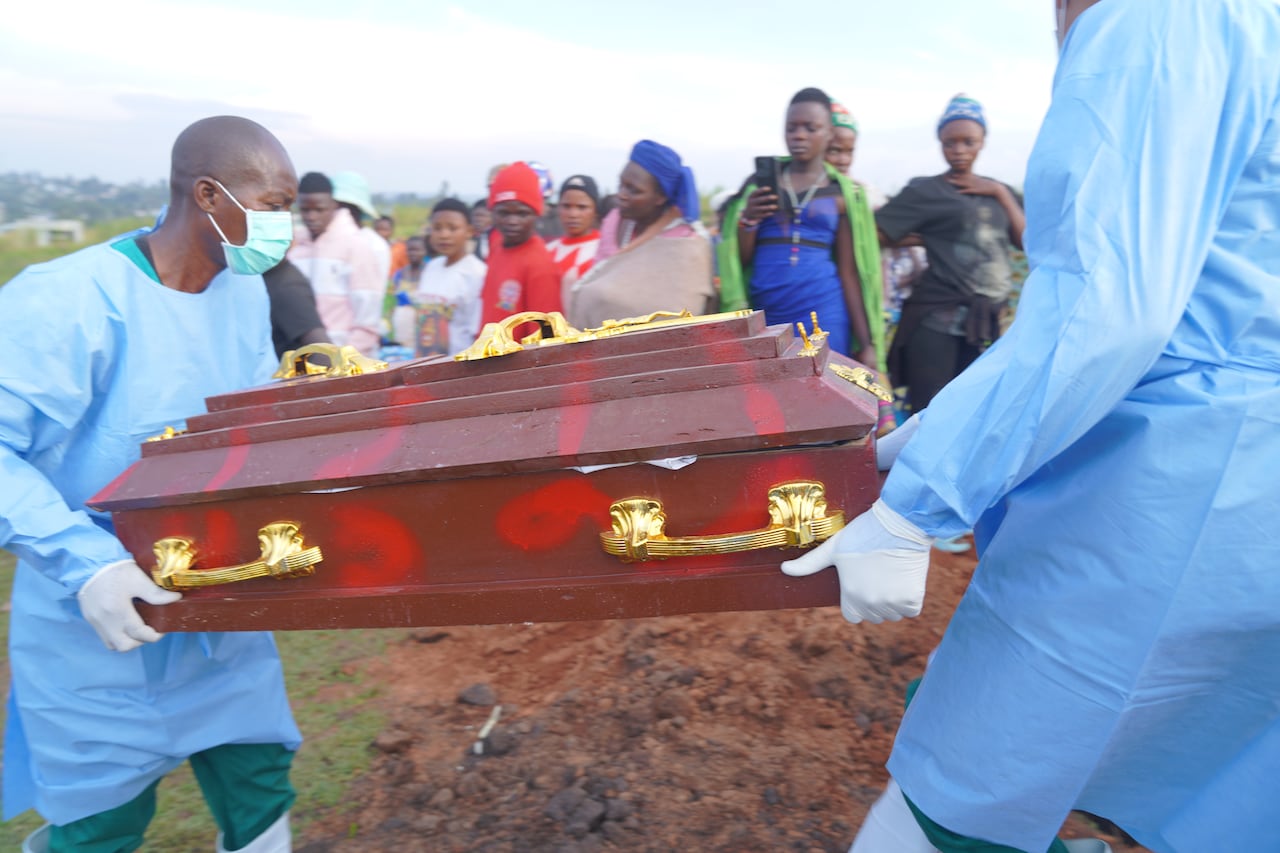
Individuals in protective clothing carry the coffin of a three-year-old who succumbed to Ebola for a burial service in Bunia, eastern Congo, on Aug. 18. (Dieudonne Dirole/The Associated Press)
Recent analyses have underscored connections between Kisangani and Kinshasa, along with settlements along the Congo River and regions near the borders with the Central African Republic and South Sudan. Of the 50 areas most linked to Kisangani, 15 were in Kinshasa province, indicating a potential risk of transmission to Congo’s capital and largest city.
These findings come as the WHO continues to alert about the possibility of the outbreak extending to Kinshasa and neighboring nations. In a modeling exercise presented in late June, the agency projected a 70 percent likelihood of a case being identified there by the end of September.
-
Schools reopen despite concerns amid Congo’s Ebola outbreak
-
Ebola in the Democratic Republic of Congo: What’s going on and why is the outbreak so alarming?
One limitation of this analysis is its dependence on data from Congolese mobile networks, which means it offers only a partial view of movements across international borders.
Furthermore, it currently relies solely on data from Vodacom, which, despite being the largest operator in the country with over 26 million active subscriptions and a market share of nearly 35 percent, does not account for the movements of individuals utilizing competing networks.
Flowminder and UN officials involved in the response have stated that they are working to establish similar agreements with other telecom operators to enhance coverage and obtain more comprehensive data.

