

This summer, various Western intelligence agencies were urgently trying to determine what sensitive information, if any, an alleged Canadian spy may have accessed while interning at several agencies and governmental departments.
Biwei Zhang, a Canadian intern stationed at NATO’s military headquarters in Mons, Belgium, was apprehended by Belgian authorities in July on charges of espionage and communication with a foreign criminal organization. She has remained in pretrial detention since her arrest and was recently denied an appeal for her release.
Belgian officials have disclosed very little information about the situation and have even refrained from disclosing her name. An investigation by CBC News in late July identified her through publicly available records and revealed that she had transitioned between several prestigious organizations over the last ten years.
Zhang is reported to have held roles as an economist at Statistics Canada, a systems engineer working on satellite operations for the Canadian Space Agency, and positions at the European Space Agency in Italy as well as the World Trade Organization in Switzerland.
-
Ottawa will investigate screening procedures following NATO intern spying accusations
-
Court ruling against Chinese student sends a message regarding espionage threats, experts assert
Although Belgian authorities have not specified who she may have been spying for, European media reports, citing intelligence sources, suggest that it was China.
The Canadian Security Intelligence Service (CSIS) has confirmed it is leading a damage assessment involving multiple departments.
“In the event of security incidents like this, it is standard for departments and agencies to carry out a review to identify and mitigate potential impacts,” said Magali Hébert, a CSIS spokesperson, in a written statement.
“CSIS can confirm that it is collaborating with federal partners in this regard.”
CBC News consulted several confidential sources from the intelligence and diplomatic sectors regarding the implications of the allegations against Zhang.
Kenneth Lasoen, a professor of intelligence studies at the University of Antwerp, indicated that a “thorough post-mortem” of her alleged actions would likely be a priority for several European intelligence agencies.
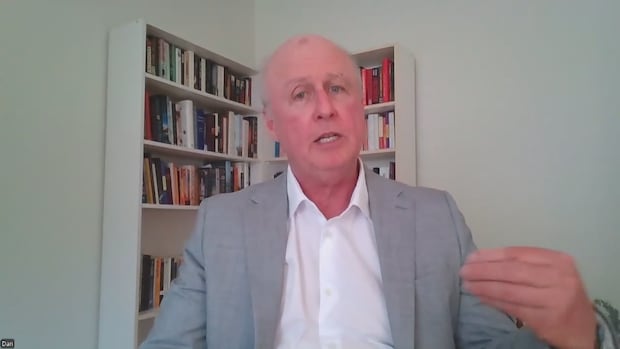
Former CSIS intelligence officer Dan Stanton discusses various scenarios concerning how the alleged NATO spy could have passed through Canada’s security clearance processes, including the possibility of her recent recruitment by a foreign intelligence service.
Agencies are working to piece together the extent of her access, the potential damage incurred, and whether Zhang was part of a larger network.
Much of the public conversation in Canada surrounding this case has centered on how the alleged spy obtained her security clearance. A House of Commons committee has plans for hearings.
Intelligence agencies, however, are more focused on understanding the broader implications of what she may have seen, what actions were taken, and whether there were accomplices involved.
“The most critical aspect of the damage assessment would be to ascertain who she was working for, what the communication channels were [and] how she collaborated with her handlers,” Lasoen told CBC News.
In the immediate aftermath of her apprehension, NATO stated that none of its essential systems had been compromised.
The European Space Agency has directed its public statements toward her security vetting, emphasizing that it was the responsibility of national authorities to conduct more thorough checks. A representative from the World Trade Organization (WTO) confirmed that Zhang was employed there briefly in 2023.
‘Are there still logs?’
Reconstructing her alleged activities within the various agencies in Europe and Canada will depend on how long they retain security records.
“Are there still records of her badge movements, for instance? Are there still surveillance camera images of her attempting to enter or moving through areas of the office where she had no legitimate reason to be?” Lasoen asked.
“I am confident that at SHAPE [NATO], given it is the most recent, they will manage to recover most of that information. However, for the other locations, it raises questions about how long ago it was and what their policies are regarding the retention of such data.”
Lasoen, an expert in counterterrorism and cyber, who has also served as an instructor for certain European intelligence agencies, highlighted the significance of Belgian authorities accusing her of engaging with a criminal organization.
Under Belgium’s newly revised legislation, anyone who encourages another to commit espionage is classified as part of a criminal organization.
“However, this raises diplomatic concerns,” Lasoen noted.
“If we label the Chinese intelligence service as a criminal organization, it’s likely that the Chinese government will have a substantial reaction to that.”
Considering her arrest was tied to alleged espionage at NATO’s military headquarters, the information she purportedly acquired or the actions she undertook could provide direct advantages to Chinese military intelligence.
The critical question being posed in intelligence communities is whether she was operating directly on behalf of them or if she was connected to a third-party criminal organization.
There are known third-party networks in Europe that have reportedly collaborated with Chinese intelligence services, including community associations from Fujian. This information is based on a ProPublica investigation conducted in Italy and Spain.
Chinese overseas police stations are also recognized as intelligence liaison points.
Although none operate in Belgium, France has recently shut down a network of nine such stations.
Brussels authorities have had to deal with informal consular networks that are alleged to aid Chinese nationals living in the area.
In Canada, officials are expected to thoroughly investigate the departments that Zhang had access to, analyzing the information she encountered through a military or intelligence perspective to determine its potential value to foreign parties.

A CBC News investigation has identified Biwei Zhang as the Canadian intern at NATO who is facing espionage charges. She previously held positions at the World Trade Organization, the European Space Agency, the Canadian Space Agency and Statistics Canada.
Reports from The Globe and Mail indicate that while at Statistics Canada, she monitored shipping data from the Port of Montreal — information that holds significant economic and military implications in times of conflict.
Zhang’s position as an IT intern may also be crucial, according to a cybersecurity expert.
China’s approach to cyber espionage markedly differs from that of adversaries like Russia, Iran, and North Korea.
While those nations and their affiliates often engage in aggressive data theft and system disruption, China’s strategy involves subtle infiltrations.
“Their methods are characterized by being slow and methodical, highly deliberate, and nearly impossible to detect,” remarked J Paul Haynes, CEO of Cinchy, a Toronto-based data access and governance firm.
The objective is to either implant malware into critical infrastructure systems for future activation, potentially during a crisis or conflict, or to establish what Haynes calls a “beachhead” for external hackers.
“The optimal strategy has historically been to have an insider collaborating with outside hackers,” Haynes noted, who frequently comments for the Centre for International Governance and Innovation.
“Everyone, from the CIA downward, would agree that this scenario is the most challenging to defend against when an insider is actively working against you.”
A coalition of European media outlets — Le Lettre, Le Soir, Knack, and Follow the Money — reported that a counterintelligence probe at SHAPE involving Zhang was initiated due to her reported presence near restricted military command buildings and her repeated inquiries to personnel about specific hypothetical security protocol violations.
Last week, these publications informed that Belgian security officials now suspect the involvement of accomplices.

