

It is now confirmed: Skydance, under Paramount’s ownership, has finalized its $81 billion acquisition of Warner Bros. Discovery.
The agreement was completed on Tuesday, marking the emergence of a new Hollywood powerhouse now simply named “Skydance.”
This merger unites two of the longest-established film studios in the United States, with HBO Max and its extensive library—including titles like Harry Potter and Sinners—now sharing a space with Paramount+, CBS, and iconic films such as Top Gun and The Godfather.
All operations will be overseen by billionaire David Ellison, along with his new co-CEO Ynon Kreiz (previously of Mattel), further consolidating influence within an already limited industry landscape.
Effects on Canadian Streaming
Ellison has indicated plans to eventually merge Paramount+ and HBO Max into a single streaming platform.
Currently, however, HBO offerings are exclusively accessible in Canada through Bell Media’s Crave, while Rogers holds a license for Discovery content and Corus has a deal for select Paramount titles, including those from Cartoon Network.
These agreements are established for multiple years, and while their expiration dates remain unclear, it suggests the streaming environment in Canada is likely to stay unchanged for the immediate future.
Although Skydance appears to be aiming for a streamlined streaming service in the U.S., this may not be financially viable in Canada, according to Stephen Zolf, a partner at the competition and communications group at the law firm Aird & Berlis in Toronto.
“Our market is relatively small compared to the U.S.,” he stated to CBC news. “If you hold the program rights, it might be more economically sensible to keep it in Canada with a local broadcaster like Crave, since they generate significant revenue.”

Bell Media maintains that Crave will continue to be the home for HBO and HBO Max programming in Canada through a long-term agreement with Warner Bros. Discovery. (Graeme Roy/Canadian Press)
While the availability of streaming services may stay the same, price increases are anticipated, according to Mike Proulx, vice president and research director at Forrester.
“We have witnessed a wave of price increases over the last five years as nearly all major streaming platforms seek profitability,” he shared with CBC News.
“Thus, you can expect that whatever configuration Skydance ultimately adopts… it will likely lead to subsequent price hikes to improve profitability and manage the debt the company will face.”
Skydance’s Commitment to More Films
As part of a settlement with U.S. states opposing the merger, Paramount has committed to releasing a minimum of 30 films annually for the next two years, ensuring theatrical distribution.
Following that, it has also pledged to put out 32 films in each of the subsequent three years, with only half of those needing to be “produced or jointly produced” by the merged entity.
This development may be disappointing for independent film enthusiasts, as noted by Keldon Bester, executive director of the Canadian Anti-Monopoly Project, who expresses concern about the medium-term implications after this five-year promise concludes.
“We know the film industry will persist in various forms long after that,” he remarked.
“From a consumer standpoint, I think we will continue to witness a trend towards fewer films being released, and those that do will mostly be limited to big-budget productions.”

An aerial view of the Paramount logo on the water tower at Paramount Studios in Los Angeles, California. A state-initiated antitrust lawsuit challenging the merger of Paramount and Warner Bros. Discovery was announced as settled in September, clearing a significant legal barrier for the agreement. (Mario Tama/Getty Images)
Challenges for Canadian Production
Even in the near term, Paramount’s assurance to increase film output may not translate into additional opportunities for Canadian artists, directors, and production teams.
The company has also promised to ramp up its film production budget in the U.S. by at least $1.5 billion over the next five years.
Moreover, Skydance has already indicated the necessity of identifying cost-saving measures, and reports suggest this may involve job cuts.
A report from Variety estimates that the merger could lead to the loss of approximately 4,500 film and television positions in Los Angeles alone within the next three years.
Bester believes this will also reduce job opportunities north of the border: “We should expect a more intense competition over production locations as this market continues to shrink.”

Actor Sally Field expressed her opposition to the Paramount-Warner merger while accepting an award at the Emmys in September. (Patrick T. Fallon / AFP/ Getty Images)
Hollywood’s Reaction
In April, a multitude of actors, writers, directors, and other industry professionals declared their “unequivocal opposition” to the Paramount-Warner merger.
The open letter—signed by prominent critics of the merger including Jane Fonda and Mark Ruffalo, alongside notable Hollywood figures like Canadian director Denis Villeneuve and J.J. Abrams—expressed concerns about job losses and “less choice for audiences both in the U.S. and globally.”
Conversely, some stars have voiced their support for Paramount as Ellison reiterated his dedication to filmmaking.
At CinemaCon this past spring, the studio presented a polished mini film about itself directed by Jon M. Chu and narrated by Tom Cruise, who concluded the segment atop the iconic Paramount water tower, stating, “the future is paramount and the future looks pretty great from here.” Director James Cameron also reaffirmed his backing for Ellison.
When receiving her Emmy last month, Remarkably Bright Creatures star Sally Field—who also signed the open letter against the merger—emphasized that “unique storytelling matters” and insisted that “we cannot allow those voices to be silenced, compromised, or merged.”
Trump’s Commentary on CNN
U.S. President Donald Trump has consistently criticized unfavorable coverage from CNN, most recently attempting to exclude the network from the White House entirely. Throughout the Warner acquisition process, his administration was vocal about its hopes for a new owner.
In December—just days after Paramount made its hostile bid for Warner—Trump claimed that CNN disseminated “poison and lies,” asserting that “the individuals responsible for CNN’s management over the years are a disgrace” and that “it is essential for CNN to be sold.”
The White House took another jab at CNN in March regarding the network’s reporting on the U.S.-Israeli conflict with Iran. At that time, Secretary of Defense Pete Hegseth remarked that “the sooner David Ellison takes control of that network, the better.”
Ellison has assured that CNN will maintain editorial independence, and the company has committed to establishing a “News Editorial Independence Board.”
However, critics highlight previous issues at CBS under Skydance’s oversight—leading to skepticism about whether this new board will have much influence, given that Ellison is expected to have substantial control over appointments. Outside this board, the merged entity will retain Mark Thompson as CNN’s editor-in-chief.
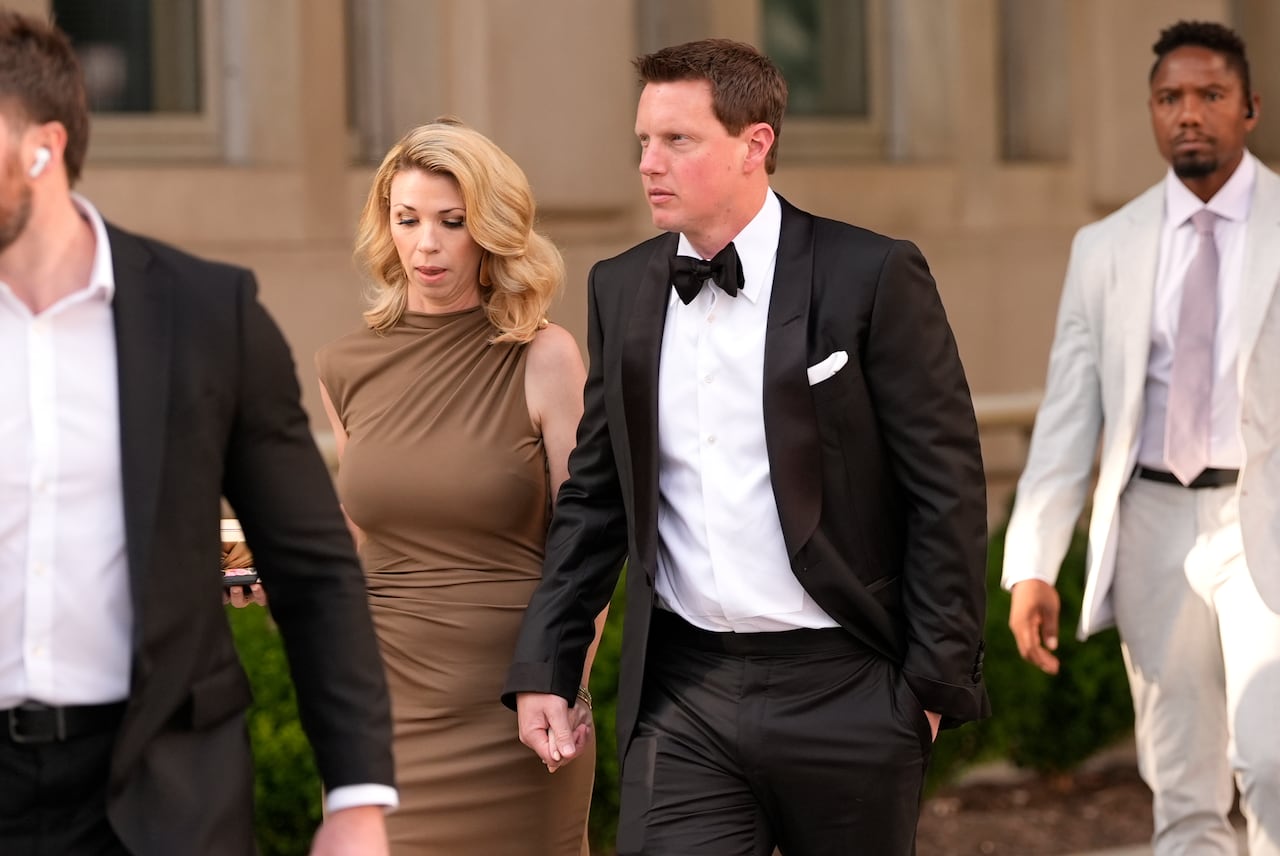
David Ellison, right, and his wife Sandra Lynn Modic walk to the White House to attend a state dinner honoring China’s President Xi Jinping last month in Washington. (Carolyn Kaster/The Associated Press)
Trump has maintained a longstanding connection with the Ellison family.
Paramount’s head reportedly held a dinner in Washington honoring Trump in April, coinciding with Warner shareholders approving the merger.
Additionally, in June, just two days after the U.S. Justice Department announced it would not intervene in the acquisition, Ellison attended an Ultimate Fighting Championship event on the White House lawn for Trump’s 80th birthday (which was streamed on Paramount+).

