

For small business owners such as Karla Briones, operating a business is becoming increasingly challenging.
Briones has been managing two Global Pet Foods franchises in the Ottawa region for over ten years, but she remarks that expenses are escalating quickly, squeezing her profit margins and making it tougher to compete against budget-friendly online retailers.
Additionally, her suppliers have transferred some costs associated with tariffs, compelling her to increase prices in her stores.
“Costs are rising in every aspect. Commercial rent, wages, our stock — all are increasing, yet we are striving to remain competitive,” Briones stated.
Briones is not alone in her difficulties. Numerous small to medium-sized enterprises nationwide, employing over 60 percent of Canada’s private sector workforce, are grappling with the impacts of tariffs and a decline in consumer spending, as explained by Jasmin Guénette, vice-president of federal affairs for the Canadian Federation of Independent Business (CFIB).
“Canada is experiencing an entrepreneurial drought, which indicates that currently, more small businesses are shutting down than launching in this country.”
As the federal budget approaches on Thursday, Finance Minister François-Philippe Champagne hinted to an audience at the Canadian Club in Toronto on Monday that small businesses would “see themselves” represented in the government’s financial strategy.
This news would be positively received by many entrepreneurs and the organizations that advocate for them, who are optimistic that the 2026 budget may introduce enhanced tax incentives and programs to aid them during challenging tariff conditions.
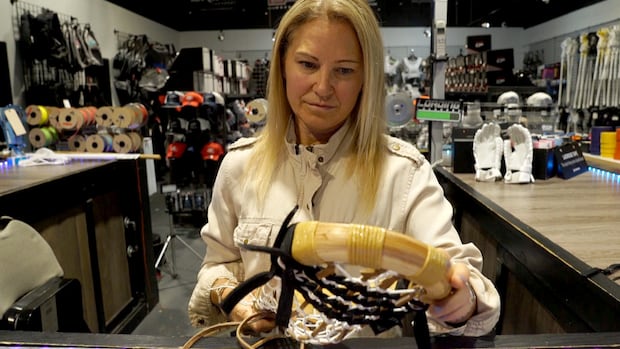
As Canada’s counter-tariffs on U.S. products come into effect, some small-business owners say that while they understand the urge to fight, they’ll take a major blow from these levies. For The National, CBC’s Nick Purdon hears from business owners trying to survive more tariffs, which one advocate calls ‘economic chemotherapy.’
CFIB prioritizes tax reductions for small businesses
At the top of CFIB’s budget wishlist are tax reforms that would reduce the cost of operating a business.
Currently, the federal tax rate applicable to small businesses is approximately nine percent, which the advocacy group wishes to decrease to six percent.
They also propose raising the threshold for small business income, which permits businesses to benefit from the lower tax rate on a portion of their earnings before a higher rate of 15 percent is applied, from $500,000 to $700,000.
Guénette asserts that this alteration would significantly impact small and medium-sized business owners across various sectors, as they have indicated to the CFIB that they would reinvest their tax savings back into their businesses.

Karla Briones rearranges cans of pet food on a shelf at one of the Global Pet Food franchises she owns in the Ottawa area. Briones is hopeful the budget will help business owners like her following comments earlier this week by Canada’s finance minister. (Marc Robichaud/CBC)
Such reinvestments might include initiatives like enhanced training programs and better wages for employees, in addition to new machinery and equipment, he adds.
On Monday, the finance minister indicated that tax simplification changes could be forthcoming.
Briones stated that any such initiative would allow her to devote more time to other aspects of her business, while the CFIB’s request would provide a well-needed advantage.
However, she believes an even more beneficial approach would be a reduction in employment insurance premiums for small businesses, enabling employers to pay the same EI rates as their staff (an objective the CFIB is also advocating for), as this would quickly increase her cash flow.
“That would be tremendously helpful for us on a payroll basis, rather than waiting until … we file our taxes to receive credits or other forms of support,” Briones remarked.
The cash flow issue has been one of the most significant challenges for Briones, and a primary reason why she has not yet taken advantage of the government’s productivity mega-deduction, which was introduced in September and allows businesses to write off the total amount spent on various investments, including equipment.
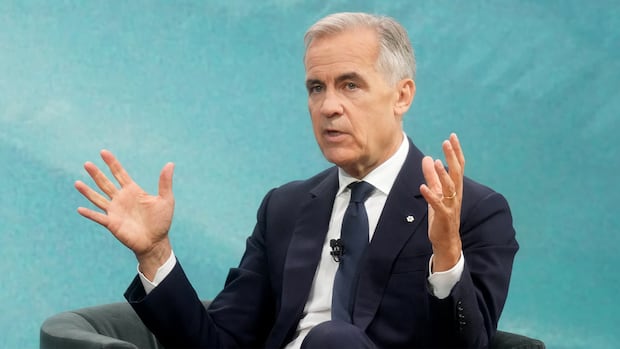
Prime Minister Mark Carney announced a massive tax break to attract investors to Canada. It includes the productivity mega-deduction which lets companies immediately write off the entire cost of new investments.
Although these investments can be expensed right away, Briones emphasizes that she would still require the initial funds to purchase a new freezer or point-of-sale system before she can recoup the money, which isn’t always straightforward. She expresses a desire for an interest-free loan program to assist businesses of all types in making such investments.
However, Eric Saumure, a finance specialist and accountant for small businesses in Ottawa with Zenbooks, suggests he isn’t overly optimistic. In a pre-budget blog entry, he noted that the mega-deduction and previously announced tariff relief initiatives are likely to restrict additional financial allocations for businesses in the budget.
“Considering these factors, it seems Ottawa may have already made its significant business tax adjustments for the year.”
Desire for more tariff relief and access to new markets
With the recent implementation of 50 percent U.S. tariffs affecting primarily small and medium-sized businesses, many are also anticipating that the budget will provide further assistance against the trade war repercussions.
The CFIB reports that approximately 46 percent of small exporters are directly affected by the U.S. tariffs, while 49 percent of small importers feel the impact of Canada’s counter-tariffs.
Amit Thakkar, president of the Brampton, Ontario-based fabric and apparel companies House of Blanks and Roopa Knitting Mills, reports that both businesses have been adversely affected due to the 50 percent U.S. tariffs on clothing.
He commended existing tariff relief measures like the regional tariff response initiative, which provides qualified businesses affected by the tariffs with up to $3 million in total support. However, Thakkar mentions that some of these programs have limitations on the types of expenses they can cover.
Moreover, they necessitate businesses to apply and demonstrate their eligibility, which Saumure also identifies as a barrier. In a pre-budget submission, Zenbooks proposed that the government implement automatic tariff relief payments for affected businesses to minimize these hurdles.

Amit Thakkar is the president of Roopa Knitting Mills and House of Blanks, which make apparel and fabric in Brampton, Ont. Some clothing items were hit with 50 per cent tariffs by the U.S., and Thakkar says he’d like to see more relief measures in this Thursday’s budget. (Spencer Gallichan-Lowe/CBC)
In the upcoming budget, Thakkar hopes to see revenue from counter-tariffs returned directly to the small businesses affected by them, an approach that CFIB has also urged the government to consider.
However, he adds that businesses must still ensure they have customers after receiving support.
“We need to ensure that there is a customer at the end of the line,” he expressed. “It all becomes pointless if there are no sales to connect to it.”
He also believes that additional assistance for accessing new markets would be beneficial in the budget. The primary barrier preventing him from exporting to Europe, for instance, is the high costs involved, so he advocates for subsidies that would assist Canadian businesses in shipping products abroad to help entrepreneurs like himself discover new markets.

