

Cherie Dimaline’s novel Empire of Wild follows the journey of three generations of women as they strive to rescue their loved one from the clutches of the werewolf-like Rogarou. Their mission is to find a missing husband and safeguard their land from corporate interests.
The narrative is characterized by its raw, alluring, and intense nature, earning it the top spot in Indigo’s 2019 book list, surpassing renowned titles such as The Testaments by Margaret Atwood and Daisy Jones & The Six by Taylor Jenkins Reid.
An investment of approximately $4 million has been allocated for an Indigenous-led creative team to adapt the book into an opera, with the world premiere scheduled for next spring in Toronto.
This bold move aims to attract a younger audience and individuals new to opera, potentially challenging traditionalists who favor the conventional repertoire.

Empire of Wild unfolds in Penetanguishene, Ont., within the Georgian Bay Métis community where Dimaline spent her formative years. Composer Ian Cusson, also from the same locality, identified elements of the Rogarou from his childhood tales, narrated by his mother, upon reading the book.
“Although a work of fiction, I encountered familiar faces and dialogues reminiscent of my upbringing,” shared Cusson during a recent CBC News session in Toronto, where the cast and orchestra were refining the new musical compositions.
Cusson emphasized that the opera provides a platform for contemporary stories like this one to thrive, transcending temporal and geographical boundaries to resonate with present-day audiences.
Contemporary Representation
Both Cusson and Dimaline, who crafted the libretto, aimed to develop relatable modern characters for today’s viewers.
“The narrative features queer characters and a working-class family navigating extreme circumstances in their daily lives,” explained Cusson.
The dialogue also mirrors contemporary language, including profanity and humor, a departure from the conventional operatic norms.
Cusson likened the production to an intensified cinematic experience, embracing the story’s darker, horror-inspired elements.
“This approach appeals to the expectations of younger audiences seeking immersive entertainment,” he noted.
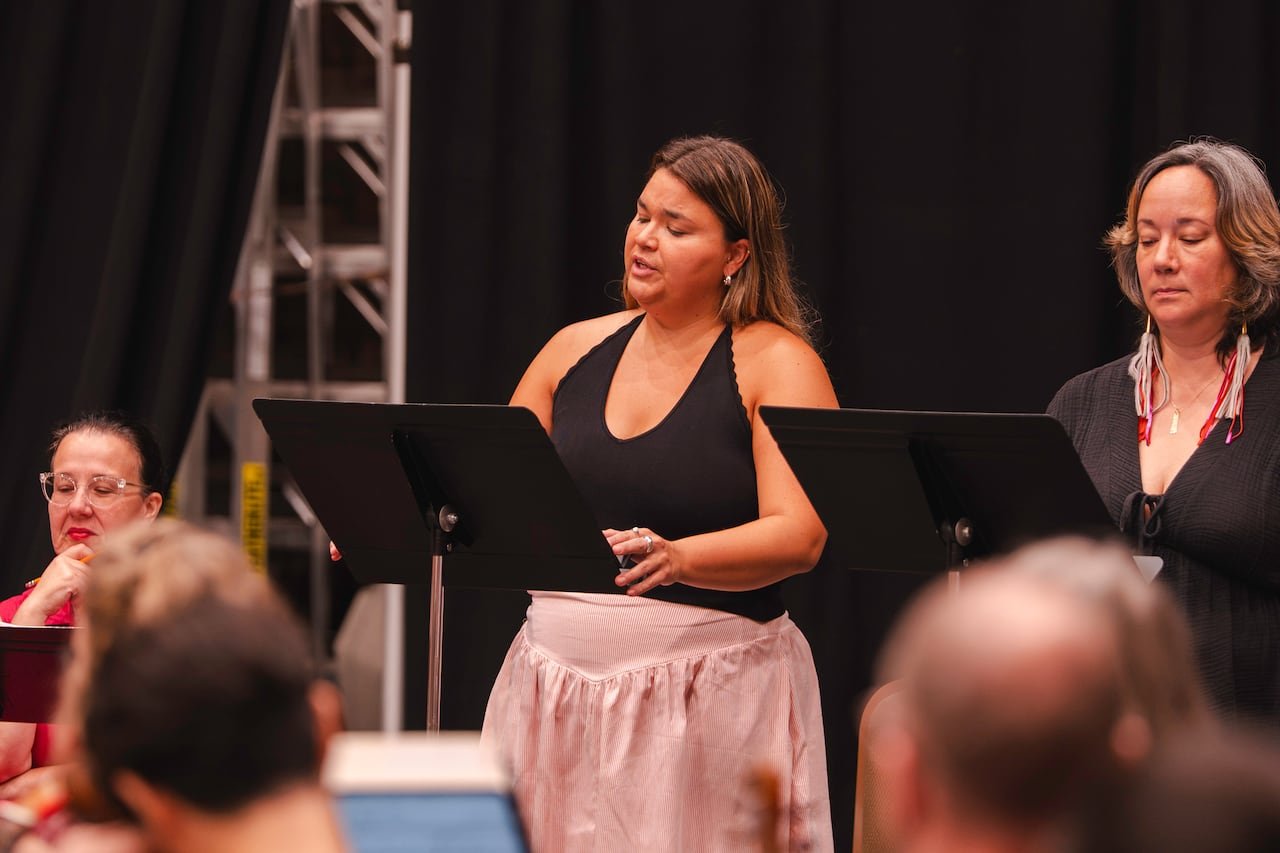
Elisabeth St-Gelais, a 30-year-old Innu soprano, assumes the role of the protagonist, Joan, in the opera adaptation of Empire of Wild. Having immersed herself in the novel twice, she acknowledges the story’s universal themes that resonate with younger audiences.
“Joan exhibits relatable flaws and coping mechanisms during crises, reflecting common human experiences,” St-Gelais remarked, referring to her character’s struggles amid her husband’s disappearance.
Challenging Conventions
At its core, Empire of Wild delves into themes of power, resistance, and resilience.
The plot unfolds as Joan’s husband mysteriously disappears after a land dispute. Upon reuniting

