

The latest federal budget in Canada introduces a modification to Registered Retirement Savings Plans (RRSPs) that aims to streamline financial planning for numerous seniors each year.
According to tax and personal finance specialists, although the new “RRSP for life” initiative may enhance convenience, it does not tackle the financial hardships faced by seniors due to escalating living expenses.
An RRSP is a type of savings account in Canada that reduces tax liabilities in the present, allowing savings and investments to grow tax-deferred until retirement. These accounts can accommodate a diverse range of financial instruments such as cash, stocks, guaranteed investment certificates (GICs), and exchange-traded funds (ETFs).
For the tax year 2026, individuals will be allowed to contribute up to 18 percent of their earned income from 2025, capping at a maximum of $33,810. If one has a workplace pension, the value of those contributions will be subtracted from that 18 percent limit.
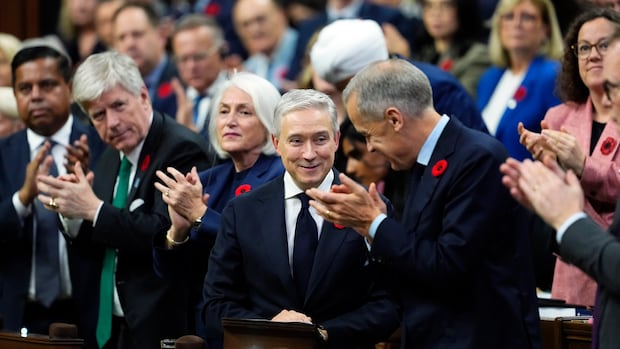
Thursday’s federal budget includes a number of measures aimed at making life more affordable for Canadians. More low-income workers will get benefit payments to help them make ends meet. Those who make a minimum of $3,000 annually get a refundable tax credit under the Canada Workers Benefit, but that threshold is being lowered to $500 for all workers.
What are the proposed changes?
Currently, individuals must withdraw or convert their RRSPs into a Registered Retirement Income Fund (RRIF) upon reaching 71 years of age. The new federal budget suggests allowing Canadians to maintain their RRSPs even after this age.
At present, if a person passes away after turning 71 with a RRIF, the account can be transferred to a spouse without the need to close it or file tax documents. This is not applicable to RRSPs at this time.
The budget proposal from Ottawa would “permit a surviving spouse or partner to become a successor holder of an RRSP, simplifying tax-free transfers to eligible survivors following the account holder’s death.”
A public consultation regarding this initiative commenced on Thursday and is set to continue until January 8, 2027.
-
7 takeaways from the Carney government’s 2nd budget
-
Carney’s new budget aims to end homelessness in 10 years
According to Jamie Golombek, managing director of tax and estate planning at CIBC Private Wealth Management, the majority of individuals aged 71 opt to convert their RRSPs to RRIFs to avoid taxation that comes with cashing out.
“It’s a complicated administrative process that affects hundreds of thousands of individuals annually,” he explained to CBC News.
“The government is suggesting, ‘Why not have an RRSP for life?’ Essentially, an RRSP that you can retain until the end of your life.”
- Cross Country Checkup is asking: What sacrifices are you making to make ends meet? Is the federal government doing enough to lower your cost of living? Leave your comment here and we may read it or call you back for Sunday’s show
Under the proposed adjustments, the government would mandate RRSP holders to withdraw a minimum percentage of their savings each year, commencing at age 72. These percentages are determined based on average life expectancy to facilitate gradual payouts of retirement savings and corresponding taxation throughout the owner’s lifetime.
John Fragos, press secretary to Finance Minister François-Philippe Champagne, confirmed to CBC News that under the government’s plan, individuals cannot contribute to RRSPs after they turn 71.

The Carney government’s second budget lays out over $150 billion in spending to attract investment, accelerate nation-building projects, boost housing and tackle the affordability crisis. The NDP says it favours the rich, while Conservatives call it a ‘credit card budget Canadians can’t afford.’
Why do the changes matter?
Aaron Hector, a senior wealth advisor at Tier Wealth in Calgary, believes that simplifying the financial landscape for seniors is a wise decision by the government. He commends the proposal that facilitates the easy transfer of RRSPs after death.
“Eliminating the need for someone to navigate the paperwork involved in converting an RRSP to a RRIF makes a lot of sense to me,” he stated. “If it gets overlooked, it could lead to significant issues for individuals.”
Li Zhang, social impact director at Chartered Professional Accountants of Canada, considers the government’s “RRSP for life” initiative to be “more of a terminology change” that disregards more pressing challenges for seniors.
She estimates that only 33 to 37 percent of Canadians have access to a pension.
“This means you’re not addressing a significant portion of individuals with substantial retirement savings,” she noted. “If you observe food bank lines, they consist primarily of the very young or the very elderly.”
She adds that another issue for RRSP holders is that mandatory withdrawals can complicate their income management. “This subsequently leads to increased taxation,” she explained.
While the consultation period for this proposal lasts until January 8, Golombek anticipates that the implementation of these changes could take significantly longer if Ottawa decides to proceed.
“I believe it will take several years before we witness the full integration of these changes, or at least the removal of the RRIF,” he concluded.

